

- within Intellectual Property topic(s)
- in Canada
As we gear up for the INTA conference in London this year, it’s a perfect time to explore some of the UK’s most well-known brands and trademarks. Whether you’ll be in attendance or not, we invite you to join us on a virtual “walking tour” of a few iconic British brands, and the ways their trademark rights have been used, enforced, and challenged in the United States.
Burberry
Our first stop, situated near the Thames in the heart of Westminster, and within walking distance of Buckingham Palace, is the headquarters of legendary fashion house Burberry. Burberry’s iconic plaid check pattern, first introduced in the 1920s, is among the most recognizable trade dress designs in luxury fashion. The company holds multiple U.S. trademark registrations for the design, both in its classic colorway and without color limitations, allowing for broad protection across variations.
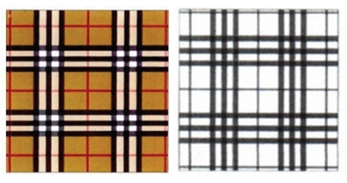
Burberry also actively enforces its trademark rights in the United States, including in high-profile litigation targeting alleged lookalike designs in the fast fashion space. In 2018, it filed a complaint in the Southern District of New York against Target, alleging that certain scarves and accessories were “superficially indistinguishable” from genuine Burberry products. The case was ultimately voluntarily dismissed after the parties reached a settlement. Burberry’s design and enforcement efforts are a key reminder that brands can leverage U.S. trade dress laws as a tool to combat alleged lookalikes abroad.
Twinings
Continuing northeast along the Thames, you will arrive at the Twinings Flagship Store on the Strand, home to London’s beloved tea brand since 1706. Enjoyed around the world, Twinings tea counted the Governor of Boston among its loyal customers, and is often said to have been spared during the Boston Tea Party. The Twinings logo was commissioned in 1787 by Richard Twining, and has remarkably remained relatively unchanged over the course of more than two centuries, making it one of the oldest continuously used commercial logos in the world.
In the United States, Twinings has faced some challenges over not its marks themselves, but how its products have been marketed. For example, in the class action Lanovaz v. Twinings North America, Inc., No. 12-cv-02646 (N.D. Cal. 2012), the plaintiffs alleged that certain statements claiming that Twinings’ teas were a “natural source of antioxidants” were false and misleading because the products did not satisfy the minimum threshold requirements for antioxidants. The U.S. District Court for the Northern District of California dismissed the case for lack of standing for injunctive relief in 2016, and the 9h Circtuit affirmed in 2018. This case underscores the scrutiny that product labeling and health claims can face in the U.S., and how long-standing companies must defend against such claims to protect consumer perception of their brand.
Harry Potter
Next stop is King’s Cross Station, London’s buzzing commuter hub. While the train station has been a regular stop for many busy Londoners over the decades, King’s Cross became known worldwide after it was prominently featured in the Harry Potter series as the site of the magical Platform 9 ¾.
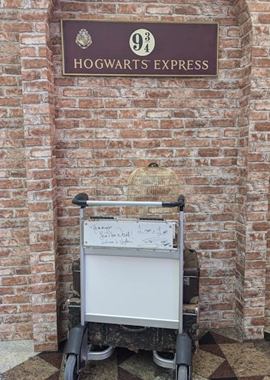
While the franchise originated in the UK, its trademark portfolio and commercialization are heavily driven from the U.S. by Warner Bros. Entertainment Inc. Warner Bros. owns hundreds of U.S. registrations covering core elements of the franchise, from HARRY POTTER and HOGWARTS to BUTTERBEER and related imagery, and has regularly sought to enforce those rights. In 2019, Warner Bros. successfully opposed the mark WIZARDING RUN before the U.S. Patent and Trademark Office, where applicant Starlit Running Company sought to register the mark for themed running events referencing wands, quidditch, and other Potter-related elements. Warner Bros. has also pursued enforcement actions against online counterfeiters, including filing a 2025 complaint in the U.S. District Court for the Northern District of Illinois seeking injunctive relief against multiple defendants allegedly selling counterfeit Harry Potter merchandise on Amazon, Walmart, and Temu. With a new Harry Potter television series slated for HBO in 2026, further enforcement activity is likely in response to what we expect will be renewed consumer demand and increased counterfeiting risk.
Rolls-Royce
Just around the corner from Kings Cross Station, you’ll find the headquarters of Rolls-Royce. It may come as a surprise to many, however, that this headquarters is not of the luxury car manufacturer, but of the Rolls-Royce aerospace defense company. In fact, Rolls-Royce operates as two entirely separate companies sharing the same famous name. The split traces back to 1971, when the original Rolls-Royce company faced financial difficulties and was nationalized by the British government, separating its automobile and aerospace businesses. The “double R” ROLLS ROYCE trademark remained with the aerospace entity, Rolls-Royce plc, rather than with the car company, Rolls-Royce Motor Cars.
This split created a critical issue when Rolls-Royce Motor Cars was offered for sale in the late 1990s. Volkswagen paid £430 million to acquire it—only to discover that it had not in fact purchased the rights to use the ROLLS-ROYCE mark or logo on automobiles. Instead, BMW (which was allegedly preferred over Volkswagen) acquired those trademark rights for a reported £40 million. As a result, under a four-year transitional arrangement, BMW then licensed the mark to Volkswagen, who continued to manufacture cars under the Rolls-Royce name until the end of 2002. After that point, BMW assumed full control, while Volkswagen retained ownership of the separate Bentley brand.
Rolls-Royce’s enforcement activities in the US have also extended far beyond the automobile field. In Rolls-Royce Motor Cars Ltd. v. Robert D. Davis (a/k/a “Rolls Royce Rizzy”), No. 15-cv-00417 (D.N.J. 2016), rapper Robert D. Davis adopted the stage name “Rolls Royce Rizzy” to promote his activities, including by selling merchandise with the tagline “Team Rolls Royce.” Rolls-Royce (the Motor Cars company, along with its North American entity) sued for trademark dilution. The U.S. District Court of New Jersey granted Rolls-Royce’s motion for default judgment on its dilution claims, holding that the rapper’s explicit social media and marketing materials could create negative associations with Rolls-Royce’s famous marks.
This case is an illustrative example of how dilution claims can play a key role in trademark enforcement strategies for famous marks, especially across unrelated goods.
Sherlock Holmes
Finally, you can wrap up your tour with a lovely stroll through the flowers of Regent’s Park and over to Baker Street, Apartment 221B, the fictional residence of legendary detective Sherlock Holmes. The Holmes universe presents an interesting intersection of copyright and trademark law.
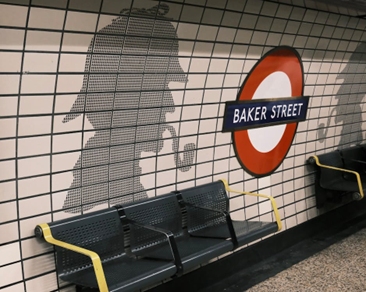
As of January 1, 2023, all Sherlock Holmes novels and short stories written by Arthur Conan Doyle are now in the public domain under U.S. copyright law. However, it’s important to keep in mind that derivative works, adaptations, and later creative works by other authors may retain their own copyright protections. In addition, the Conan Doyle Estate still maintains trademark registrations for SHERLOCK HOLMES and related marks in the U.S. and elsewhere, and operates an active licensing program, including collaborations with brands such as Montblanc and Fiat. While new creative works may be freely developed, use of the Holmes name in a manner suggesting endorsement or affiliation may still raise trademark concerns, illustrating how different forms of IP protection can overlap even after copyright expires.
From luxury fashion to legacy consumer goods to global entertainment franchises, these brands underscore a common theme: while trademark rights are territorial, brand strategy is inherently global. As INTA brings practitioners to London this year, it serves as a useful reminder that protecting a brand in the United States extends well beyond registration to enforcement.
To view Foley Hoag's Trademark and Copyright Law Blog please click here
The content of this article is intended to provide a general guide to the subject matter. Specialist advice should be sought about your specific circumstances.
[View Source]
