

Recently, the Food and Drug Administration (FDA) introduced a new online resource called the Chemical Contaminants Transparency Tool (CCT Tool) which allows the public to search for information about different chemical contaminants that may be found in human food. This online, searchable database provides a consolidated list of contaminant levels such as tolerances, action levels, and guidance levels used to evaluate potential health risks in human foods. This tool is part of the FDA's efforts to modernize food chemical safety and has been launched as part of the administration's Make America Healthy Again initiative.
Key Features and Objectives of the Transparency Tool
Prior to launch of the CCT tool, tolerances, action levels, guidance levels, derived intervention levels, recommended maximum levels, and advisory levels were to be found (or defined) in 21 C.F.R. parts 109 and 509, and also in guidances for industry. The CCT Tool consolidates this information into one resource, with the goal of making it easier to find information about the contaminants by commodity type.
Here is a snapshot of some data available through the tool:
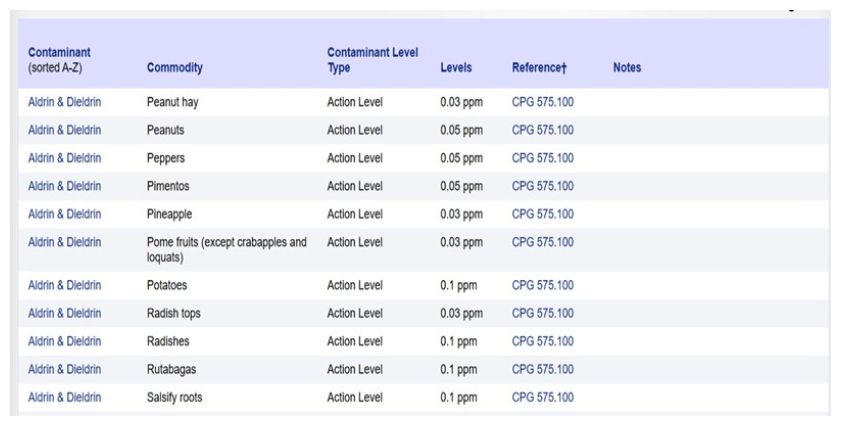
The levels above show the safety limits for contaminants in food, but do not imply that the presence of these chemical at the specified level is necessarily permissible. FDA's prior guidances on these chemicals remains an important resource to understand the levels shown in the chart. As explained by acting FDA Commissioner Sara Brenner, M.D., M.P.H., "While it's ideal to have no contaminants in our food, they can sometimes occur. Eating a variety of nutrient-rich foods from all major groups – vegetables, fruits, grains, dairy, and protein – can help minimize exposure."
The introduction of the CCT Tool is a useful reminder of the importance of compliance for food manufacturers and distributors. It also highlights the new administration's focus on transparency for and within the food system, and could be a harbinger of new tools that FDA may develop as part of the new administration's goals.
The content of this article is intended to provide a general guide to the subject matter. Specialist advice should be sought about your specific circumstances.

