
- with readers working within the Law Firm industries
Taylor Swift, Matthew McConaughey, and perhaps others, are lining up trademark rights to fight against unauthorized artificial intelligence-generated images, sounds, and catchphrases associated with them.
These new uses for trademark rights are intended to supplement traditional trademark rights, rights of publicity, copyright rights, and state laws that regulate specific unauthorized AI activities.
Traditional Trademark Rights
Various performers, athletes, and celebrities, including Beyoncé, Oprah Winfrey, Kim Kardashian, LeBron James, and many others, have obtained trademark registrations for their names and for other indicia associated with them.
These registrations generally have been intended to protect against the marketing of infringing products or services, or to support the registrant’s own licensing activities. For example, Taylor Swift’s company owns more than 175 active trademark registrations and pending trademark applications in the U.S.
Specialized State Laws
We previously wrote about some New York statutes that may limit AI-generated material:
- “New York Law Alert – Entertainers and Celebrities Get A Descendible Right of Publicity, and Everybody Gets A Right to Sue for a Sexually Explicit Depiction” (January 5, 2021).
- “Advertising Law Alert -- New York Regulates AI-Generated and Posthumous Images” (January 29, 2026).
What is New
What is new is the attempt to use trademark rights against AI-generated fakes that simulate a public figure’s appearance, or voice, or catchphrases in a way that may not be covered by other intellectual property rights or state laws.
A trademark registration has advantages that might apply to this situation, including a presumption of the validity of the mark, federal jurisdiction, and injunctive relief against the infringer.
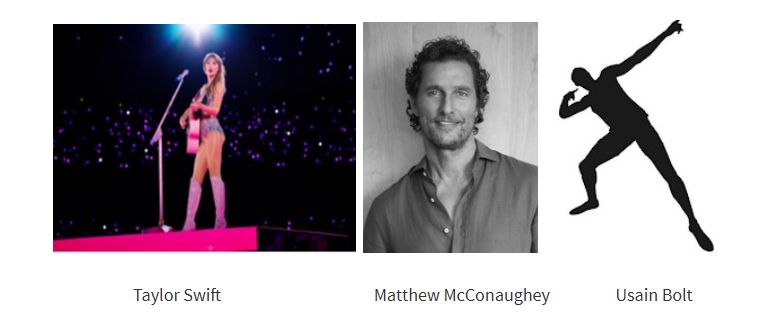
On April 30, 2024, the Olympic Gold Medal sprinter Usain Bolt registered his iconic pose shown above for various goods, and for various entertainment and other services,.
On April 5, 2026, Matthew McConaughey’s company, J.K. Livin Brands Inc., filed an application to register his photo shown above, and previously he had registered a sound recording of him saying ALRIGHT ALRIGHT ALRIGHT and other sound recordings associated with him, each for various entertainment services.
On April 24, 2026, Taylor Swift’s company, TAS Rights Management, LLC, filed applications to register the performance picture shown above of her performing on stage, and sound recordings of her saying HEY, IT’S TAYLOR, and HEY, IT’S TAYLOR SWIFT, each for various entertainment services.
Trademark filings such as these may provide an additional cause of action to protect performance, vocal, or likeness rights against AI-generated imitations likely to cause confusion with the persona of a celebrity or performer.
It will be interesting to see whether this approach is successful against AI-generated infringements.
The content of this article is intended to provide a general guide to the subject matter. Specialist advice should be sought about your specific circumstances.
[View Source]