

- within Strategy topic(s)
- with readers working within the Media & Information industries
- within Wealth Management and Compliance topic(s)
- with Senior Company Executives, HR and Inhouse Counsel
Key trends shaping global business strategy for the year ahead
Last year saw Donald Trump return to the White House with a radical 'America First' policy agenda, challenging global norms and heralding a new era of geopolitical uncertainty.
Yet, we also witnessed remarkable business resilience and reasons for optimism: from adaptable global supply chains through to buoyant equity markets, transformational AI advances and encouraging falls in inflation and interest rates. With many economies now emerging from the 'peak uncertainty' of 2025, the fundamentals for business look set to improve further in the coming year.
Five key trends shaping the business outlook
- Global trade is being reshaped
- Slower growth but markets robust
- Inflation falling but rate cuts uncertain
- Fractured geopolitics and national political dramas
- AI is driving markets and business strategy
Key trend 1:
Global trade is being reshaped
What happened in 2025?
President Trump shook the world with his 'Liberation Day' tariff announcements but a global trade war was averted as preliminary deals were struck with the likes of the EU, UK and Japan – but trade tensions remain high with India, Canada and China. Supply chains adapted and any short-term inflationary shock was contained – but the effective US tariff rate is settling around 15%-20% (vs c2% previously).
What's the big picture in 2026?
More US tariff unpredictability. The US will continue to deploy tariffs to raise revenue, exert geopolitical pressure and score domestic political points on key US voter issues. Expect renewed pressure on the outline deals struck in 2025, plus a high stakes renegotiation of the US-Mexico-Canada trade deal (USMCA). Sector-specific tariffs in areas such as steel, automotive and healthcare/pharma will remain live issues.
US-China friction. The 12-month trade truce agreed in late 2025 will remain under strain, with China having demonstrated its unique leverage in the supply of rare earth minerals, set against US dominance in top-end semiconductors.
The drive for new trade deals outside the US will accelerate. Governments and businesses are looking to diversify beyond the US market and take advantage of new trade deals. The EU aims to close deals with Mexico, Indonesia, the UAE, India and the Mercosur group of Latin American nations. China is seeking deals with Switzerland, South Korea and the Gulf states. Countries will also look to clear internal trade barriers, such as those between Canadian provinces.
Key trend 2:
Slower growth but markets robust
What changed in 2025?
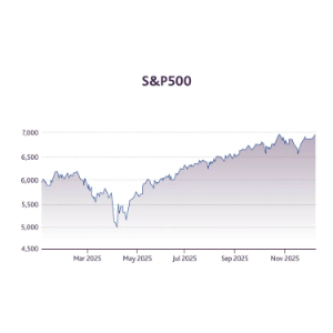
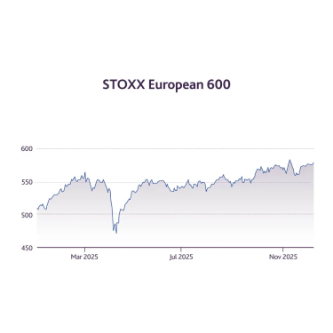
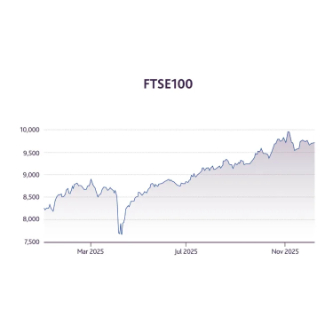
Healthy H1 economic growth in 2025 was bolstered by front-loading of global inventory restocking ahead of US tariffs, but growth was more fragile in H2. Financial markets shrugged off macro risks and equities powered to double-digit growth, fuelled in part by the strength of US AI investment. Global M&A deal value rebounded strongly – driven by a surge in 'mega-deals' – though overall M&A deal volumes were more muted.
 |
 |
 |
What's the big picture in 2026?
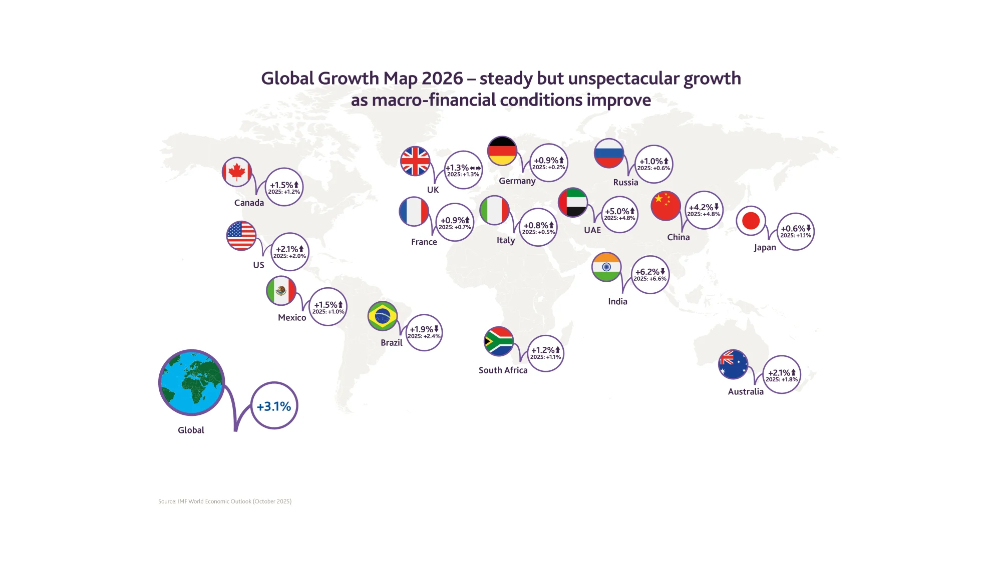
Global growth of 3.1% will reflect a modest slowdown on 2025 due to the full impact of trade tariffs and ongoing geopolitical uncertainty.
Lower inflation and interest rates will start to strengthen the consumer and business outlook and provide a stronger underpin for growth in 2026 and 2027.
The strongest growth will be led by India (c6%) – forecast to overtake Japan to become the 4th largest global economy in 2026 – the Middle East (c4%) and the ASEAN-5 (c4%).
US growth is likely to hold at c2% with strong AI-driven momentum, fresh government stimulus for household spending, and tax cuts and looser regulation for business.
Improving prospects in Germany and France will support stable but unspectacular EU growth of c1.5%. Germany will boost spending on infrastructure and defence to move back into growth (c1%), with France also forecast to see stronger growth of c1% if political strife can be contained.
In focus: US outlook 2026
Another robust year is expected for the US economy, though inflation is a key risk factor
Positive tailwinds
More interest rate cuts to come? – the balance of the US Fed now expect to cut rates further in 2026.
'One Big Beautiful Bill' stimulus kicks in – with tax cuts and rebates for households and tax exemptions and incentives for business.
Strong corporate performance and margins – tariff impacts have so far been absorbed through productivity and efficiency gains and US corporates remain well-positioned for 2026.
The AI boom looks set to run... with limited signs of investor retrenchment as the major AI players push hard in the race for AI capacity and capabilities, creating spin-off AI momentum across markets generally.
...But challenging risks
Inflation could spike again – if the US economy runs hot, with prices rising due to tariffs, inflation could stick above 3% and stall rate cuts.
Tariffs impact still unclear – the full effects of tariffs will start to flow through the US economy in 2026 and could yet hit growth across multiple industries.
AI market wobbles – if investors are spooked by AI bubble risks it could prompt a broad market correction/reallocation.
US administration volatility – although markets have become largely immune to the day-to-day US political drama, the radical economic and foreign policy positions of the Trump administration (e.g. recent military intervention in Venezuela) creates an ongoing risk of market and specific sector shocks.
Key trend 3:
Inflation falling but rate cuts uncertain
What changed in 2025?
Global inflation fell from 5.2% to 4.2% despite pockets of sticky inflation (including the US and UK). Helpfully, global oil prices remained subdued despite flashpoints such as the US military strike on Iran's nuclear facilities and US sanctions on Russian oil majors. The Bank of England and US Fed were both cautious in early 2025 but each had implemented a series of interest rate cuts by the year-end.
The UK saw inflation spike from 3% to 4%, driven in part by April 2025 increases in employer NICs and the National Minimum Wage.
What's the big picture in 2026?
UK interest rates are likely to be cut gradually from 3.75% to c3%, with inflation trending down to 2.5% in 2026 and 2% in 2027.
The US inflation outlook will be complicated by the full impact of import tariffs on prices, which some estimate could add 1% to underlying inflation. Most expect that a gradual decline in inflation to c2.5% should allow for at least one further rate cut in 2026 but the Fed will remain cautious. The appointment of a new US Fed Chair in May will be watched closely for any signs that the Fed's independence will be compromised.
The ECB is expected to hold rates in 2026 with inflation running close to target and Eurozone growth resilient (if unspectacular).
China exports are diversifying / re-focusing into markets outside the US, which will help to suppress global inflation but may prompt 'anti-dumping' responses – perhaps most likely from the EU – to protect key national industries.
Key trend 4:
Fractured geopolitics and national political dramas
What changed in 2025?
President Trump's America First agenda has cast doubt on whether longstanding US commitments to its allies – on defence, foreign policy and trade – will hold. The world is braced for rising geopolitical instability and conflict with a trend to derisk national and corporate reliance on the US. Stuttering Ukraine-Russia peace talks have amplified tensions between the US and EU. European leaders have also struggled for domestic authority in the face of difficult tax, debt and policy trade-offs – with budget pressures squeezing the headroom for essential investment.
What's the big picture for 2026?
US mid-term elections in November. President Trump is under pressure on cost-of-living economic issues, with the prospect that the Democrats could win back the House of Representatives and seek to constrain the president's sweeping use of executive powers.
In the UK, local election results in May could be a catalyst for leadership challenges in both the ruling Labour Party – resulting in a new UK Prime Minister – and opposition Conservative Party.
Germany investment unleased? Chancellor Merz has successfully passed reforms to relax the nation's 'debt brake', unlocking a bold €1trillion energy, infrastructure and defence investment programme to break several years of economic stagnation – which is expected to deliver broader EU-wide benefits.
A bond market crisis? With national debt levels soaring – including in the US and Europe – bond markets have a hawk-eye on whether politicians are delivering credible plans to put debt on a more sustainable path. There is an ongoing risk that political crises or loose fiscal policies could spook the bond markets – ramping up government borrowing costs and making the debt challenges even more acute.
A Ukraine-Russia peace deal? Although it sadly still feels unlikely, a substantive US-backed peace deal would lift European markets, bolstered by the prospect of huge reconstruction projects.
In focus: UK outlook 2026
A more stable growth outlook for the UK as it moves beyond budget uncertainty, with falling inflation and interest rates improving consumer and business sentiment.
Positive tailwinds
Inflation is falling – helped by the 2025 Autumn Budget package to ease consumer cost pressures (energy bills support, fuel duty freeze, rail fares freeze).
Interest rate cuts expected – reducing household mortgage pressures and easing corporate financing.
Investment fast-tracked – with public sector investment and infrastructure plans frontloaded into 2026/27.
Greater policy stability? The UK Chancellor's increased fiscal headroom (and the proposal for less frequent OBR forecasts) should now reduce policy volatility and strengthen business certainty.
Dynamic sector base. The UK maintains a strong position in many key growth sectors, including energy transition, defence, life sciences, technology, financial services and advanced manufacturing. The UK's Industrial Strategy is setting ambitious growth objectives with policy support.
...But challenging risks
Weak growth momentum – with growth having flat-lined in late 2025 the UK will need a material bounce-back heading into 2026. The OBR forecasts 1.4% growth in 2026 – stable but below the UK's long-term trend.
Softening labour market – which may drive more cautious household spending behaviours.
Political upheaval? Local elections in May could spark a leadership contest in the governing Labour Party. Potential Labour Party leadership contenders hold a wide range of views on tax, spending and regulation, which could create fresh uncertainty for business.
Key trend 5:
AI is driving markets and business strategy
What changed in 2025?
AI investment surged with the large US tech giants alone investing c$400 billion. Market-leading chipmaker Nvidia touched a record valuation of $5 trillion and OpenAI expanded its commercial reach through partnering deals with AMD, Oracle and Nvidia.
Roughly two-thirds of the S&P500 gains in 2025 came through mega-cap tech stocks tied to AI. Every organisation grappled with how to harness the real-world benefits (and manage the risks) of increasingly powerful and pervasive AI tools.
What's the big picture for 2026?
AI adoption push. The full productivity potential of AI rests on deep and wide adoption, beyond narrow use cases. 2026 will see a concerted push from both AI vendors and business leaders to embed AI across organisations at all levels, moving beyond the experimentation phase.
AI transformation puts the spotlight on jobs and skills. Expect more businesses to bet big on an AI-led future and announce disruptive operating model transformation. This will spark greater debate on the impact for jobs and future skills.
AI bubble risk – a 2026 correction? The sheer weight of risk capital thrown into AI, coupled with surging AI-driven corporate valuations, is raising concerns of a market bubble. A market correction (or worse) would cause ripples more broadly across financial markets and the global economy. However, as Capital Economics have observed: "The reassuring feature for now is that, if it is a bubble, then it is an equity-funded bubble in a productive asset rather than a debt-funded bubble in an unproductive asset."
Seizing opportunities, managing risk – the 2026 agenda for business leaders
Every organisation will have its own unique mix of strategic opportunities and risks but some broad themes for business leaders to consider include:
Hunting growth
With GDP growth in many developed economies running at 1-2% businesses will need focused sales strategies to win market share and an open mind to new avenues for growth. For some, this could mean expansion into higher growth regions such as Asia or the Middle East. For others, it could mean tapping into high growth sectors, such as the rapid expansion expected in the global defence industry.
Seizing opportunity: accessing higher growth markets and sectors.
Managing risk: protecting market share in a low-growth environment.
AI transformation
Every organisation will be developing a longer-term AI strategy that blends the right choice of AI tools and 'agents' to improve customer experience externally, and drive productivity and efficiency internally. Whereas 2025 was the year of experimentation, 2026 has higher expectations for tangible AI delivery and results.
Seizing opportunity: transforming customer service through AI.
Managing risk: robust data protection and AI usage polices, and wider cyber security resilience.
Public-private partnering
In the UK and EU, in particular, the urgent push for investment in areas such as defence, infrastructure and housing will hinge on effective and creative partnering between government and the private sector – both to support delivery and provide long-term financing support.
Seizing opportunity: Bringing together public policy ambition, private sector expertise/resources and the investment firepower of financial institutions.
Managing risk: Commercial structures to ensure successful delivery of government objectives alongside appropriate private sector risk and return.
(Re-)financing options
With interest rates expected to fall in 2026, there will be cheaper financing available to support strategic investment or re-gear existing borrowings. Many expect that rate cuts will essentially have run their course by the end of 2026, so the picture should become clear on likely medium-term borrowing costs.
Seizing opportunity: Cheaper financing deals
Managing risk: Expanding debt in still fragile economic conditions.
Strategic M&A
The uncertainties of 2025 encouraged a 'wait and see' approach to M&A and investment deals – notably in the lead up to the Autumn Budget in the UK. With greater tax certainty, improving funding conditions, and pent-up demand for both strategic M&A and private equity exits/acquisitions, dealmaking is set to accelerate in 2026. The energy transition, defence, tech/AI, media, life sciences and real estate sectors are all expected to be active.
Seizing opportunity: Strategic deals to outpace competitors and capitalise on market mega-trends.
Managing risk: Robust due diligence and deal/funding structures as corporate/asset valuations settle coming out of the post-Covid period.
We hope that our Big Picture For Business 2026 is a useful guide to help you plan for the year ahead, and we look forward to supporting our clients to make the most of the opportunities that present themselves in times of change.
Read the original article on GowlingWLG.com
The content of this article is intended to provide a general guide to the subject matter. Specialist advice should be sought about your specific circumstances.
