

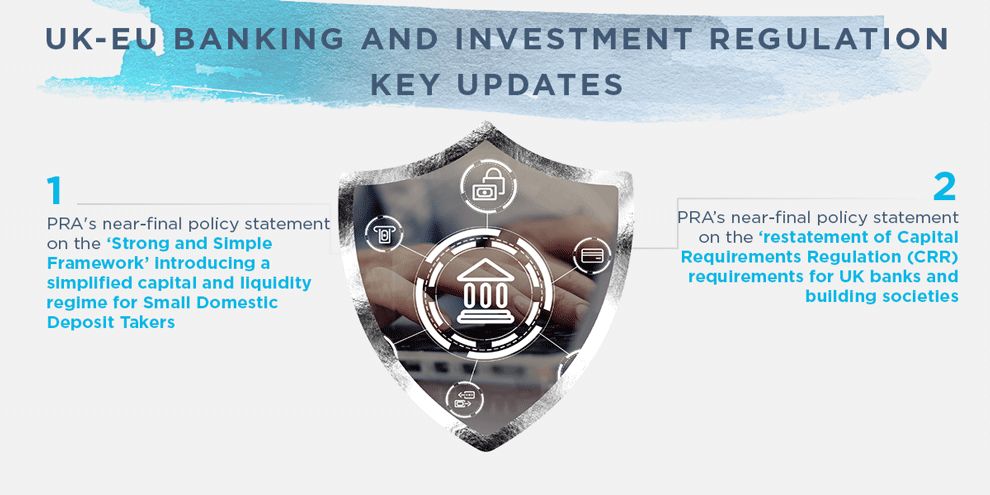
In this edition, we discuss latest developments in the UK and EU banking and investment regulation. This issue focuses on two key papers from the Prudential Regulation Authority (PRA) last month. These include the PRA's near-final policy statement (PS20/25) on the 'Strong and Simple Framework' introducing a simplified capital and liquidity regime for Small Domestic Deposit Takers and its near-final policy statement (PS19/25) on the restatement of Capital Requirements Regulation (CRR) requirements. A number of these initiatives impose strict requirements and regulatory deadlines on firms while other changes present opportunities for your business.
PRA publishes near-final policy statement on the 'Strong and Simple Framework'
The PRA's near-final policy statement (PS20/25), published on 28 October 2025, marks a significant shift for small UK banks and building societies. The 'Strong and Simple Framework' introduces a simplified capital and liquidity regime for Small Domestic Deposit Takers (SDDTs), aiming to reduce regulatory burden, support competition, and maintain financial resilience. The new rules, effective from 1 January 2027, align with international Basel 3.1 standards and replace the Interim Capital Regime.
Click here to read further on the framework and why this matters for SDDTs >
PRA publishes near-final policy statement on the restatement of Capital Requirements Regulation requirements for UK banks and building societies
On 28 October 2025, the PRA published its near-final policy statement (PS19/25) on the restatement of Capital Requirements Regulation (CRR) requirements, with implementation set for 1 January 2027. This development is a pivotal moment for UK banks, building societies, and investment firms, as it marks a significant step in the UK's transition away from assimilated EU law with the PRA exercising its expanded rule-making powers.
Read here to know more on the relevant changes and implications for UK firms >
The content of this article is intended to provide a general guide to the subject matter. Specialist advice should be sought about your specific circumstances.


