

- with Inhouse Counsel
- with readers working within the Advertising & Public Relations, Business & Consumer Services and Technology industries
Businesses across Toronto are making preparations as the City gets ready to host the 2026 FIFA World Cup. If your business is anywhere near downtown Toronto, especially around Exhibition Place, BMO Field (Toronto Stadium), Liberty Village, Fort York, the waterfront, or the main routes that feed those areas, now is the time to pay attention to the City’s FIFA World Cup 2026 Mobility Plan. The big picture is pretty simple: during the tournament, getting around will look different. The City has been clear that the priority will be transit, walking, and cycling, which means cars, curb space, and “quick stops” are going to be harder to count on. The exact impacts will shift depending on match days and event timing, so what feels manageable one week could be frustrating the next.
For tenants, landlords, and business operators, the real issue isn’t whether there will be disruption. It’s what happens when that disruption collides with everyday operations, and how much of the pain gets absorbed by the tenant, the landlord, or both under the lease and building rules.
Key Business Impacts
The most noticeable changes will likely show up in the basics: access, parking, and deliveries. Think road closures, detours, curb lane changes, temporary no-parking zones, and controlled access areas. Pick-up and drop-off points may be pushed away from building entrances, especially near secure perimeters. Public parking near key locations is expected to be limited, which can ripple out into surrounding streets as drivers search for alternatives.
In practice, that translates into small disruptions that add up fast. Customers who used to pop in because it was convenient may hesitate if they can’t park nearby. Employees may change their commute habits or arrive later than usual on match days. Couriers and delivery drivers might get stuck in traffic patterns, which may make delivery windows unreliable. Waste removal schedules may need adjusting, and routine maintenance visits may get disturbed.
Some businesses will feel this more than others. Anything appointment-based, time-sensitive, or mobility-dependent is more exposed, including clinics and personal services. Restaurants, bars, entertainment venues, and the retail sector can see swings in foot traffic that are hard to predict. You might get a boost when crowds flow your way, or you might get a drop when access feels like a hassle.
Lease Provisions Requiring Immediate Review
This is where a quick, practical lease read-through can save headaches later. You’re looking for what the lease says about access, parking, and who pays when operations change.
Access and Quiet Enjoyment
Many tenants assume the lease guarantees smooth access to their unit, but leases often qualify that promise. It’s common to see language that says access can be affected by government action, construction, traffic controls, or municipal restrictions. If that’s in your lease, it may limit what you can claim if customers can’t reach you easily for a stretch of time.
Parking Rights
Parking is often where expectations and paperwork don’t match. If your lease clearly gives you specific stalls or dedicated areas, you may have stronger footing to ask for alternatives if those stalls become unusable. If parking is described more loosely as “as available”, “shared”, or “subject to change”, then the landlord may have more flexibility, even if the business impact is still significant.
Loading and Shipping Provisions
If curbside rules change and routes get blocked, you may need different delivery times or different loading procedures. It’s worth checking what your lease and building rules say about delivery hours, dock access, elevator bookings, contractor entry, and waste removal. Even a well-run building can get jammed if everyone is forced into the same narrow servicing window.
Operating Hours and Service Costs
Some businesses may shift hours to avoid congestion, while others will extend hours to capture event traffic. Either way your lease may charge you additional costs for after-hours HVAC, security, cleaning, or staffing that goes beyond what was initially agreed to. The last thing you want is a surprise invoice because you stayed open later than usual for a busy weekend.
Force Majeure and Governmental Action
City restrictions may fall under “force majeure” or “government action” clauses, but those clauses often excuse performance without reducing rent. In plain terms, that can mean you still owe full rent even when access is messy. It’s worth checking whether there’s any language about cooperation, temporary accommodations, or cost adjustments during disruptions.
Insurance and Business Interruption Alignment
A lot of business interruption coverage focuses on physical damage, not the lack of access to the premises. If the disruption is mainly about restricted routes and controlled perimeters, standard coverage may not kick in. It’s smart to review whether your policy has endorsements for civil authority, denied access, or extra expense, and to make sure what the lease requires aligns with what you actually carry.
Recommended Action
The best move is to get ahead of this while everyone still has time to plan. If your business depends on nearby public parking, frequent deliveries, quick drop-offs, accessible entry, contractor access, or time-sensitive appointments, review the City’s FIFA World Cup 2026 Mobility Plan and start talking to your landlord now about workable temporary routines. The goal isn’t perfection, it’s predictability. Clear notice protocols, simple wayfinding signage, flexible delivery windows, and a realistic loading dock schedule may make a big difference once the streets start filling up.
On the landlord side, early communication is everything. Buildings that share route updates, explain access changes in plain language, and keep tenants updated on parking and servicing adjustments will reduce confusion and complaints.
Businesses that prepare now will be best positioned to preserve continuity, reduce disputes, and respond efficiently when tournament controls are implemented.
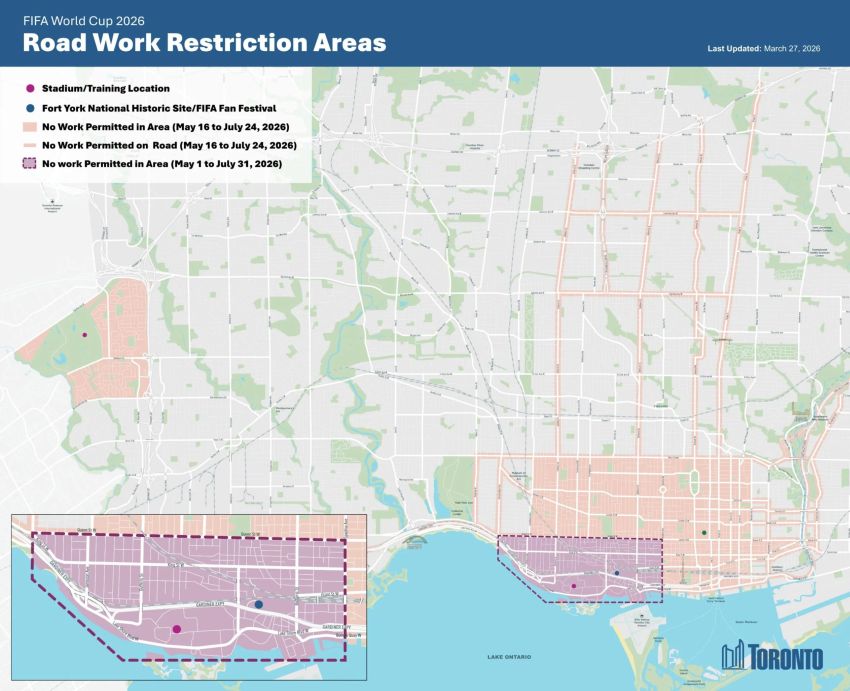
Source: City of Toronto, “Road Restriction Areas for FIFA (May 1 to July 31),” accessed April 2026
https://www.toronto.ca/news/city-of-toronto-releases-fifa-world-cup-2026-mobility-plan/
The content of this article is intended to provide a general guide to the subject matter. Specialist advice should be sought about your specific circumstances.
[View Source]