

- within Litigation and Mediation & Arbitration topic(s)
- in Canada
- within Transport, Media, Telecoms, IT, Entertainment and Family and Matrimonial topic(s)
- with Inhouse Counsel
- with readers working within the Law Firm industries
Bahrain has launched the Bahrain International Commercial Court (BICC), introducing a unique transnational mechanism that allows parties to appeal to the Singapore International Commercial Court (SICC)
10 November 2025
On 5 November, Bahrain launched the Bahrain International Commercial Court (BICC), introducing a unique transnational mechanism that allows parties to appeal to the Singapore International Commercial Court (SICC). Appeals from the BICC can be heard by the International Committee of the SICC, which will comprise local and international judges of the SICC and ad hoc judges from the BICC.
The BICC will be headed by President Jan Paulsson, Deputy President Christopher Greenwood KC, and other distinguished commercial judges who hail from common and civil law jurisdictions. The BICC panel will also include four eminent Bahraini judges. Proceedings may be conducted in English with foreign counsel representation and the application of foreign law (Articles 14 and 18 of Royal Decree No 9 of 2024).
The BICC will have jurisdiction only if the parties agree to submit international commercial disputes or arbitration-related matters to the BICC:
- A dispute is international if any of the following is outside of Bahrain: a party's headquarters, a significant part of contract performance, or the subject matter of the dispute.
- A dispute is commercial whether contractual or not, and includes matters such as supply of goods or services, distribution agreements, and commercial agency (Article 10 of Royal Decree No 9 of 2024).
All BICC appeals will go to the International Committee of the SICC, unless the parties agree for the appeal to be heard by the BICC's Appellate Body. Judgments of the International Committee will be treated as Bahraini judgments for the purposes of enforcement (section 13 of the SICC (International Committee) Act 2024).
The BICC is distinct from the existing Bahrain Chamber for Dispute Resolution (BCDR), which has mandatory jurisdiction over disputes in which the claim exceeds BHD500,000 (US$1.3 million) and:
- the dispute is of an international commercial nature;
- one of the parties is a financial institution licensed by the Central Bank of Bahrain; or
- the dispute is between commercial companies licensed in accordance with the Bahraini Companies Law and relating to their commercial relationship.
The BICC aims to distinguish itself from other regional courts by leveraging on Singapore's reputation for international dispute resolution. The SICC, which celebrated its 10th anniversary this year, boasts a bench of leading international and local judges, including former chief justices from the UK, Australia and Canada. Unlike the Dubai International Financial Centre and the Abu Dhabi Global Market courts, which follow English procedural law, the BICC will seek to blend best practice from civil and common law systems.
The BICC is the latest in a drumbeat of recent initiatives by the Kingdom of Bahrain to enhance its international dispute resolution regime. The Kingdom recently acceded to the Singapore Convention on Mediation, ratified the Hague Convention on Choice of Court Agreements 2005 (Hague Convention), and entered into a host country agreement with the Permanent Court of Arbitration (PCA), making it the first Middle Eastern country with a representative office of the PCA.
The BICC offers a new option for parties looking to enforce judgments in the contracting states of the Hague Convention or for a neutral seat of arbitration in the MENA region.
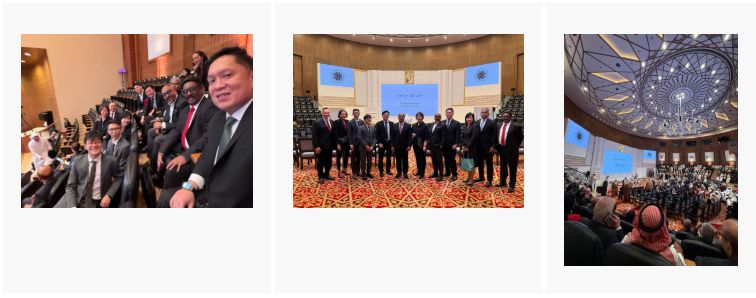
Daniel Chia and Joshua Chia in attendance at the BICC launch and conference in Manama, Bahrain. Daniel Chia is Managing Director of Prolegis LLC and Head of Litigation in Singapore. Joshua Chia is a Singapore-qualified associate in the Middle East disputes team, based in Dubai.
The content of this article is intended to provide a general guide to the subject matter. Specialist advice should be sought about your specific circumstances.
[View Source]