

The form factor boom layers beauty onto health & wellness, and it's going to challenge VMS operators
You wake up, drink your AG1, chew your multivitamin gummy, and swallow your BPC-157 and TB-4 oral peptide supplements.
If you haven't heard of the latter combination, it's known as the "Wolverine stack"—so-called for its rapid healing properties ("wounds close faster, tendons knit together" extolls one retailer)—and it is not approved by the FDA or for human use. Regardless, it is a top seller on e-commerce supplement sites and through social media, sought out by self-informed consumers in the body-building world or those in pain.
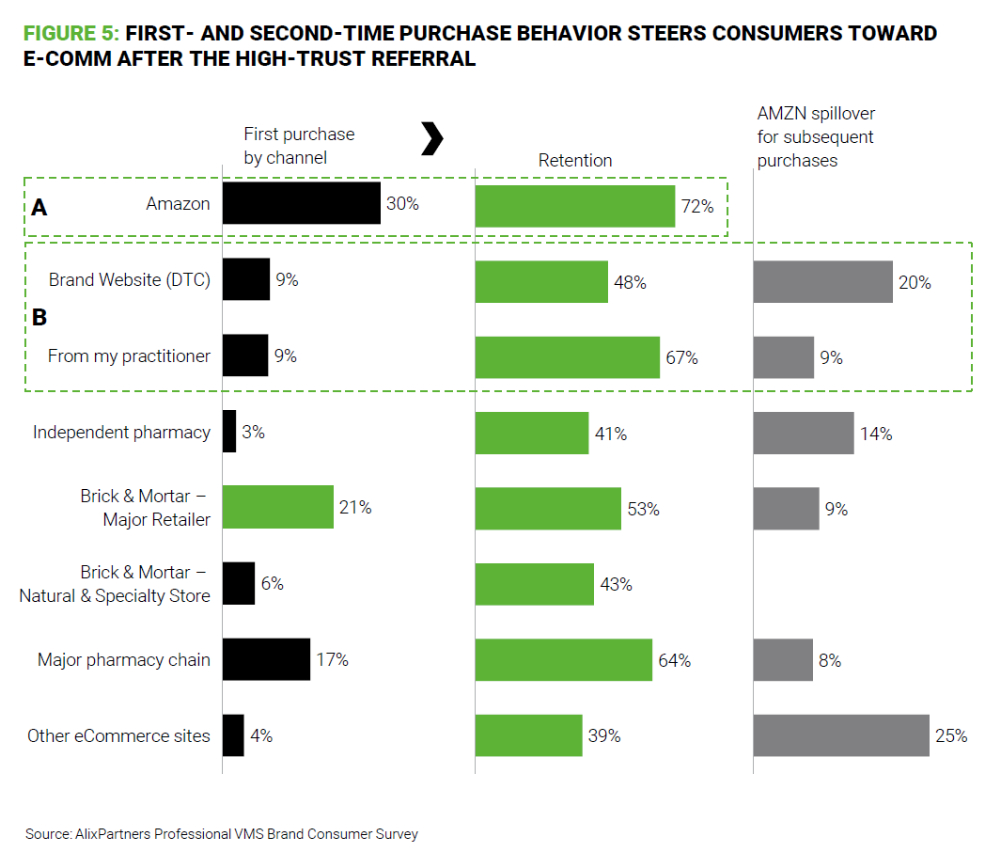
We see the spike in adoption of the Wolverine stack as a trend for the beauty, health, and wellness industry, which is being disrupted by medical-adjacent treatment plans. Consumers are embedding supplementation into their lives as part of a more holistic, results-based approach to wellbeing, beauty, and achievement. The AlixPartners Professional VMS Survey finds shifting loyalties among a curious population looking to optimize. Consumers are increasingly looking to practitioners for their initial recommendations, education, and even purchases before switching to Amazon for continuing buys (brand websites see only 48% retention on the second buy). Vitamins, minerals, and supplements (VMS) are on the rise both in areas where there is sufficient research, and in new and emerging areas where product claims overshadow quality, safety, and efficacy.
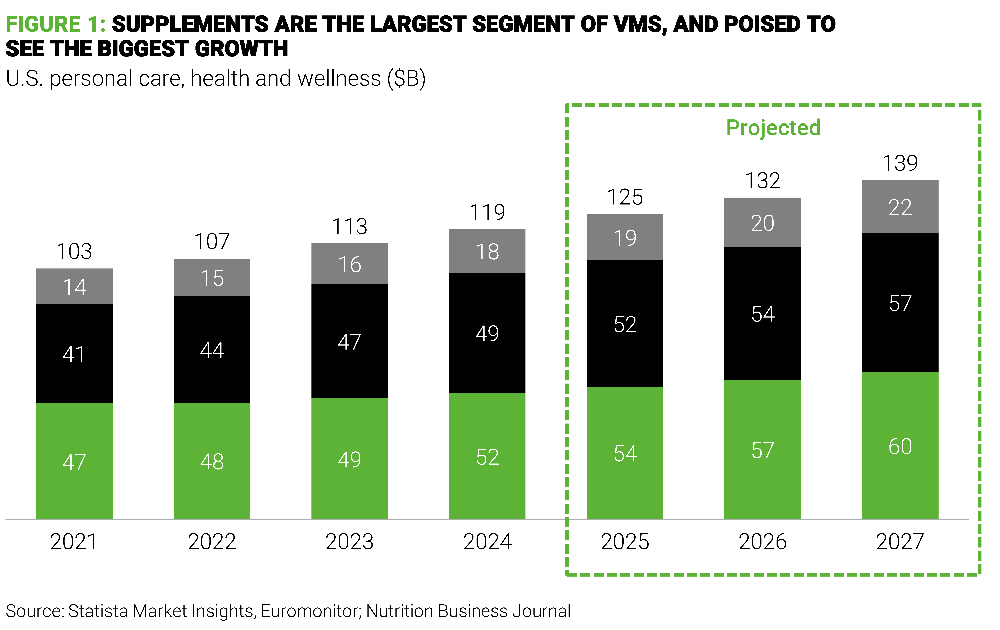
The U.S. VMS market topped $125 billion in 2025, per Euromonitor. Active nutrition is projected to grow 11% through 2027.From changing diets to the rise of longevity programs/products, and a deterioration in access to healthcare, a host of conditions have combined to attack the old paradigm.
Legacy beauty and upstart producers alike will have to adapt to the new use-case. Manufacturers and retailers will want to capitalize on the VMS gold rush but need to adhere to the quality and safety standards that helped overcome the previous industry reputation of someone mixing ingredients in their garage. Regulators may have an appetite to loosen restrictions on peptides, which would open the door to greater adoption and growth.
More, more, and more: Why the VMS industry is changing
From the availability of consumer-level healthtech to a more informed consumer and a blurring of the beauty/health/wellness categories, there are a few major trends driving change in this space.
The rise of continuous monitoring and growth of self-directed healthcare: From Apple Watches, Whoop, and the Oura ring to consumer-level glucose monitors from companies like Abbott and Dexcom, healthtech has grown with the consumer desire to be informed about their health at all times.
The growing reliance on data to make health decisions, or self-diagnose conditions, has occurred as healthcare services have become more expensive and harder to access—average wait times to see a general practitioner in the U.S. are up ~20% in some cases in urban metro areas to 30 or more days, per AMN Healthcare—and have been passed over for alternative voices. Accordingly, we've seen a rise in self-treatment or doctor-directed treatment with VMS. This isn't limited to men or women. Both appear to have an appetite to spend in the VMS category, although they may be targeted differently.
Beauty and nutrition have become inextricably linked: We keep hearing "beauty from the inside out," in reference to dietary impact on physical appearance and health. VMS has capitalized on this, with companies like Nutrafol offering capsules to treat hair loss treatment for men and women, Thorne offering diagnostic testing complemented with matching supplements for internal and external needs, and people drinking lemon water and olive oil to "tighten up" and to maintain their youthful glow.
"Beauty from the outside-in" is also fully in play as cosmetic companies incorporate traditionally ingestible supplements. AlixPartners research found that 85% of consumers buying holistic beauty products want detailed ingredient information. How many skincare routines include peptides, collagen, vitamin C, or a nutrient additive? Go to your local Sephora or browse the shampoo aisle at the grocery store. The secret additive that drives your desired outcome is in everything.
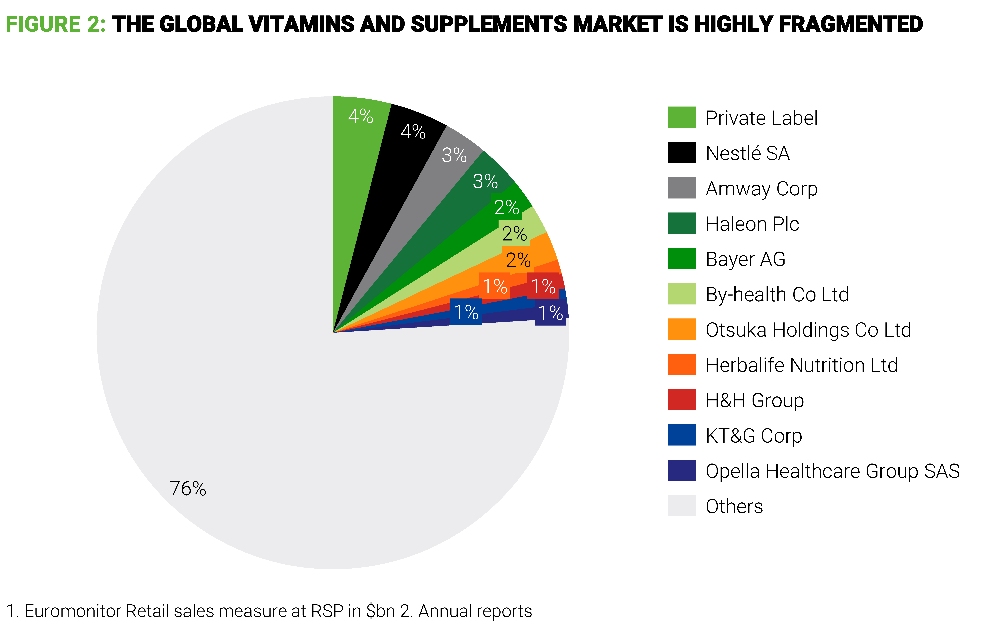
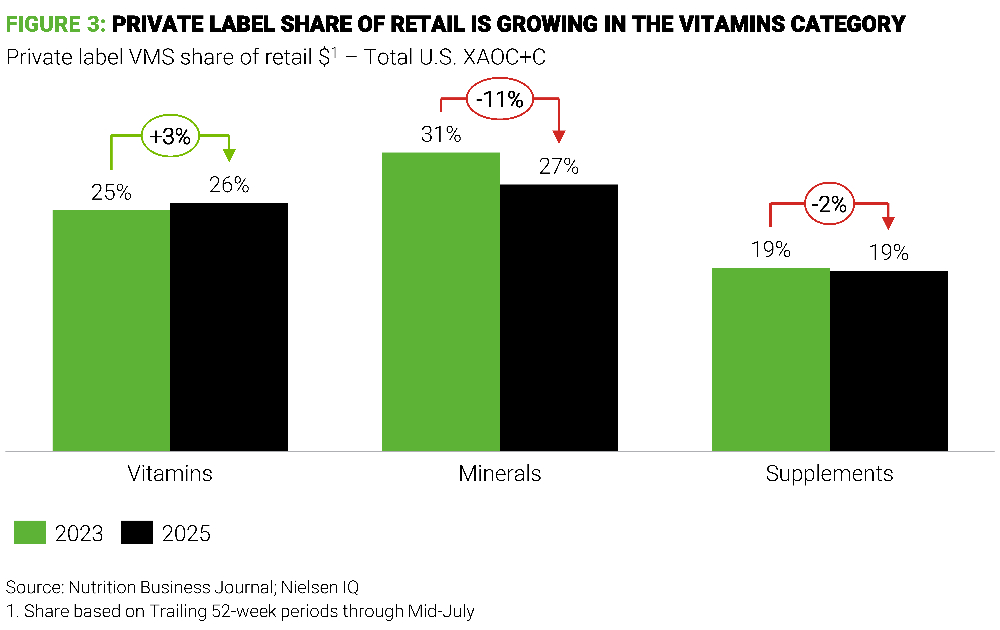
Private label is showing strength as consumers seek out specific ingredients: As with beauty, marketing and sales are the growth drivers in VMS. Where R&D lies and how much spend should be allocated is more company dependent, but consumers are always looking for a next-level product, and private label products have more share than the largest branded products. No company has more than a 5% share. Once booming brands that are in decline or stagnating continue to show up in the beauty space and private label is playing a greater role in retailers' assortment. As small players in beauty and wellness look for manufacturing partners, the opportunity for private label remains huge.
Despite the appearance of endless products and brands, as the VMS market grows, private label is responsible for a large portion of the footprint, though it is very fragmented.
The all-in-one experience: Med spas, gyms, wellness centers and retreats have exploded in growth. Walking around cities, it seems like there is a consumer treatment center on every corner. Although many specialize, there are some that look to become a one-stop shop, from doing blood tests and writing prescriptions to tailoring your diet and providing physical manipulation.
The retail footprint is massive. Direct-to-consumer and Amazon are the preferred method of purchase for recurring vitamin and supplement purchases. However, the retail footprint is massive. Going to a location—whether a doctor or a different provider for initial learnings—has a lot of power. Generationally, this is huge with Gen Z, more likely to bond and socialize with wellness activities in a sauna for R&R than spend a night out drinking. In retail, it looks to be only a matter of time before we see VMS products in beauty retailers and beauty products in VMS retailers. Ulta has already started with products like Mary Ruth.
Discovery comes from providers and e-commerce
So, how can VMS manufacturers and retailers reach this burgeoning market?
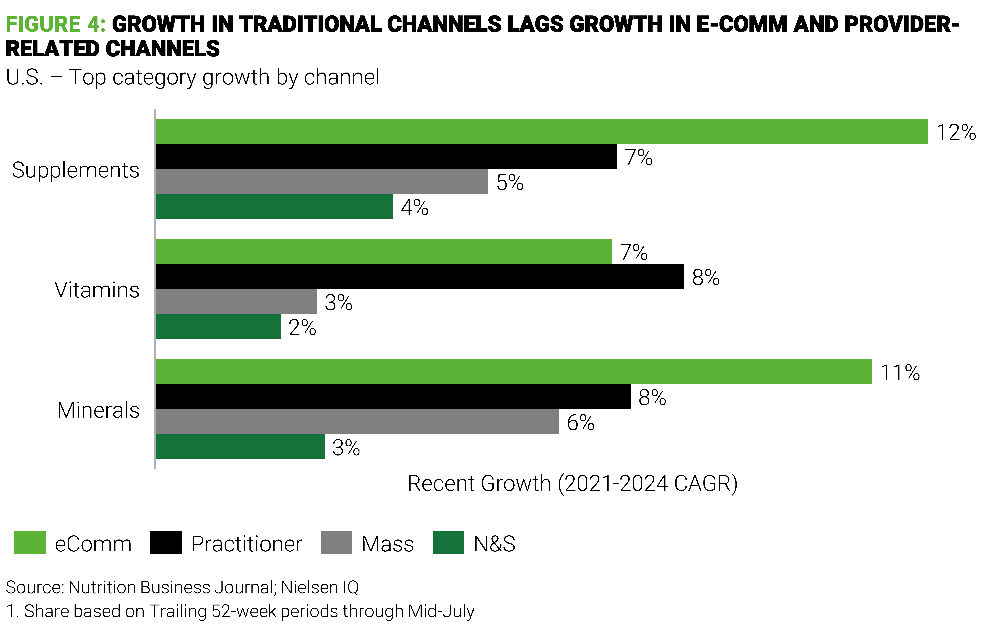
All channels are showing growth, but practitioner-related referrals and e-commerce lead the way. As we've discussed, growth in this space is driven by a desire for information about personal health that can be put in action to fuel self-improvement—the AlixPartners Consumer Sentiment Index found that med spas/salons and doctors' officers now rank #4 and #5 for specialty beauty destinations. Thus, providers' recommendations or one of the many strains of influence (yes, even Reddit) are what convert consumers into users of a product.
Even among consumers who receive a recommendation for a specific VMS regimen from a healthcare provider, 92% still conduct additional research, per AlixPartners' professional VMS survey, and women are twice as likely as men to continue to investigate benefits and uses.
Once consumers have tried a product, 9% of those referred by a provider switch to Amazon, and around 20% of those who originally purchased via a DTC channel look to buy it from the e-commerce giant, according to VMS survey data. There could be many drivers of this behavior, whether it be cost, convenience, or an indication that few brands offer the full suite of VMS products that comprise consumers' tailored regimens.
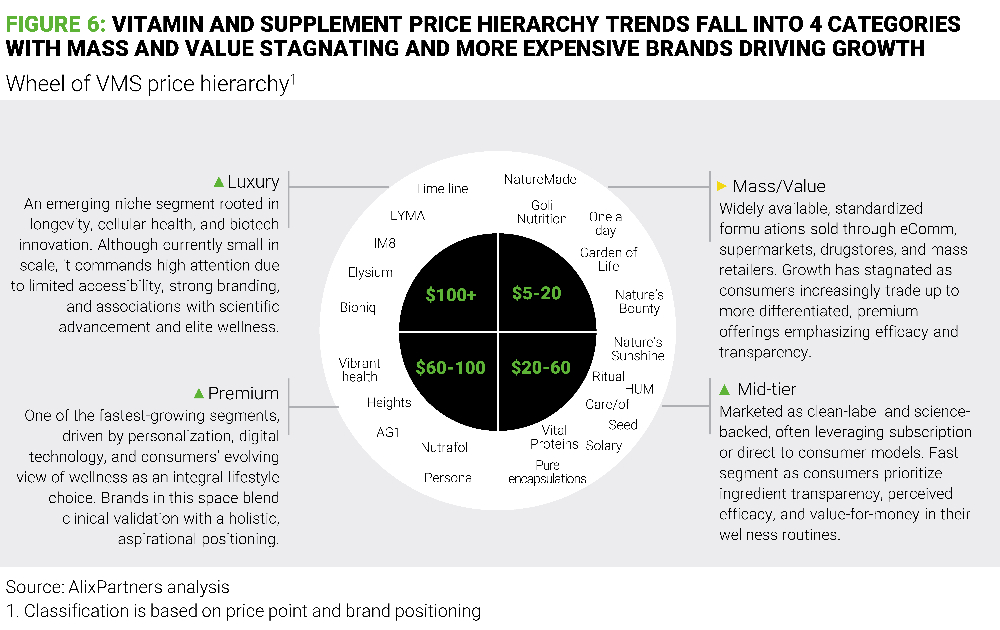
Higher-priced brands are leading the way for branded products
To win, companies need to have the right marketing, the right channels, the right products, and a differentiator. Across the value chain, luxury is outperforming mass and value, due in part, we believe, to the associations with biotech innovation, associations with scientific advancement, and elite fan bases.
The opportunity is huge, but the product has to work
Even among consumers who are purchasing VMS products after a recommendation from a healthcare provider, product quality and brand reputation are the most frequently important purchase factors. Pricing (per dose, not just per bottle) is also an important factor for nearly a third of consumers.
As the VMS boom plays out, consumers will have a growing opportunity to test and switch products. The winners will be the companies selling science-backed products that provide results and win trust.
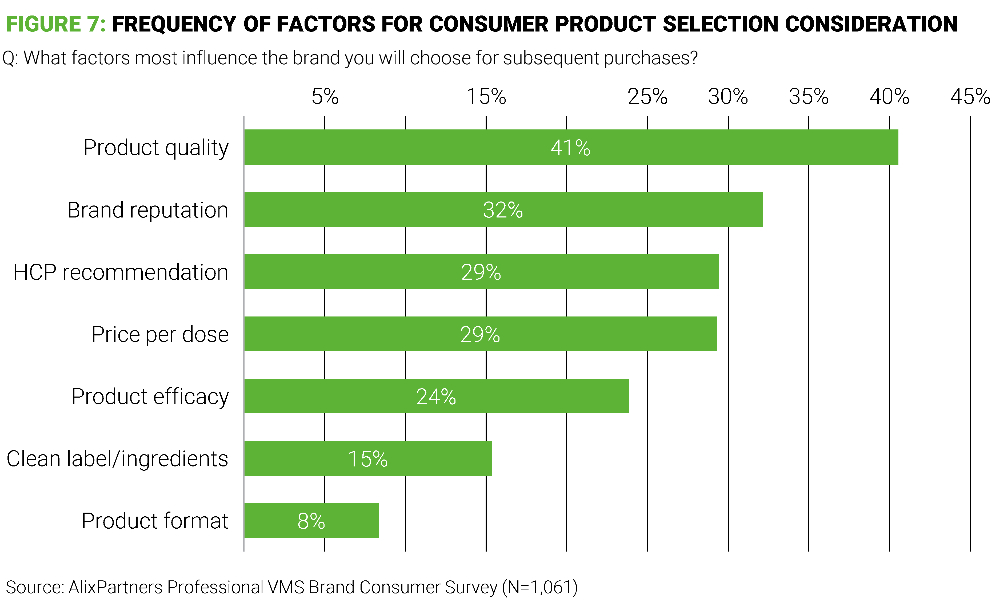
The consumer looking for the right "stack" won't take their physician or trainer at their word—they will weigh the effect of the product against pricing and brand identity.
Companies looking to outperform the competition need to:
- Be deliberate and intentional in building brand, consumer, customer and product strategies, knowing the consumer piece is driven increasingly by practitioners and influencers.
- Drive customer and consumer education, leveraging science-backed research and maximizing value of certifications and quality.
- Optimize portfolio and make sure investments are aligned with trends and growing brands, products, and regions.
- Build efficient and quality focused operations that enable speed to market and agility, bring operations into the 21st Century, and balance cost with operational effectiveness.
- Optimize footprint and supply chain, especially with tariff risks and impacts and the increasing power of private label/co-manufacturers.
Like the products their consumers are taking, companies need a serious stack of operations improvement to capitalize on the rich potential in front of them.
AlixPartners Professional VMS Survey conducted July 2025.
Contributors: Raj Konanahalli, Michael Bronstein, Abby Sattler, Wyatt Puscas
The content of this article is intended to provide a general guide to the subject matter. Specialist advice should be sought about your specific circumstances.

