

Download a PDF copy of this Blog here.
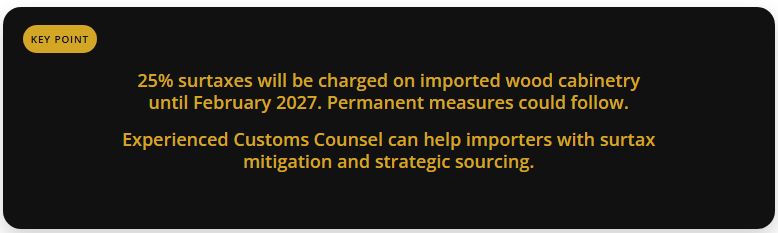
On July 31, 2026, Canada enacted a provisional 25% safeguard surtax (“Safeguard Surtax”) on specific wood cabinet and vanity products.
This measure will be in effect for up to 200 days while the Canadian International Trade Tribunal (“CITT”) completes its safeguard inquiry (“Inquiry”) into the broader wood products industry (including hardwood flooring, and wood storage furniture).
In this Customs & Trade Report, we review the basics of the Safeguard Surtax, as well as what permanent measures may follow, depending on the outcome of the CITT’s Inquiry.
The CITT Inquiry – Scope & Timeline
As we previously wrote, the CITT initiated its Inquiry in April to investigate allegations that a surge of low-priced imported wooden furniture, fixtures, and flooring is causing or threatening serious injury to Canadian manufacturers.
The Inquiry includes hardwood flooring and storage furniture, but, for now, the Safeguard Surtax exclusively targets wood cabinets, vanities, and permanent subassemblies.
What follows the temporary Safeguard Surtax will depend on the CITT’s final determinations following the conclusion of its Inquiry, which will proceed over the next few months. Critically, public hearings before the CITT are scheduled for October 1-2, 5-6, and 8-9, 2026, to examine evidence regarding market conditions and the necessity of long-term remedies, which could include long-term surtaxes or restrictive import quotas.
On the other hand, if the CITT finds that imports are not injuring the domestic industry, the Safeguard Surtaxes will immediately cease to apply, and all collected Surtaxes will be refunded.
The CITT is mandated to conclude its Inquiry and issue its final report and recommendations to the Minister of Finance by January 15, 2027. Because the Safeguard Surtax is scheduled to expire on February 16, 2027, the federal government will have approximately one month to review the CITT’s January report and decide whether to impose permanent trade remedies.
Navigating the Exceptions
While the 25% Safeguard Surtax casts a wide net over imported cabinetry, the government has provided several highly specific statutory exceptions. These include, generally, goods originating from the US or Mexico, as well as certain goods from Israel, Chile, and recognized developing nations .
Additionally, there are product-level exclusions. Freestanding furniture not designed for permanent installation, as well as certain aftermarket accessories imported separately from a primary cabinet or vanity, may be exempt if they meet strict regulatory definitions.
Takeaways
The sudden imposition of a 25% Safeguard Surtax represents a massive financial liability for many Canadian importers. With this aggressive provisional measure remaining in place through the winter, businesses cannot afford to simply absorb these punitive costs while waiting for the CITT to finalize its report.
Importers should immediately review their supply chains, classification data, and shipping records. Given the complexities of free trade origin rules, technical product-specific exclusions, and the specific evidence required to safely claim any exemption, importers are advised to consult Experienced Trade Counsel to properly determine how these rules apply to their shipments.
For help with Canadian surtax issues, please click here.
The content of this article is intended to provide a general guide to the subject matter. Specialist advice should be sought about your specific circumstances.
[View Source]
