

- within Employment and HR and Technology topic(s)
- with Inhouse Counsel
- with readers working within the Law Firm industries
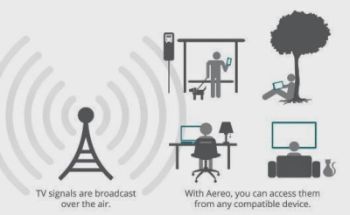
The U.S. Supreme Court ruled that Aereo infringes over-the-air broadcasters' copyrights through Aereo's unauthorized rebroadcast of the broadcasters' content, rejecting Aereo's argument that its ingenious technology is in full compliance with the U.S. Copyright laws (ABC et al. v. Aereo). Aereo's technology includes individual, dime-size antennae, one for each subscriber to its service, from which Aereo streams over-the-air broadcast television programs to its subscribers. The U.S. Supreme Court determined that Aereo's streaming content (i.e. transmission) is a "public performance" in violation of the broadcasters' exclusive rights.

Aereo had contented that (1) it does not control what programs
are transmitted so "Aereo", itself does not
"perform" anything. Further,
Aereo had contented that its transmission was not a
"public performance" since a
single individual receives a single transmission of content, and
thus, each transmission is "private" and not public.
Aereo had analogized its service to a modern version of an old
school rabbit ears antenna connect to a television, but instead of
rabbit ears, it uses a single dime size antenna and instead of
copper wires, it uses the Internet.
The broadcasters contend that Aereo's service is no different
than cable service providers and therefore, should be governed by
the same rules that applies to them, namely, Aereo must pay
licensing fees to re-broadcast the content or be subject to
copyright infringement.

The Supreme Court agreed with the broadcasters and disagreed
with Aereo's two contentions. Looking at the intent, purpose
and history of the U.S. Copyright Act, and § 111, in
particular, (provisions for compulsory licensing of community
antenna television (CATV)), the Court found that "an entity
that engages in actives like Aereo's
performs." The Court also found that
the performance was
public, by not recognizing a difference
between (a) multiple, single transmissions to respective
individuals and (b) a single transmission to multiple
individuals.
For a more in-depth analysis of the Aereo decision, please see the article
entitled, "
Slings and Aereos of Outrageous Fortune: Supreme Court Rules that
Aereo Infringes by
Alexandra MacKay and
Mari-Elise Taube, of
Stites & Harbison, PLLC, as well as future posts here, at
OP-IP.
The content of this article is intended to provide a general guide to the subject matter. Specialist advice should be sought about your specific circumstances.
[View Source]