
The market for toys and licensed products is one of the most dynamic segments of the creative economy. On 1 January every year, more works from pop culture and other areas enter the public domain, creating huge commercial opportunities for entrepreneurs. Market success will depend not only on trends and seasonality, but also on the ability to quickly respond to changes in the legal environment. A good example of this was the widespread coverage of the 'freeing' of Mickey Mouse in 2024. This demonstrated that the line between legally using a cult figure and violating someone else's rights can be blurred, and crossing it can have serious financial and reputational consequences.
'Mickey Mouse is in the public domain.' This was reported in the media when it was announced that the copyright for this character had expired, meaning that anyone could use it however they wanted. But when a work enters the public domain, this does not automatically mean that there are no restrictions on its commercial use.
What does the public domain mean for business? Not every Mickey Mouse is 'free'!
1 January of each year is Public Domain Day, when a list of works for which the copyright has expired is published. This is precisely what happened with Mickey Mouse. The problem is that many people confuse this fictional character with its depiction in Disney cartoons. It is worth remembering that the appearance of the famous mouse has evolved. Disney's Mickey Mouse first appeared on the big screen on 18 November 1928 in the animated film "Steamboat Willie". It was this version of the character that lost its legal protection, and not the one associated with modern Disney cartoons.
Current event as a warning signal for business
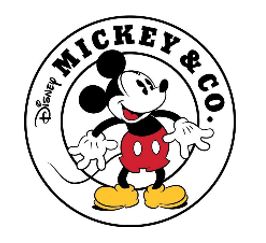
Shortly after the announcement that Mickey Mouse had entered the public domain, the European Union Intellectual Property Office received a trademark application for "MICKEY IS FREE!", intended for use on clothing. In response, DISNEY ENTERPRISES, INC. filed an objection based on the risk of misleading audiences due to its prior rights to the 'DISNEY MICKEY & Co.' mark. EUTM. 018790923.
The Applicant argued that the contested 'MICKEY IS FREE!' mark is neither a derivative of the Disney trademark nor it is designed to mislead consumers. 'MICKEY IS FREE!' was intended to be a clearly distinctive, expressive sign referring to the legal reality of the Mickey Mouse character from Steamboat Willie entering the public domain in the United States in January 2024.
The Office rejected this argument, stating that such a conclusion required 'a great deal of imagination' and did not reflect how trademarks were perceived by consumers in the European Union. Instead, a significant proportion of consumers, particularly English speakers, could perceive this mark as a continuation or an element of the Disney mark.
Although the trademarks in question had many different elements, both verbal and graphic, the Office concluded that the use of the word 'MICKEY' would mislead consumers into thinking that products bearing the mark were produced by DISNEY ENTERPRISES, INC.
Traps of intellectual property outside copyright law
As the case of the 'MICKEY IS FREE!' mark shows, the expiry of proprietary copyrights, and thus the entry of a work into the public domain, does not automatically mean that there is no legal protection. Works in the public domain may also be protected, e.g. by trademarks or other industrial property rights if they meet necessary criteria. For example, a trademark must be distinctive, which means that it must distinguish goods or services of one entrepreneur from those of another. Using such a 'freed' work may sometimes result in allegations of unfair competition or harm to personal rights. These forms of protection have different scopes and premises, but they are not mutually exclusive.
Is a trademark a barrier or a business tool?
Registering a designation that constitutes a work under copyright law does not extend expired copyright protection. In practice, even after a work enters the public domain, an entrepreneur may still encounter real legal barriers, such as the registration of graphically refreshed trademarks. Trademark protection is not concerned with the creative value of the designation itself, but with its market function: the ability to identify the origin of goods or services.
Conversely, the same mechanism may present significant business opportunities for entrepreneurs. When a work enters the public domain, it becomes possible to develop your own communication strategy for engaging with customers around elements that are no longer protected by copyright but which are often widely recognised and effective as a promotional tool. Firstly, these works should be used in a way that distinguishes an entrepreneur's offer on the market without violating the prior rights of third parties. In such a case, properly planned trademark registration can become a tool for legally and permanently distinguishing the brand on the market.
Safe directions for commercial use of works from the public domain
The relatively safe use of public domain characters in business activities is possible, provided an informed and adapted legal strategy accompanies them. In practice, this may involve creating original illustrations or graphics inspired by the original characters, which could be used in marketing campaigns, for example. However, it is crucial to avoid taking over the creative and distinctive elements of the original work. While it is permissible to draw on the ideas, motifs or aesthetics of an era, it is not permissible to reproduce them faithfully.
Similarly, when it comes to clothing or gadget designs, creating a modified version of a character with new creative features can significantly reduce the risk of infringing third-party rights.
Materials of an educational, scientific, critical or satirical nature, for which the use of the work is considered fair, including the right to quote, remain a safer area for exploitation, provided the statutory conditions are met. These include indicating the source and author, if possible, and demonstrating that there is no direct commercial purpose involved.
Finally, the lower legal risk is associated with using the character as one element of a larger visual or narrative composition, rather than as the main identifier of a product or brand. This is provided that it is verified each time that the character is in the public domain in a given territory, and is not covered by other forms of protection, such as trademarks or industrial designs.
Where freedom ends: risky forms of use
Conversely, there are several scenarios that entrepreneurs should definitely avoid. For example, it is particularly risky to suggest commercial, licensing or organisational links with the owner of a well-known brand, even indirectly or allusively, as this could result in allegations of misleading consumers.
Similarly, using character names, titles of works or other distinctive features in product names, branding or marketing communications without the consent of the rights holder is dangerous, as these elements are often protected under industrial property law or regulations on combating unfair competition.
Particular caution should be exercised when copying the style of contemporary characters from films, TV shows or comics, as these are generally protected under copyright law and trademark, industrial design or other legislation.
Finally, applying for registration of marks that contain word or graphic elements strongly associated with another brand may result not only in the application being rejected, but also expose the entrepreneur to legal liability if they use such a mark in business. In practice, the fact that a work has entered the public domain does not exempt you from the obligation to conduct a comprehensive legal risk analysis, and special care is still required when designing and commercialising the product.
When and why a work enters the public domain
In accordance with the Act on Copyright and Related Rights, under Polish law, copyrights expire 70 years after the author's death (counting from the end of the year, with some exceptions specified in Article 36 of the Act). This means that, after this time, you can use the work freely, i.e. without needing to obtain consent from the author or their heirs. They will no longer be entitled to derive financial profit from these works.
However, bear in mind that moral rights are non-transferable and never expire. If a work is used improperly, for example if its use harms the author's reputation, their relatives may claim infringement of moral rights up to 70 years after the author's death.
These regulations apply when a work that was created elsewhere (e.g. in the United States, such as Mickey Mouse) is used in Poland. As both Poland and the USA are parties to the Berne Convention, if the author of the work is American and the work is used in Poland, Polish law should apply. A similar situation will arise in other European Union countries, as the aim is to harmonise copyright regulations.
It is important to verify which specific form of the work has entered the public domain and what regulations are in force in the territory in which we plan to use it, in order to avoid the risk of copyright infringement.
The public domain is not a legal 'no man's land', but rather an area that requires an informed strategy and careful risk management. For companies that can combine creativity with legal analysis, this can provide a real competitive advantage.
How to use public domain characters safely in business
- Only use the version that is actually in the public domain. Make sure that the project starts with the specific public domain image of the character (e.g. Mickey Mouse from Steamboat Willie), rather than its later, copyrighted versions.
- Give the domain version its own character through
creative processing.
Although using the original version of the character is allowed, faithfully reproducing it unchanged in commercial activity may increase the risk of association with the existing brand. Therefore, a safer solution would be to process the domain version creatively, for example by changing the graphic style, the context of use, the narrative, or the character function, so that it plays an independent, original role. - Avoid protected names, logos and
designations
Just because a character is in the public domain does not mean you can use their name or any marks associated with a specific entrepreneur. Names like 'Mickey,' 'Disney,' and distinctive logos can still be protected as trademarks or industrial designs. The original rights holder may pursue claims for infringement of industrial property rights and for unfair competition, for example, based on misleading designation of goods or services. - Analyse the territory of use
Specify the territory in which you plan to use a given work or character. The rules of the public domain and copyright may vary from country to country. Industrial property rights are also territorial, and protection is only valid in countries where they have been registered. There may also be additional legal regimes that permit infringement claims. Additionally, online activity often involves operating in multiple territories simultaneously.
The content of this article is intended to provide a general guide to the subject matter. Specialist advice should be sought about your specific circumstances.

