
A U.S. trademark registration may be cancelled for abandonment if, among other things, (1) the mark has not been used in U.S. commerce, and (2) there is not an intent to resume (or to commence) its use. “Use” means “the bona fide use of such mark made in the ordinary course of trade, and not made merely to reserve a right in a mark.” Nonuse of a mark for three consecutive years creates a presumption of its abandonment. We discussed these rules in our article entitled “Abandonment Rules Clarified for Madrid Protocol Extensions to the U.S.”
Will the sale in the U.S. of four saxophones over a three-year period be sufficient to rebut a nonuse abandonment claim?
Background
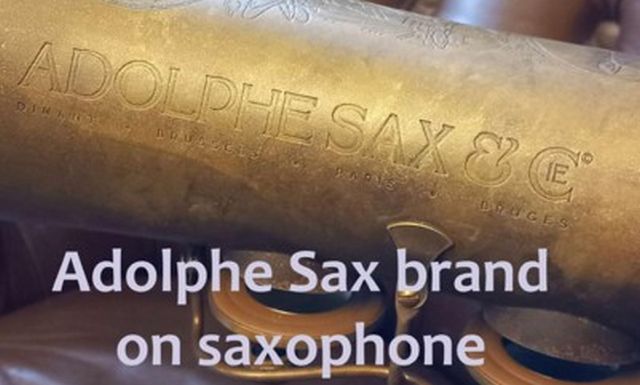
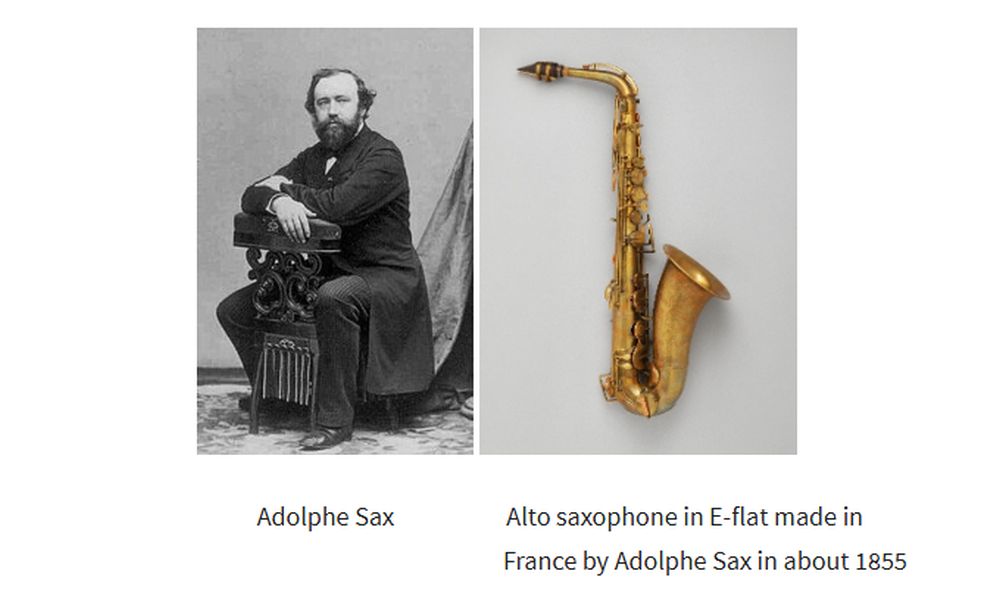
Antoine-Joseph "Adolphe" Sax, a Belgian inventor and musician, invented the saxophone in the early 1840s. He moved his workshops to Paris in 1842, and he died in 1894.
In 2012, the brand “Adolphe Sax & Cie” was revived by Karel Goetghebeur, a Belgian individual who manufactures saxophones. In 2014, Goetghebeur obtained an international registration of the mark ADOLPHE SAX & CIE for “musical instruments.” In 2015, he extended that registration to the U.S. Since he based the U.S. registration on an International Registration, he was not required at that time to show use in U.S. commerce.
Meanwhile, Henri Selmer Paris, S.A.S., which had acquired Adolphe Sax’s Parisian workshops in 1929, obtained an international registration in 2006 of ADOLPHE SAX for “musical instruments.” In 2019, Selmer applied to extend its international registration of ADOLPHE SAX to the U.S., but this application was blocked by Goetghebeur’s then-existing U.S. registration of ADOLPHE SAX & CIE.
In 2020, Selmer petitioned to cancel Goetghebeur’s U.S. trademark registration on the ground that he was presumed to have abandoned the mark by not making sufficient use of it in U.S. commerce for at least the last three consecutive years.
The Decision
Goetghebeur had filed a statement of use, with a specimen showing use, during the fifth year of his U.S. registration. However, the parties stipulated that Goetghebeur had sold only four saxophones in the U.S. over the relevant three-year period.
Selmer argued to the Trademark Trial and Appeal Board (TTAB) that Goetghebeur should be presumed to have abandoned his mark in the U.S. because these sales did not constitute bona fide use of the mark made in the ordinary course of trade but rather were “de minimis, sporadic, casual, nominal, or isolated.”
In making this argument, Selmer leaned heavily on Adamson Sys. Eng’g Inc. v. Peavy Elecs. Corp., Opposition No. 92076586 (T.T.A.B. 2023), in which the TTAB had found the mark CS for amplifiers abandoned and cancelled the registration. We discussed that case in “How to Cancel a U.S. Trademark Registration for Abandonment.”
The TTAB distinguished Adamson as follows:
First, sales invoices were in evidence in the current case unlike the lack of invoices in Adamson.
Second, although the sales numbers were low, Goetghebeur was an individual, not a sizeable company, and there was no evidence that he had stopped selling or was purposely drawing down his sales. In Adamson, the advertising had stopped, and a representative of the registrant had recommended another brand stating that the goods were not in stock and were no longer available. Furthermore, Goetghebeur’s deposition testimony was phrased in the present tense consistent with an on-gong instrument manufacturing business, not one being drawn-down.
In short, despite Goetghebeur’s modest trade, his sales had never stopped and the TTAB found that the four sales were bona fide and made in the ordinary course of trade and not merely to reserve a right in the mark.
Based on this evidence, the TTAB denied the cancellation.
Henri Selmer Paris, S.A.S. v. Karel Goetghebeur, Cancellation No. 92074077 (September 3, 2026).
Author’s Note:
The U.S. Court of Appeals for the Federal Circuit, the reviewing court for TTAB decisions, has held that the de minimis character of sales is of no consequence if the sales are in, or affect, commerce that is within the power of Congress to regulate under the Commerce Clause.
Regarding trademarks, an example isChristian Faith Fellowship Church v. Adidas AG, 120 USPQ2d 1640 (Fed. Cir. 2016) (sale of two hats marked ADD A ZERO to an out-of-state resident constituted sufficient use in commerce to support a trademark application). Regarding service marks, an example is Larry Harmon Pictures Corp. v. Williams Rest. Corp., 929 F.2d 662 (Fed Cir. 1991) (a single-location restaurant named BOZOS serving a minimal number of interstate travelers constituted sufficient use in commerce to support a service mark application).
The decisive issue to maintain an application or registration of a trademark or service mark against an abandonment claim is not the amount of use of the mark. Rather it is whether the use is bona fide and made in the ordinary course of trade and not merely to reserve a right in a mark.
The content of this article is intended to provide a general guide to the subject matter. Specialist advice should be sought about your specific circumstances.
[View Source]