

- with readers working within the Law Firm industries
We previously wrote that boundaries exist in trademark proceedings where the marks are similar but the services differ (“Services Have Boundaries in Trademark Proceedings.”) Correspondingly, whether or not the goods or services are similar, boundaries exist where the marks differ, even when the complainant’s mark is famous.
In other words, to succeed in challenging the registration of a mark on the ground that it is likely to cause confusion with your mark, the challenged mark must create the same commercial impression as your mark, even if your mark is famous.
Here are summaries of two examples of unsuccessful oppositions by the owners of famous marks. These lengthy detailed opinions were issued three days apart by different panels of the Trademark Trial and Appeal Board (TTAB).

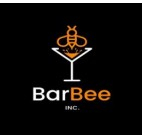
Mattel, Inc. v. BarBee Inc., Opposition No. 91281982 (T.T.A.B. February 6, 2026).


Airbnb, Inc. v. Soul BnB LLC, Opposition No. 91288785 (T.T.A.B. February 3, 2026).
The BARBIE Case
Mattel, Inc. (Mattel) owns numerous registrations of the BARBIE mark. The TTAB found this mark to be conceptually strong and “very commercially strong (indeed ‘famous’ for purposes of likelihood of confusion) for “dolls,” “clothing for dolls,” and “doll houses.”
Mattel opposed an intent to use application by BarBee Inc. (BarBee) to register its composite word and design mark shown above for “online social networking services accessible by means of downloadable mobile applications.”
Mattel claimed a likelihood of confusion between BARBIE (in standard characters) and BARBEE (in logo form). The TTAB limited Mattel’s claim to its active, pleaded registrations, deeming its pleaded common law rights as having been waived for technical reasons.
The TTAB held that the evidence did not establish that the respective goods and services of the parties were either legally identical or even related, nor that the channels of trade overlapped. It found that the use of the BARBIE mark on, for example, Facebook or Instagram, in connection with its dolls and accessories was not equivalent to offering “online social networking services” to others. Moreover, there was no evidence of third-party uses or registrations of the respective identified goods and services under the same mark.
More importantly, the TTAB held that the marks had nothing in common other than a similar sound, and that they were dissimilar in appearance, meaning, and commercial impression. It noted that BARBIE is a nickname, whereas BarBee’s mark (which included a design a bee with a martini glass) conveyed a worker bee at a bar. Therefore, the TTAB concluded that there was no likelihood of confusion despite the strength of the BARBIE mark, and even though it found that the BARBEE portion of the challenged mark was dominant.
In view of the differences in the respective goods and services, Mattel also claimed that the BARBEE mark was diluting its famous BARBIE mark by blurring its distinctiveness. The TTAB rejected this claim because BarBee’s mark was so dissimilar that it did not readily conjure up Mattel’s mark. The TTAB also held that the dissimilarity of the marks defeated Mattel’s claim of dilution by tarnishment.
Accordingly, having determined that the respective marks were dissimilar, the TTAB dismissed this opposition holding that there was no likelihood of confusion or dilution.
The AIRBNB Case
Airbnb, Inc. (Airbnd) owns at least eight registrations of the standard character mark AIRBNB for various services relating to temporary accommodations and travel.
Airbnb opposed an intent to use application by Soul BnB LLC to register the standard character mark SOUL BNB for “health spa services for health and wellness of the mind, body and spirit offered in or from a remote, mobile or temporary on-site location.”
Airbnb claimed a likelihood of confusion between AIRBNB and SOUL BNB. The TTAB held that the respective services were different, but they were related because they may be offered by the same source. The TTAB said that wellness activities can be an integral part of travel since consumers seeking accommodations and travel may also seek to book “wellness activities” and “spa or spa-like” services. Also, the trade channels and classes of consumers were the same.
Regarding the marks, the TTAB held that AIRBNB falls on the higher end of the commercial strength spectrum. However, it found that AIR and SOUL were the dominant portions of the marks, and that the marks differed in sound, appearance, and overall commercial impression. This outweighed the minimal similarity created by the shared, highly suggestive if not descriptive term BNB, which the TTAB said is the phonetic equivalent of “B & B” which evokes an immediate association with the term “bed and breakfast.”
Accordingly, having determined that the respective marks were dissimilar, the TTAB held that there was no likelihood of confusion notwithstanding the relatedness of the respective services, so this opposition also was dismissed.
The content of this article is intended to provide a general guide to the subject matter. Specialist advice should be sought about your specific circumstances.
[View Source]