

- in United States
- within Food, Drugs, Healthcare, Life Sciences, Intellectual Property and Tax topic(s)
- in United States
A Rapidly Fragmenting Regulatory Landscape
State governments have entered an era of aggressive, uncoordinated rulemaking across the food, beverage, personal care, and packaging sectors. Over the past few years—accelerating sharply in the last 12–18 months—state legislatures have enacted a broad range of ingredient bans, warning-label mandates, testing and disclosure rules, and packaging obligations that differ substantially from state to state. Businesses selling nationally can no longer assume consistency across jurisdictions; instead, they must navigate a regulatory landscape that is increasingly "patchwork-y," often contradictory, and operationally burdensome. Tracking these shifting requirements is challenging, but essential.
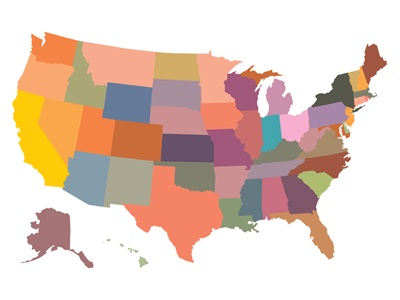
This trend is fueled by advocacy groups, public health campaigns, and movements such as Make America Healthy Again, all of which encourage state intervention on ingredient safety, waste reduction, and consumer protection. At the same time, states are adopting progressive ideals—particularly in packaging and waste—and tailoring them to local political priorities. The result is a surge of state-level innovation that often outpaces federal action and leaves companies with complex, mismatched obligations. Below is but a sampling of these rules, an update on the pushback against the patchwork, and how companies can prepare for 2026.
Diverging Ingredient Bans and Market Pressures
One of the most significant areas of divergence is state-level ingredient bans, which vary widely in scope and scientific basis.
General Retail Food Ingredient Bans
A growing number of states now prohibit the sale of foods containing particular additives:
- Arkansas bans potassium bromate and propylparaben.
- California bans brominated vegetable oil, potassium bromate, propylparaben, and FD&C Red No. 3.
- West Virginia bans a broader list, including BHA, propylparaben, and multiple FD&C dyes.
These bans do not align in chemical definitions, exemptions, or timing, requiring companies to evaluate their product portfolios state by state.
School Food Bans
Other states focus on foods served in school meal settings:
- Arizona, Louisiana, Texas, and Utah have enacted ingredient restrictions for school nutrition programs.
- California has added an expansive category—ultraprocessed foods of concern—which will be banned in school environments.
Definitions and scope vary significantly, meaning compliance efforts must be tailored to each jurisdiction.
State Warning Requirements: Labeling Becomes Even More Fragmented
In addition to bans, some states require product warnings tied to specific ingredients.
Texas, Louisiana, and New York Warning Requirements
Texas mandates a statement for foods containing any of 44 listed ingredients, warning that the product contains a substance not recommended for consumption by regulators in Australia, Canada, the European Union, or the United Kingdom. Just next door, Louisiana identifies its own list of 44 ingredients (not identical to Texas's list) and requires a QR code linking to a notice about the ingredient, including FDA approval information. By contrast, New York has introduced a bill that would direct state agencies to develop regulations governing the content and placement of such warnings.
Because these lists and formats differ, companies must either create state-specific packaging (an untenable option) or layer multiple warnings into the same label—a costly and complex undertaking.
Product Testing + Disclosures Add Operational Burdens
Several states have enacted testing mandates that introduce ongoing compliance obligations.
Heavy Metal Testing for Baby Food
California, Illinois, Maryland, and Virginia require manufacturers of baby food to test for lead, mercury, cadmium, and arsenic. Testing must be conducted monthly on a representative sample of each production aggregate, and results must be posted online. In California, dietary supplements are excluded from these requirements, but prenatal multivitamins are included. Covered manufacturers will also need to disclose on their website the name and level of the tested chemicals in each production aggregate of each final baby food product.
Date-Labeling Standardization Further Complicates Packaging
In 2024, California passed AB 660 establishing a uniform format for "Best By" and "Use By" dates that often appear on packaged food products. The law itself does not mandate use of these statements, but applies if a company voluntarily decides or is otherwise required by law to include one of these statements on their packaged food. To indicate the quality date of a food item, the uniform language and format is as follows: "BEST if Used by" or "BEST if Used or Frozen by" (or "BB" for small packages). To indicate the safety date of a food item, the uniform language and format is as follows: "USE by" or "USE by or Freeze by" (or "UB" for small packages). The law also prohibits use of the phrase "sell by," unless it is coded in a way that is not easily readable by consumers and that does not include the phrase "sell by."
Extended Producer Responsibility (EPR): Packaging Compliance Expands Rapidly
Seven states (Oregon, Colorado, California, Maine, Minnesota, Washington, Maryland) have adopted Extended Producer Responsibility ("EPR") laws related to packaging and are currently at various stages of implementation. More states are likely to adopt EPR laws in the near future. EPR is a policy approach holding the "producer" of "covered materials" (i.e. packaging) accountable for their products throughout their lifecycle, including post-consumer.
EPR laws require "producers" to register with a producer responsibility organization (or "PRO"), which in most states is the Circular Action Alliance, and report product data that will be used to assign participation fees to each producer to fund better waste and recycling processes in the state. The specifics in each state vary, but the EPR laws often come with strict recycling rate targets and prohibitions from selling products that do not meet those targets or for producers who failed to register and report. Oregon was the first state to issue invoices to producers, and a trade organization filed a lawsuit against the Oregon Department of Environmental Quality challenging the constitutionality of the EPR law.
Why This Environment Is So Difficult for Businesses
The cumulative effect of these laws is a regulatory landscape that is difficult to navigate not only because of the number of requirements, but because of how inconsistent and fast-moving they are. States often legislate using undefined or ambiguous terms, leaving companies to interpret unclear obligations in real time. Even where states target similar concerns—such as food additives, contaminants, or packaging waste—they rarely align their ingredient lists, scientific standards, or effective dates. A substance banned in one state may require only a warning in another or may be unregulated entirely elsewhere.
These discrepancies create cascading operational challenges. Companies must decide whether to maintain different formulations or packaging for different states, redesign labels multiple times as laws come into effect on different schedules, and manage supply chains around state-specific restrictions. Compliance becomes not a single exercise but a continuous cycle of monitoring, adjusting, and validating product changes. In this environment, national uniformity becomes increasingly difficult to preserve, and operational agility becomes essential.
Industry Pushback and the Preemption Debate
Industry pushback has become more organized as companies grapple with the cost and complexity of meeting divergent state obligations. Trade associations and individual companies have raised concerns that state-specific bans, warnings, testing mandates, and packaging requirements undermine FDA's national regulatory framework and impose duplicative operational burdens—especially when the underlying scientific standards differ. Packaging-focused EPR laws have drawn particular scrutiny due to their data-reporting demands and variable fee structures.
These challenges have renewed calls for federal preemption or harmonization, but support remains politically divided. Many in industry argue that uniform national standards are necessary to ensure predictable compliance and maintain efficient interstate commerce. Consumer advocates, however, resist broad preemption, asserting that state innovation is essential to fill perceived gaps in federal oversight. With federal action unlikely in the near term, businesses must plan for continued fragmentation and adapt to a regulatory landscape driven primarily by state legislatures.
How Legal Departments Should Prepare
Companies managing this landscape most effectively are those that centralize regulatory tracking, build cross-functional teams, prepare for rapid updates to formulations and packaging, and engage early with regulators and industry coalitions. Scenario planning for potential state expansions—whether involving ingredients, packaging materials, warnings, or testing—will be critical as legislative activity continues to accelerate.
What to Expect in 2026 and Beyond
All indicators suggest continued acceleration in state-level activity. Companies should anticipate additional ingredient bans, more warning-label mandates, expanded EPR programs, increased product testing and disclosure obligations, and growing emphasis on transparency around chemicals and nutrition.
Conclusion
In the absence of federal uniformity, state legislation will continue to define the regulatory environment for food, beverage, and consumer product companies. Navigating these requirements demands proactive monitoring, agile compliance structures, and strong coordination across business units. Companies that invest in centralized governance and adaptable systems will be best positioned to manage the next wave of state-led regulation.
The content of this article is intended to provide a general guide to the subject matter. Specialist advice should be sought about your specific circumstances.


