

A federal court issued a preliminary injunction that bars New Mexico from requiring businesses to label products containing PFAS with a disclosure. The ruling provides consumer product companies with a reprieve from enforcement of the most expansive PFAS labeling law in the country. American Chemistry Council et al. v. Kenney et al., No. 1:26-cv-02130-MIS-SCY (D.N.M. Sept. 16, 2026).
Manufacturers challenge New Mexico’s far-reaching PFAS law
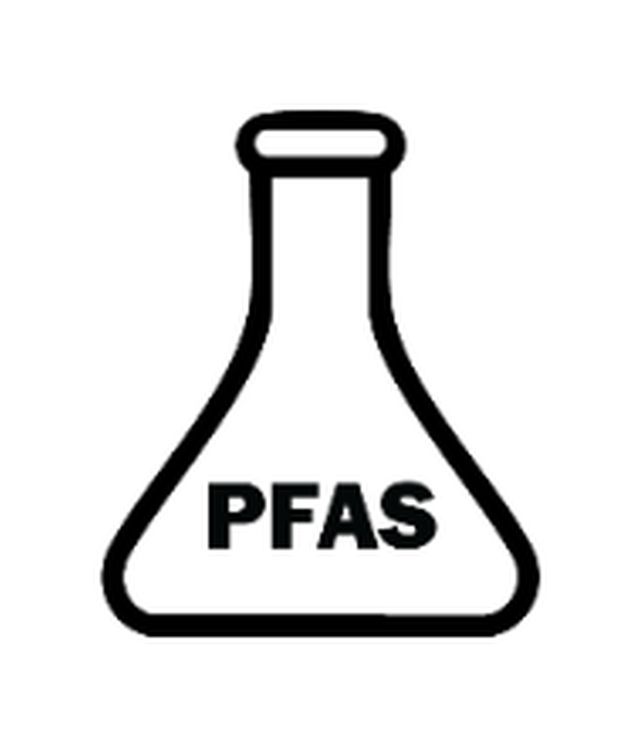
Enacted in 2025, the Per- and Poly-Fluoroalkyl Protection Act prohibits the sale of most products containing intentionally added PFAS, requires manufacturers to report the amount of PFAS in their products, and authorizes New Mexico’s Environmental Improvement Board (EIB) to create labeling requirements for products that contain PFAS. The EIB issued final regulations requiring PFAS labels in May 2026. The mandated label must include the word “PFAS” inside the outline of an Erlenmeyer flask. “PFAS” is broadly defined as “a substance in a class of fluorinated organic chemicals containing at least one fully fluorinated carbon atom.”
The American Chemistry Council, joined by several industry trade associations,1 filed suit on July 1 against the Secretary of the New Mexico Environment Department and the New Mexico Attorney General. The lawsuit alleges that the labeling requirement violates the First Amendment and the Dormant Commerce Clause. Plaintiffs sought a preliminary injunction on First Amendment grounds, claiming the requirement unconstitutionally compels commercial speech under Zauderer v. Office of Disciplinary Counsel of the Supreme Court of Ohio, 471 U.S. 626 (1985). Under Zauderer, the government may only compel commercial speech if the speech is purely factual, noncontroversial, and not unjustified or unduly burdensome. Even if a disclosure law meets these requirements, it must be reasonably related to achieving a substantial state interest under Central Hudson Gas & Electric Corporation v. Public Service Commission, 447 U.S. 557 (1980). Judge Margaret Strickland found that the required disclosure is likely factual and noncontroversial but is nevertheless not related to achieving a substantial state interest.2
The court finds that the labeling requirement is likely factual
Plaintiffs raised two arguments to show that the PFAS labeling requirement is not factual. First, they noted that there is no agreed upon definition of PFAS, but New Mexico used a broad definition that encompasses potentially thousands of substances. Judge Strickland concluded that even if different substances included in New Mexico’s definition of PFAS have different qualities, the law does not require the label to “speak to the qualities or characteristics of PFAS; rather it merely identifies the product as containing one substance that could be considered PFAS.” This rendered the label factual and not, as plaintiffs contended, an opinion.
Second, Plaintiffs argued that the required Erlenmeyer flask symbol would cause consumers to construe the label as a warning about harm allegedly caused by using the product. Judge Strickland found that plaintiffs did not substantiate this argument and therefore failed to show that the symbol rendered the label non-factual.
The court finds that the labeling requirement is likely not controversial
Plaintiffs argued that the science surrounding PFAS and their impacts on human health and the environment is unsettled, making a warning requirement for such a broadly defined class of substances controversial. This type of argument has proven fatal to state-mandated disclosures of other chemicals that require warning language, such California’s Proposition 65. See, e.g., Cal. Chamber of Comm. v. Bonta, 781 F. Supp. 3d 1071 (E.D. Cal. 2025); Personal Care Products Coun. v. Bonta, 799 F. Supp. 3d 1075 (E.D. Cal. 2025). But the New Mexico law does not require PFAS labels to convey any information about the alleged harms caused by PFAS. Instead, it merely informs consumers of the presence of a class of chemicals and, Judge Strickland found, is therefore likely uncontroversial.
The court finds that the labeling requirement is not reasonably related to New Mexico’s claimed interests
Although the plaintiffs could not demonstrate that the labeling requirement is non-factual or controversial, Judge Strickland ultimately ruled that the labeling requirement is not reasonably related to the state’s claimed interest.
Judge Strickland agreed that the state’s claimed interests—protecting consumer health and safety as well as the environment—are substantial. She found, however, that the state could not show a reasonable relationship between the labeling requirement and those interests. In its briefing, New Mexico went to great lengths to characterize the requirement as a “consumer awareness label,” not a warning, and therefore a factual and noncontroversial disclosure. Yet in doing so, Judge Strickland concluded, the state “destroy[ed] the connection between the purpose of the required disclosure . . . and the means employed to realize that purpose, which in other instances is achieved with a warning.”
Because the required label does not convey “any advice or information about PFAS,” consumers do not have information about how the products might impact their health or the environment. If consumers are not warned of any risk to their health, safety, or the environment, it is unclear how knowing that PFAS are present in the product will achieve the state’s interests. Instead, the labeling requirement served only to satisfy “consumers’ idle curiosity,” which is not a sufficient governmental interest. As a result, Judge Strickland ruled that the labeling requirement is not reasonably related to New Mexico’s claimed interests, indicating that the law is likely unconstitutional under the First Amendment.
Beyond the preliminary injunction
With the preliminary injunction in place, the state cannot enforce the labeling requirement against the members of the plaintiff trade associations. The Secretary of the New Mexico Environment Department has indicated that the state plans to appeal the injunction. The deadline for doing so is October 16, 2026.
New Mexico also filed a motion to dismiss in August, arguing that plaintiffs failed to state a claim for relief on First Amendment and Dormant Commerce Clause grounds and that the underlying facts are not ripe for judicial review. Although the motion to dismiss is still being briefed, it will likely be denied, at least in part, because the order granting the preliminary injunction indicates that the court views the First Amendment claim as meritorious.
Because New Mexico’s approach to PFAS disclosures on labels is unusual, Judge Strickland’s ruling may have limited impacts on PFAS laws in other states. It is nevertheless an important example of the limits on the government’s ability to force disclosures by businesses—an increasingly popular form of regulation that costs governments little and provides information that activists can use to seek changes from businesses. But while mere disclosures may be purely factual and non-controversial, they cannot be compelled unless they are reasonably related to a substantial government purpose that goes beyond disclosure.
The content of this article is intended to provide a general guide to the subject matter. Specialist advice should be sought about your specific circumstances.
[View Source]

