

Key Takeaways:
- Planning to hire? Strengthen payroll tax, benefits compliance, and internal controls to support sustainable growth.
- Increasing capital expenditure? Align purchases with a tax‑efficient approach and keep audit‑ready documentation from day one.
- Expanding into new states? Map nexus early to avoid unexpected multi‑state tax obligations.
If your organization is preparing to grow — through hiring, entering new markets, or increasing capital investments — you need a strong foundation to support that expansion. Growth brings new tax obligations, higher audit expectations, and a greater need for durable financial controls. Scaling smart isn’t just about adding resources; it’s about establishing the processes and controls that allow your organization to grow efficiently while reducing risk.
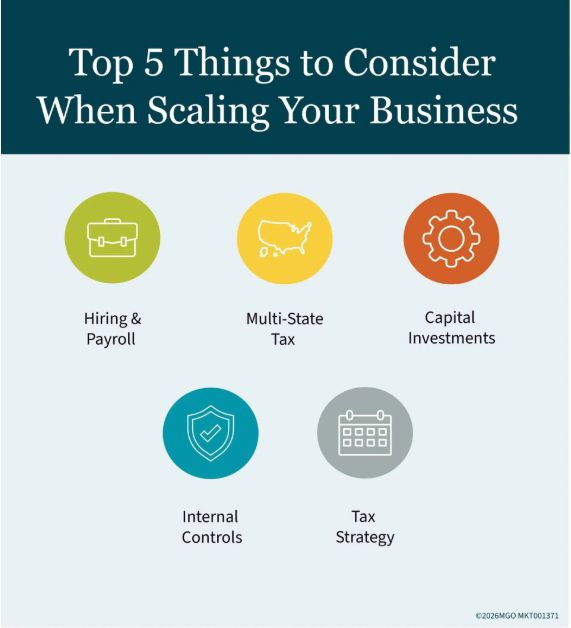
This five‑part checklist provides a practical path to move forward with clarity while strengthening the audit and tax footing that supports long‑term success. This checklist is designed for finance leaders balancing growth initiatives with increasing audit and tax complexity.
1. Prepare Your Payroll Infrastructure for Workforce Growth
If headcount is rising, payroll systems, tax processes, and employee benefit obligations need to keep pace. Even modest hiring can create errors in state withholding, benefits eligibility, and wage reporting.
Actions to consider:
- Confirm registrations and filing requirements in each employee’s work state, including remote roles
- Reconcile payroll tax filings quarterly to catch mismatches early
- Review benefits eligibility and documentation — growing organizations may cross thresholds that trigger additional filings or plan audit requirements
- Strengthen internal controls by using approval workflows and audit trails in your HR/payroll systems
- Consider an outsourced payroll provider than can share the burden. Make sure the provider has a SOC 1 report to complement your internal controls and future audit processes.
Protecting payroll integrity can help reduce penalties and supports employee trust as you scale
2. Map Multi‑State Tax Exposure Before Expanding Markets
Entering new geographic markets can create “nexus” in states where you previously had no tax presence. That can trigger income, franchise, sales/use tax obligations, and more — even without a physical office.
Actions to consider:
- Conduct a nexus and apportionment assessment before selling or operating in a new state
- Find thresholds, filing requirements, and local taxes that apply to your industry
- Build a compliance calendar for registrations and returns
- Establish a process to keep exemption certificates and state‑specific documentation
A proactive approach can help reduce surprises at year‑end or during an audit.
3. Align Capital Expenditures With a Tax‑Efficient Approach
Many organizations are investing in technology, infrastructure, and expansion to support growth. Capital expenditure decisions carry long‑term tax and financial reporting implications.
Actions to consider:
- Review capitalization policies and support consistent application across departments and locations
- Track in‑service dates, useful lives, and asset categories accurately for depreciation; keep vendor contracts and commissioning details organized
- Evaluate potential eligibility for Section 179 expenses, bonus depreciation, energy‑related incentives, and R&D‑adjacent activities tied to systems upgrades
- Keep documentation current — clean files support depreciation of elections and speed audits
Aligning capital investments to a tax‑efficient approach early helps your organization make more informed investment decisions.
4. Strengthen Internal Controls to Support Audit Readiness
Growth often brings fresh staff, systems, and processes, which can change your risk profile. Controls that once worked may no longer be sufficient.
Actions to consider:
- Refresh and document approval workflows for spending, payroll changes, and vendor onboarding
- Make sure your existing ERP supports your growth plan and meets your needs
- Reconcile key balance‑sheet accounts monthly to keep financial statements clear throughout the year
- Review revenue recognition, especially if pricing or contract structures evolve
- Schedule a mid‑year audit readiness review to show and address issues well before year‑end
Stronger controls help protect your organization and streamline external audits.
5. Build Tax Strategy Into Growth Planning
You don’t need to wait until tax filing deadlines approach to evaluate your organization’s tax position. Decisions related to investments, operations, and expansion can affect eligibility for credits, incentives, apportionment, and elections.
Actions to consider:
- Track credit‑eligible activities — innovation, workforce development, or energy initiatives — as they occur
- Monitor revenue and activity by state to keep filing obligations aligned with your footprint
- Assess whether changes in structure, investments, or operations call for new tax elections or accounting method updates
- Establish a documentation framework early to support filings and potential audit inquiries
Proactive tax planning can help your organization identify opportunities, strengthen compliance, and reduce last-minute pressure.
Strategic Support to Help Your Organization Scale With Confidence
As you grow, your tax and audit needs evolve. MGO provides audit, tax, consulting, and state and local tax (SALT) guidance to help organizations strengthen internal controls, streamline multi‑state compliance, and take a tax‑efficient approach to capital investments.
If you’re looking for a practical starting point, consider a focused nexus review or a mid‑year audit readiness check — both produce actionable steps without disrupting day‑to‑day operations.
Reach out to us today to uncover opportunities to strengthen compliance, reduce risk, and support scalable growth.
The content of this article is intended to provide a general guide to the subject matter. Specialist advice should be sought about your specific circumstances.
[View Source]