
ECJ of the European Union 24 May 2012, Case C-196/11 P (Formula One Licensing/OHIM)
Two trademark regimes are known to coexist in the European Union: the national (or Benelux) regime under which trademarks with only national validity can be obtained, and Community trademarks which have effect in the entire territory of the European Union as one single trademark. Although considerations in the Community Trademark Regulation, which regulates Community trademarks, do stipulate that Community trademark law does not replace the national trademark law of the Member States, the EU Court of Justice (ECJ) had never before expressed an opinion on the relationship between national and Community trademarks. It has now done so in its judgment of 24 May 2012.
The reason for the judgment was the filing by Racing-Live SAS of an application for registration of a Community trademark F1-LIVE as figurative mark:

The Dutch company Formula One Licensing B.V. filed an opposition against this trademark application on the basis of its national trademarks F1 as word mark, and the Community trademark depicted below, which were registered for similar and identical goods and services (in particular electronic publications in the field of Formula 1 races) as the goods and services for which the trademark of Racing-Live SAS was applied for.
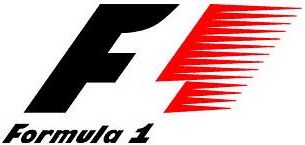
The Opposition Division of the European trademark office OHIM has awarded the opposition because the signs at issue were similar to a medium degree. Racing-Live SAS brought an appeal against that decision before the First Board of Appeal of OHIM and was proven right, because the Board was of the opinion that the similarity between the trademarks was in the "F1" element, which the Board considered to be descriptive. Formula One Licensing filed a complaint about this judgment with the General Court in Luxembourg, but its appeal was dismissed. On the basis of the evidence provided by the parties, the General Court established that the "F1" element is similar, and went on to assess whether that component was the dominant element in the trademarks. The General Court established that "F1", just like "Formula 1", is used to designate the sport of motor racing in generic terms, and ruled that the relevant public will not perceive the "F1" element in the mark applied for as a distinctive element, but as an element with a descriptive function. Because the General Court regarded "F1" as a descriptive generic designation, it ruled that there is no likelihood of confusion and upheld the judgment of the Opposition Division that the opposition was not successful.
Formula One Licensing brought forward an appeal before the ECJ against this judgment based on a number of grounds. The most far-reaching ground for appeal was that the General Court had unlawfully removed the protection afforded to an earlier trademark (the national word marks "F1") by regarding "F1" as a generic name and by denying the mark all distinctive character. According to Formula One Licensing, the General Court has thus de facto annulled its "F1" word mark.
The ECJ agreed with the objection and held that Community institutions are not allowed to review (the registration of) national trademarks so that the General Court cannot judge in opposition proceedings that an earlier national trademark lacks distinctive character or is a generic name, because these are absolute grounds for refusal. The Community institutions must assume the validity of the national trademarks invoked and must therefore assume that those trademarks have at least some distinctive character. Therefore, the General Court should not have ruled that "F1" is a generic name, which is descriptive and has no distinctive character, because by doing so it has called the validity of the earlier national trademarks into question.
The ECJ therefore set aside the judgment of the General Court and referred the case back to the General Court in order to conduct a new investigation into the possible likelihood of confusion of the sign of Racing-Live SAS and the earlier national "F1" trademarks, on condition that the General Court may not establish that "F1" has no distinctive character.
The starting point of this judgment will also apply to the reverse situation, if opposition is filed against a national trademark on the basis of an earlier (rather descriptive) Community trademark. After all, also in this situation the basic principal is that the Community and national trademark regimes co-exist.
The content of this article is intended to provide a general guide to the subject matter. Specialist advice should be sought about your specific circumstances.
