

Protecting three-dimensional trademarks (or shape marks) within the European Union is a complex balancing act. Given the need to reconcile the requirements of free competition and the recognition of companies' creative efforts, the boundaries of these trademarks' validity are frequently tested. Clarisse Merdy examines the topic in the context of a recent EUIPO decision relating to the famous Toblerone trademark.
The 8 July 2026 decision by the EUIPO’s Cancellation Division (Invalidity Case No. C 67 425) strikingly illustrates the robustness of a historic three-dimensional (3D) trademark: the famous triangular-peaked chocolate shape of the Toblerone.
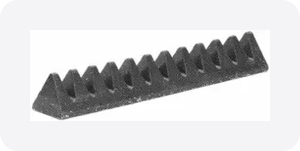
(EU trademark No. 31,237 in class 30)
The case pitted the Polish company Millano spółka z ograniczoną odpowiedzialnością SKA. (the applicant for a declaration of invalidity) against the Swiss company Kraft Foods Schweiz Holding GmbH (the owner of the pictured trademark).
A Confectionery Conflict: The Duel Between Millano and Kraft Foods
The dispute concerned the 3D European Union trademark (EUTM) No. 31 237, filed on 1 April 1996 (claiming Swiss priority from 2 October 1995) and registered on 28 January 1998, for goods in class 30 ("Chocolate, chocolate-based products, cocoa, confectionery and pastry, edible ices"). The trademark protects the shape of a chocolate bar consisting of a uniform base and a continuous line of separable triangular peaks (the famous design associated with Toblerone chocolate).
The applicant, Millano, filed an application for a declaration of invalidity pursuant to Article 59(1)(a) of Regulation (EU) 2017/1001 of the European Parliament and of the Council of 14 June 2017 on the European Union trademark (EUTMR), invoking the absolute grounds for refusal set out in Article 7(1)(b) (lack of distinctive character) and Article 7(1)(e)(i), (ii), and (iii) (shapes exclusively dictated by the nature of the goods, necessary to obtain a technical result, or giving substantial value to the goods).
Design and the law: where does the technical aspect end, and where does the trademark begin?
The EUIPO Cancellation Division had to address the following question: Is the three-dimensional shape – characterised by a single-piece chocolate bar consisting of a base and a series of 12 separable triangular peaks – valid as a trademark, or does it fall foul of the absolute prohibitions relating to technical functionality, the nature of the goods, substantial aesthetic value, or a lack of inherent distinctive character?
A design victory: EUIPO upholds the 3D icon
In its decision of 8 July 2026, the EUIPO Cancellation Division rejected the application for a declaration of invalidity in its entirety. The validity of 3D trademark No. 31,237 was fully upheld. Consequently, Millano was ordered to bear the full costs of the proceedings, set at €450.
Deciphering the decision: The secrets of functionality
The significance of this decision lies in the methodical and rigorous analysis conducted by the EUIPO regarding each of the arguments raised by the applicant:
Shape resulting from the nature of the goods themselves (Art. 7(1)(e)(i) EUTMR)
The applicant argued that the 3D shape derived from the very nature of a triangular chocolate bar. The EUIPO dismissed this argument, noting that chocolate has no "natural" or unique shape. Unlike other products that lack alternative presentation options, chocolate can be marketed in a multitude of shapes (flat bars, spheres, etc.). Furthermore, the comparison with the traditional Italian Gianduiotto chocolate (see below) was deemed irrelevant, as the contested trademark exhibits a combination of visual characteristics far more complex than a simple, isolated triangle:

Shape necessary to obtain a technical result (Art. 7(1)(e)(ii) EUTMR)
This was one of Millano’s key arguments: the presence of triangular sections allegedly allowed the chocolate to be easily broken into individual portions ("easy-to-break"), a technical function supposedly covered by earlier patents (specifically, an Austrian patent from 1910).
The EUIPO reiterated a key principle of case law: for this ground for refusal to apply, all the essential characteristics of the shape must be necessary to achieve the technical result. However, while the ability to break the chocolate into portions is indeed an advantage, the specific shape of pointed pyramidal peaks and their arrangement on a common base are not technically necessary to achieve that result. A standard, flat chocolate bar with rectangular grooves achieves exactly the same technical result without adopting this unique mountainous design.
Shape giving substantial value to the product (Art. 7(1)(e)(iii) EUTMR)
The applicant argued that the triangular shape – highly emphasised by the proprietor in advertising campaigns – conferred substantial value on the chocolate.
The Cancellation Division clarified that the concept of "value" must not be confused with the "reputation" or "popularity" of the trademark. In the food sector, consumers primarily buy chocolate for its taste and flavour qualities, not merely for its geometric shape. This ground for refusal, intended to prevent the circumvention of the limited duration of patents or design rights, applies mainly to durable design or luxury goods (such as furniture or high-end loudspeakers), rather than to food products where the shape disappears immediately upon consumption.
Inherent distinctiveness (Art. 7(1)(b) EUTMR)
Finally, regarding distinctiveness, the EUIPO recalled that the burden of proof lay with the applicant for a declaration of invalidity. The applicant had to demonstrate that, at the date of filing (in 1996), the trademark lacked any distinctive character. The applicant merely cited three other products on the market (Kinder Chocolate, Kinder Bueno and KitKat). The EUIPO deemed this evidence insufficient: not only are three examples inadequate to establish a market standard for 1996, but a mere visual inspection reveals that these products (flat, rectangular or rounded) are entirely different from Toblerone’s three-dimensional mountain-peak structure. The contested shape therefore departs significantly from the norms and customs of the confectionery sector.
The final word: The consecration of a 3D icon
Ultimately, the EUIPO Cancellation Division has issued a rigorous decision that reinforces the protection of the most iconic shape marks. By rejecting all of Millano’s arguments, the Office emphatically reaffirms that a design’s commercial success and renown should not be used against its creator simply because it has become a key reference point in the public's mind.
Although this decision, issued on 8 July 2026, remains subject to appeal before the EUIPO Boards of Appeal (within two months of notification), it marks a resounding victory for Kraft Foods. It cements the legitimacy of this unique chocolate contour and confirms that Toblerone’s peaked shape remains a fully valid indicator of commercial origin, protected against attempts to render it generic through competition.
What this saga teaches the creators and brands of tomorrow
This decision offers several key strategic lessons for rights holders and design creators:
1 Robust yet demanding protection:
The 3D mark remains an extremely powerful and perpetual protection tool, provided the shape departs significantly from industry norms and combines multiple memorable visual elements (in this case, the combination of a uniform base and 12 triangular peaks separated by "tunnels" or "canyons").
2 The rigorous burden of proof in invalidity proceedings:
To challenge the validity of a trademark registered decades ago, the applicant must provide particularly solid evidence of a lack of distinctiveness as of the exact filing date. Reconstructing market conditions from 30 years ago proves extremely difficult in practice.
3 The interplay between patents, designs and trademarks:
The existence of an earlier, expired patent for a manufacturing process or machine does not automatically invalidate a 3D trademark, provided the mark's final shape is not limited to the invention's purely functional or technical characteristics.
4 Advertising and substantial value
Highlighting a food product's original shape in marketing campaigns to create a "unique selling point" (USP) does not undermine your 3D trademark under Article 7(1)(e)(iii) EUTMR, so long as the consumer's purchasing decision remains driven by the very nature of the product being consumed (taste, texture, etc.).
The content of this article is intended to provide a general guide to the subject matter. Specialist advice should be sought about your specific circumstances.
[View Source]