

The Swiss Federal Administrative Court has denied similarity between class 5 (medical products) and class 44 (medical and therapeutic services) in an opposition dispute over 'CannaMed' figurative trademarks. Omar Hassan explains why.
The ruling issued on 29 April 2026 by the Swiss Federal Administrative Court in case B-6574/2025 (CF & C Finance Suisse SA and Swiss DermaCosmetics SA v Mossad Abounahi and the IPI), covers key points of interest to trademark practitioners regarding 1) the similarity between goods and services and 2) the conditions for claiming enhanced distinctiveness acquired through use. The 29 April 2026 judgement will be of interest to companies active in the pharmaceutical, medical and cosmetic sectors, as well as to IP law professionals.
Background to the CannaMed trademark dispute
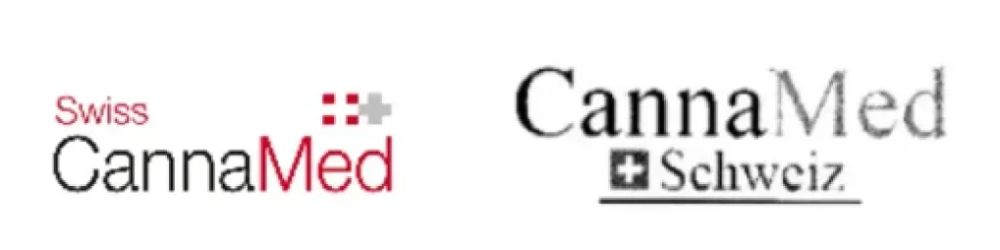
The appeal before the Swiss Federal Administrative Court involved an opposition between the opposing mark 'Swiss CannaMed (fig.)', shown below (left), and the contested mark 'CannaMed Schweiz (fig.) ', shown below (right), registered for various goods and services in classes 5 and 44.
At first instance, the Swiss Federal Institute of Intellectual Property (IPI) had rejected the opposition by the holders of the 'Swiss CannaMed (fig.)' trademark on the grounds that there was no likelihood of confusion.
Legal analysis of the dispute
Beyond the issue of the very weak distinctive character of the earlier mark, one of the key takeaways from this judgement lies in the subtle distinction drawn by the Swiss Court between the cosmetics market (class 3) and the pharmaceutical products market (class 5) when compared with class 44 services (healthcare, beauty care and medical services).
- Assessment of similarity
The Court acknowledged the similarity between the class 3 goods of the earlier mark (cosmetic products and non-medicated toiletry preparations; non-medicated toothpastes; perfumery, essential oils) and some of the class 44 services of the contested mark (information on health matters by telephone; provision of information on healthcare by telephone and the Internet; healthcare; provision of health-related information; healthcare consultancy services).
The justification for this similarity goes beyond a mere functional link. Beauty care service providers sell cosmetic products to their clients and advise them on the choice and use of these products, particularly for daily use. Such products are used both for professional treatments and sold for home use; consequently, cosmetic products – in the context of hygiene and beauty care – must be recognised as having a "dual role" that extends beyond a purely functional link.
Conversely, the Court denied the existence of similarity between the class 5 goods of the opposing mark (pharmaceutical products, medical and veterinary preparations; hygienic products for medical purposes; dietetic food and substances for medical or veterinary use; plasters, materials for dressings) and a part of the class 44 services of the contested mark (medical advice in the health sector; health clinic services; medical, therapeutic, and other healthcare services; medical and therapeutic services in the health sector).
There are indeed thematic points of contact and a functional link between medical, clinical, and therapeutic services on one hand and medicines, medical preparations, and hygienic products on the other. However, medicines, medical preparations, and hygienic products do not play a dual role similar to that of cosmetic products. Indeed, they are not sold for independent home use but are provided solely within the context of administered medical treatment. The provision or sale of these products remains confined to the medical treatment.
Unlike cosmetic services and products, there is no known commercial practice whereby doctors diversify into the class 5 product sector to market such goods independently.
- Assessment of enhanced distinctiveness through use
Regarding the claim of enhanced distinctiveness through use, documented use of the mark over a 10-year period is required. As for the time period, the appellants failed to demonstrate intensive use or special circumstances that would have justified adopting a different period.
Finally, the opposing mark has, at best, very weak distinctiveness, while the similarities between the signs are limited to elements belonging to the public domain; this does not give rise to a likelihood of confusion relevant under trademark law. The appeal was therefore dismissed.
The content of this article is intended to provide a general guide to the subject matter. Specialist advice should be sought about your specific circumstances.
[View Source]