

On 6 April 2026, the Malta Tax and Customs Administration (MTCA) issued awaited guidelines that signal a fundamental evolution of Malta's economic model for the gaming sector. Building upon the legislative foundation established by Legal Notices 84 and 86 of 2026 (published 1 April 2026), these reforms represent a sophisticated effort to reinforce Malta's status as a stable, competitive, and transparent jurisdiction. For the strategic operator, this is not merely a change in code, but a pivotal shift toward a more predictable fiscal environment.
The core objectives of the reform - regulatory certainty, VAT neutrality, and fiscal resilience - reflect a move toward a more mature tax ecosystem. By synthesising industry feedback with the government's 2026 Budget commitments, the Malta Gaming Authority (MGA) and the MTCA have sought to eliminate the "grey zones" that often troubled previous tax interpretations. As we transition into this new framework, it is clear that the move toward a bespoke VAT model is intended to ensure Malta remains an attractive, future-proof base for international operations.
1. Redefining the VAT Exemption: From Broad to Bespoke
We observe the MTCA adopting a significantly more restrictive interpretation of the VAT exemption, moving away from the historically broad "exempt without credit" default.
This reclassification is a deliberate policy shift that aligns Malta with the international "place of consumption" principle. By ensuring that the tax is charged where the digital service is actually consumed, Malta is harmonising its framework with global VAT standards for digital supplies.
Under the new interpretation of Item 9 of Part Two of the Fifth Schedule to the VAT Act, only three specific activities remain "exempt without credit":
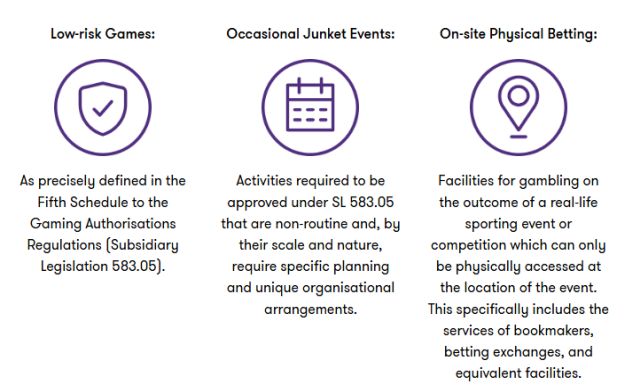
Consequently, the vast majority of modern remote gaming services, including online casino, RNG games, live casino, online betting, and poker, now fall outside this exemption. Far from being a simple technical adjustment, this is a strategic move to treat gaming as a taxable supply. While "taxable" may sound overwhelming, this reclassification is the key that unlocks the ability for operators to recover input VAT, transforming it from a sunk cost into a manageable fiscal variable.
2. The VAT Recovery Upside: Optimising Financial Efficiency
Historically, many gaming operators in Malta were hindered by "VAT leakage"- the inability to recover input VAT on their operational expenses due to their "exempt without credit" status. The new framework corrects this inefficiency by establishing a "natural right of recovery." This mechanism is designed for the protection of the neutrality of VAT, ensuring the tax remains a burden on the final consumer rather than a hidden cost on the business itself.
By shifting toward a higher share of taxable activities, operators gain a natural right to recover VAT on significant cost centres. This optimisation is most impactful in:
- Technology & Infrastructure: Reclaiming VAT on software development, licensing, and IT systems.
- Growth & Acquisition: Improving margins on marketing and advertising spend, which are traditionally high-expenditure areas.
- Professional Services: Enhancing the cost-efficiency of external consultancy, legal support, and outsourced operations.
This reclassification enhances the long-term sustainability of the sector by ensuring that Malta-based operators are not at a competitive disadvantage regarding their cost structures. However, achieving this level of fiscal optimisation requires active management and a holistic view of the accompanying changes to gaming tax.
3. Modernising the Gaming Tax Structure
To ensure a well-balanced overall impact, the MGS ia amending the Gaming Tax Regulations (SL 583.10) to harmonise with the new VAT rules. This restructuring is not happening in a vacuum, as it is designed to simplify compliance and offset the administrative shifts required by the VAT reclassification.
The modernised framework introduces two critical enhancements:
- Consolidation and Simplification: The existing gaming tax and the tax on gaming device are being consolidated into a single, streamlined gaming tax structure. This removes a significant administrative hurdle by classifying tax according to game type and mode of offer in one unified system.
- Equitable Territory-Based Rates: The framework implements equitable tax rates for both land-based and online operators. Crucially, these new rates apply specifically to qualifying gaming activities provided to players present in Malta, ensuring a fair domestic playing field.
By removing the device-related fee and simplifying the rate structure, the MGA is reducing complexity for operators whose primary focus remains the international market, while ensuring the local fiscal footprint is clear and manageable.
4. Strategic Roadmap: Preparing for October 2026
The effective date of 1 October 2026 creates a vital window for operational alignment. This transition from an "exempt" model to a "taxable" model involves more than just a filing change and requires a fundamental look at your business's financial architecture.
We recommend the following action plan for operators:
- Reassess Product Classifications: Conduct a vertical-by-vertical audit to distinguish between exempt and taxable supplies.
- Model VAT Recovery and Cash-Flow: Revisit cost allocation models to quantify the potential cash-flow benefits and cost savings from increased recovery. This is essential for accurate 2026-2027 budgeting.
- Supply Chain Evaluation: Review procurement and corporate structuring to ensure VAT outcomes are optimised across the entire supply chain.
- Quantify the Recovery Gap: Determine the exact financial impact of the shift from irrecoverable VAT to a recovery-based model to assist in C-suite decision-making.
5. Navigating Complexity with Grant Thornton Malta
These coordinated reforms to VAT and Gaming Tax represent a forward-looking policy shift that strengthens Malta's international standing. By providing a predictable, neutral tax environment, the MTCA and MGA have ensured that Malta remains a stable and competitive base for the global iGaming community.
The Grant Thornton Malta VAT team possesses the strategic foresight and technical depth to assist you in this transition. We invite you to a consultation to begin quantifying the recovery impact for your specific operations and to conduct a bespoke impact assessment before the October 2026 deadline.
Our commitment is to provide local excellence and global expertise, ensuring your business turns these legislative shifts into a long-term strategic advantage.
Contact us today to see how we can support your business.
The content of this article is intended to provide a general guide to the subject matter. Specialist advice should be sought about your specific circumstances.
[View Source]