

Every day, consumers rely on trademarks to identify and select goods and services from businesses that they know and trust. Over time, trademarks come to represent not only the goods and services of a business, but also the reputation of the business. Trademarks are therefore a crucial aspect of a business’s success. The first entry in this series explains what a trademark is and provides an overview of the different types of trademarks available to businesses.
What is a trademark?
A trademark is a “sign” used to distinguish a business’s goods and services from the goods and services of others.
Below is a summary of the types of trademarks. The vast majority of trademarks are word marks and design marks.
1. Word marks
Word marks include word(s), phrases, letters and/or numbers.
Word marks differ from:
-
corporate names - the legal name of a business as it appears in its articles of incorporation (e.g. ABCDE Inc.)
-
trade names - the name used to identify the business when it trades (e.g. ABCDE Inc., trading as ABCDE).
-
domain names - a business’s website address (ABCDE.ca)
While businesses often adopt word marks that are the same as their corporate names, trade names and domain names, it is important to note that these names are not the same and need to be treated differently. Simply registering a corporate name or domain name does not mean that the name is available to be used as a trademark and does not adequately protect the trademark from others.
2. Design marks
Design marks include designs, combinations of designs and words and words depicted in specific colours, fonts and/or typefaces. Many design marks are recognized by the public as logos, including the examples shown below.
3. Colour marks
Colour marks fall into two main categories: colour applied to other marks or objects, physical or virtual, or colour itself.
An example of the first category is the colour brown applied to UPS delivery trucks:
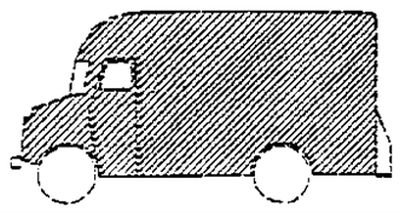
The lines represent the colour brown
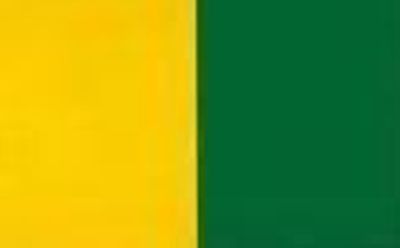
John Deere’s registration for the colours yellow and green is one of the few examples of a Canadian registration of a colour combination itself.
4. Position marks
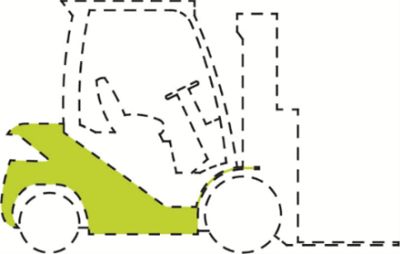
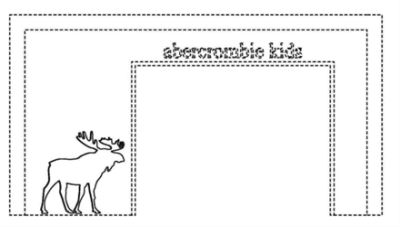
Position marks protect the specific location or placement of a sign on a product/object. For example, the colour “hot yellow green” applied to forklifts and the design of a moose applied to the exterior of a retail storefront are registered position marks in Canada:
5. Shape marks
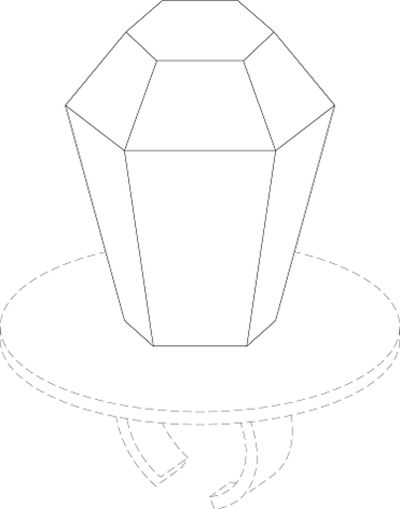
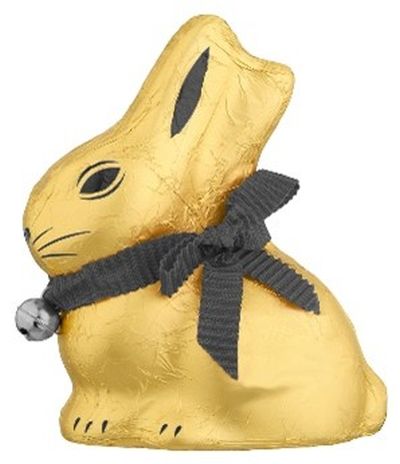
Shape marks consist of the unique shape of an object or of its part(s). For example, the “diamond” shape of RING POP® candy and the shape of the foil wrapping, with the ribbon and the bell, of Lindt’s chocolate bunny, are registered trademarks in Canada:
6. Sound marks
Sounds can also help consumers identify the source of goods and services. For example, Metro-Goldwyn-Mayer’s sound of a roaring lion, heard at the beginning of its movies, is a registered trademark in Canada (TMA828890).
7. Motion marks and hologram marks
Motion marks protect specific movements and animations. For example, Netflix’s “N” animation (TMA1383404) is a registered motion mark in Canada.
Hologram marks protect holographic three-dimensional images and animations. To date, only one hologram mark has been successfully registered in Canada (TMA1223059). The registration protects a holographic rainbow effect applied to a pixelated blue jay.
8. Texture marks
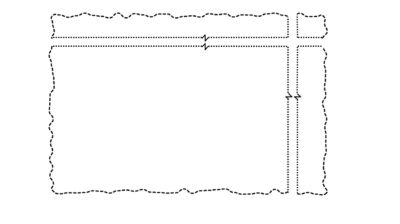
The unique feel of a product or its packaging can also function as a trademark. For example, the following texture mark, which protects a frayed cardstock texture, is registered in Canada:
9. Scent marks
While a scent mark has yet to be successfully registered in Canada, examples of scent marks registered in the U.S. include the unique scents of PLAY-DOH® clay and CRAYOLA® crayons.
Other types of marks
Certification marks
Certification marks are used to identify goods and services that adhere to specific standards rather than the goods and services of a specific business. These standards often relate to the character and quality of the goods and services or the conditions of or the persons employed in their production.
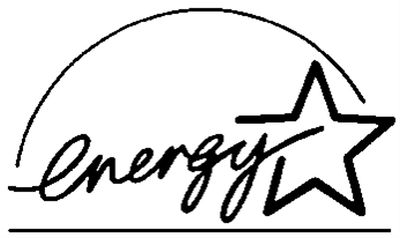
For example, the Energy Star certification mark signals to consumers that the goods bearing the mark meet specific energy efficiency standards:
Certification marks are often owned by organizations that oversee the character and quality of the goods and services bearing the marks.
Prohibited marks
Prohibited marks can be protected at the request of universities and Canadian public authorities, such as government departments and regulatory agencies. Unlike a trademark, a prohibited mark prohibits against the adoption, application for and use of a mark that is identical to or closely resembles the prohibited mark, in association with any goods or services. Businesses wishing to apply for or use a mark that is identical to or closely resembles a prohibited mark must first obtain the consent of the relevant university or public authority.
Coming up
In the remainder of this series, we will discuss key considerations concerning:
-
selecting trademarks,
-
searching trademarks, having regard to copyright and industrial designs,
-
applying to register trademarks (or not) to maximize their protection,
-
using trademarks, having regard to their promotion, advertisement and use, and
-
“controlling” the use of trademarks by others, whether they are authorised or not.
The content of this article is intended to provide a general guide to the subject matter. Specialist advice should be sought about your specific circumstances.
[View Source]
