

Key Takeaways:
- Every phase of the real estate investment lifecycle presents distinct tax, compliance, and operational considerations.
- Early planning decisions can shape outcomes across acquisition, ownership, disposition, and reinvestment.
- A lifecycle-based approach helps you align strategy, execution, and long-term portfolio goals.
Real estate investment is a dynamic process — one that demands strategic foresight, operational discipline, and a deep understanding of regulatory and financial complexities. Whether you're acquiring your first multi-family property or managing a portfolio of commercial assets, each phase of the investment lifecycle presents distinct challenges and opportunities.
This article introduces a strategic framework designed to help real estate investors make informed decisions, optimize performance, and unlock long-term value.
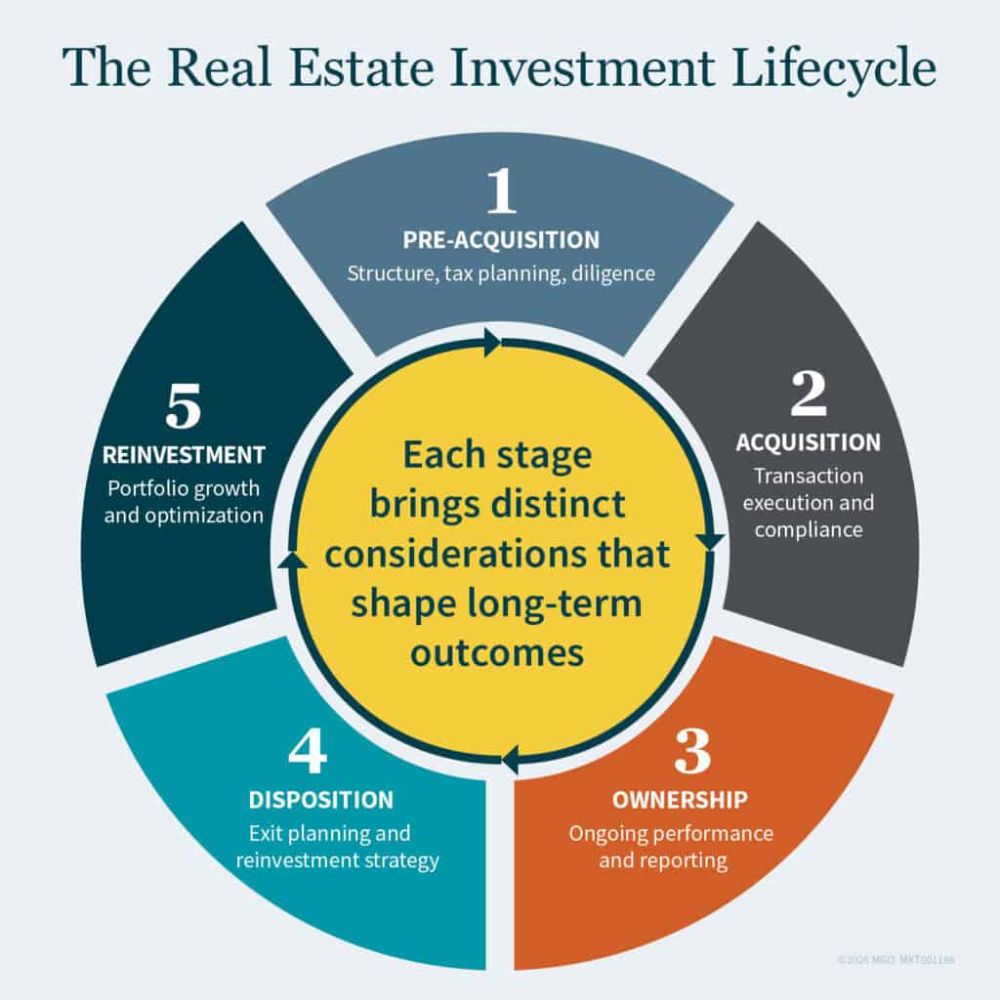
Stage 1: Pre-Acquisition — Planning the Investment
Before a deal is signed, investors must consider how to structure their investment, assess tax implications, and conduct financial due diligence. These early decisions can shape the trajectory of the investment and influence long-term outcomes.
Key considerations:
- Entity structuring — limited liability company (LLC), limited partnership (LP), S corporation, etc.
- Tax planning, including 1031 exchanges and Qualified Opportunity Zones
- Energy tax credits (including 179D and 45L) — time-sensitive due to recent OBBBA changes
- Financial modeling and risk analysis
- Cybersecurity and IT risk assessments for digital infrastructure
- Passive investment structures, including Delaware statutory trusts (DSTs) and umbrella partnership real estate investment trust (UPREIT)
Stage 2: Acquisition — Executing the Deal
Once a property is identified and funding secured, the transaction phase begins. This is where audit and assurance services, transaction advisory, and tax structuring play a critical role in supporting compliance and driving value.
Key considerations:
- Purchase accounting and audit readiness
- Transaction structuring for tax efficiency
- Multi-jurisdictional tax compliance
- Construction cost consulting for development or renovation planning
Stage 3: Ownership — Optimizing Performance
During the ownership phase, investors focus on maximizing returns while maintaining compliance. This is where cost segregation studies, energy tax credits, and client accounting solutions can drive meaningful savings and operational improvements.
Key considerations:
- Cost segregation and depreciation strategies
- Implementation of energy tax credits (including 179D and 45L) — time-sensitive due to OBBBA changes
- Accounting services and key metric analytics
- Annual tax compliance and reporting
- Lease accounting, internal controls, and outsourced accounting support
Stage 4: Disposition — Planning the Exit
Selling or divesting a property requires careful planning to manage tax liabilities and facilitate a smooth transition. Whether reinvesting through a 1031 exchange or winding down operations, strategic guidance is essential.
Key considerations:
- Capital gains and depreciation recapture
- Exit tax planning and audit support
- Reinvestment strategies (private placements, syndicates)
- Tribal consulting (for transactions involving Tribal lands or entities)
Stage 5: Reinvestment — Scaling the Portfolio
For many investors, the end of one transaction marks the beginning of another. Scaling a portfolio introduces new complexities around fund formation, multi-state tax planning, and operational oversight.
Key considerations:
- Portfolio optimization and fund structuring
- Multi-state compliance and tax strategy
- Strategic growth consulting and client accounting solutions
Building Your Strategic Advantage Across the Investment Lifecycle
Understanding the full lifecycle of a real estate investment is key to making informed decisions and unlocking long-term value. At MGO, our dedicated Real Estate team delivers integrated tax, audit, and consulting services tailored to each phase of the transaction lifecycle — helping investors and owners navigate complexity with confidence.
The content of this article is intended to provide a general guide to the subject matter. Specialist advice should be sought about your specific circumstances.
