

- with Senior Company Executives and HR
- with readers working within the Chemicals and Construction & Engineering industries
As Congress considers the reauthorization of Toxic Substances Control Act (TSCA) fees, which expire September 30, 2026, and the 2016 Lautenberg amendments, which are near their ten-year mark, both the House of Representatives and the Senate have released proposals to reauthorize fees and revise the statute. Following the release on January 15, 2026 of a TSCA reform discussion draft by the House Energy and Commerce Subcommittee on Environment, the Senate Committee on Environment and Public Works released its discussion draft on February 26.
We use the term “discussion draft” because the proposed bills have not been formally introduced in the House or the Senate, a status which could change at any time. Committees with primary jurisdiction over TSCA in both chambers already have held hearings on the concepts put forward in the discussion drafts. The House Committee on Energy and Commerce held a hearing on its discussion draft on January 22, and the Senate Committee on Environment and Public Works held a hearing on its discussion draft on March 4.
TSCA reform is crucial for both chemical manufacturers and downstream users to monitor closely because changes will directly impact regulatory compliance requirements, timing to introduce new products to the market, and keeping markets open for existing chemicals. TSCA’s impact on supply chains makes it an essential part of corporate strategic planning in many sectors of our economy.
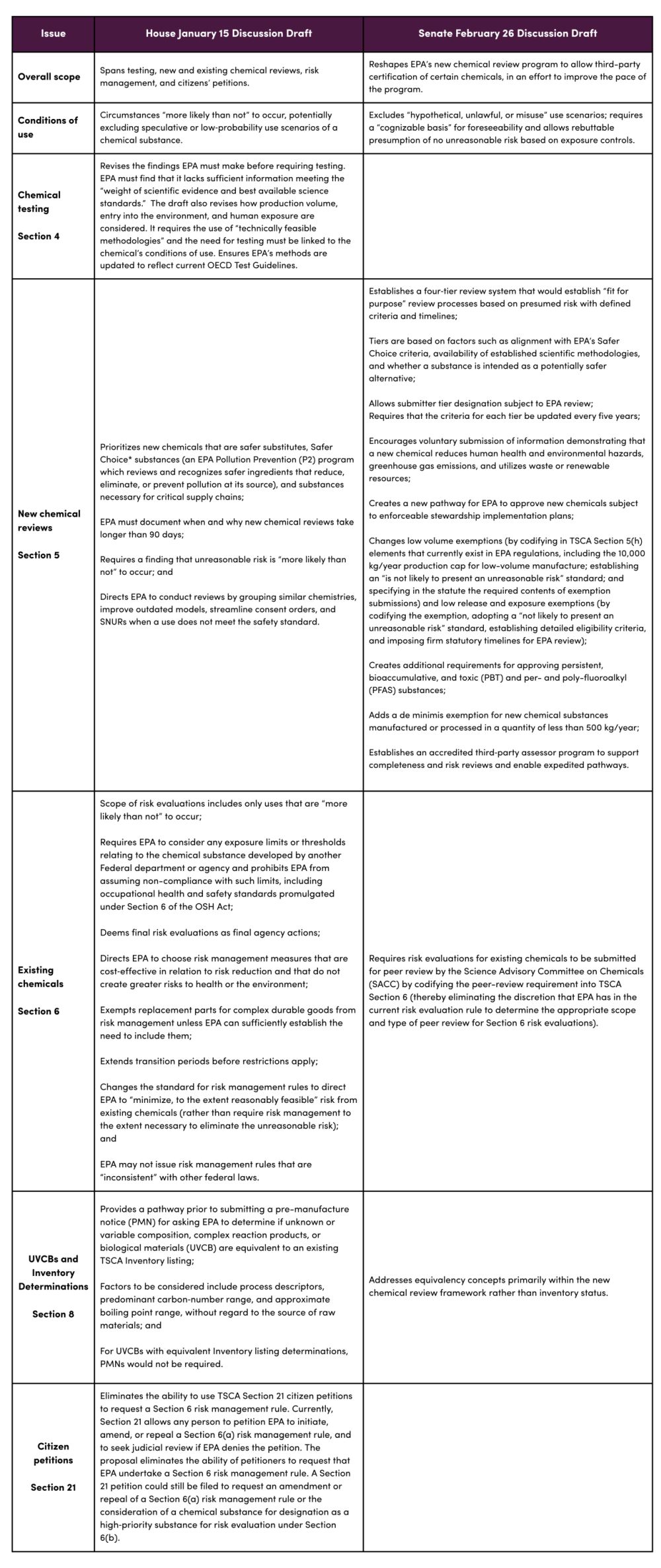
The proposed drafts are very different in their approaches to TSCA reform. The House draft advances revisions in multiple areas of the statute, while the Senate’s draft is focused on reshaping the U.S. Environmental Protection Agency’s (EPA) new chemical review process. The Senate bill does not make significant changes to the Section 6 existing chemical risk evaluation process. Given the expanding universe of state chemical regulations and restrictions, the lack of attention to the existing chemical provisions and their impact on TSCA’s preemptive effect is noticeably missing in the Senate draft proposal.
One area where there is alignment between the two chambers is the need to renew EPA’s authority to collect user fees under TSCA. Failure to renew the fee authority will put these programs further underwater. The next few months are critical for chemical manufacturers and downstream chemical users, such as product manufacturers, to think about changes to TSCA that would help U.S. business stay competitive for the next 10 years and beyond. The provisions in the House and Senate discussion drafts are summarized in the table below.
Key Differences – House and Senate Discussion Drafts
The content of this article is intended to provide a general guide to the subject matter. Specialist advice should be sought about your specific circumstances.
[View Source]


