
Tennessee's Alcoholic Beverage Commission (TABC) has moved decisively into the hemp space. Emergency rules adopted in September 2025 now require mandatory age verification and prohibit sales of Hemp-Derived Cannabinoid Products (HDCP's) to anyone under 21. Beginning January 1, 2026, TABC will also roll out a three-tier licensing system for hemp-derived cannabinoid products (suppliers, wholesalers, retailers), with violations carrying the risk of automatic license cancellation: a significantly harsher consequence than under prior law.*
From Gray Market to Regulated Industry
Tennessee's hemp rules are meant to drag a fast-growing, barely regulated gray market into something that looks more like a real consumer product industry. Regulators watched gas-station gummies and vape-shop drinks flood the market with inconsistent potency, questionable purity, and almost no age controls. From their perspective, risks like accidental ingestion, inconsistent dosing, and contaminated batches completely undercut the state's stated goal of safely allowing adult access to hemp-derived products. The message behind TABC's new framework is simple: if you're going to sell psychoactive hemp here, you can't treat it like a novelty on the counter.
Another key goal is to put responsibility squarely on businesses. Licensing manufacturers and retailers, tying products to lab reports via QR codes, and authorizing inspections all serve to create traceability and accountability. If something goes wrong, whether it's a hot batch, mislabeled potency, or sales to minors, the state wants to easily identify who made it, who sold it, and whether they followed the rules.
One major concern for adult consumers across the country has been that intoxicating hemp products are not always held to the same health and safety standards as cannabis sold at licensed dispensaries. By mandating transparent and trustworthy COAs, TABC is aiming to protect consumers from contaminants such as heavy metals, pesticides, and residual solvents, while increasing accountability and reducing the likelihood that non-compliant products reach store shelves. For consumers, these measures are intended to deliver greater transparency and confidence in the products they purchase.
Ensuring the Products You Sell Are Legal in Tennessee
In the first session of the new TABC Webinar Series, the Commission hosted a one-hour Webex session, titled "How to Read a COA for HDCs: Ensuring the Products You Sell Are Legal in Tennessee" with the goal of helping suppliers, wholesalers, and retailers understand how to verify Certificates of Analysis (COAs) and ensure compliance with Tennessee law.
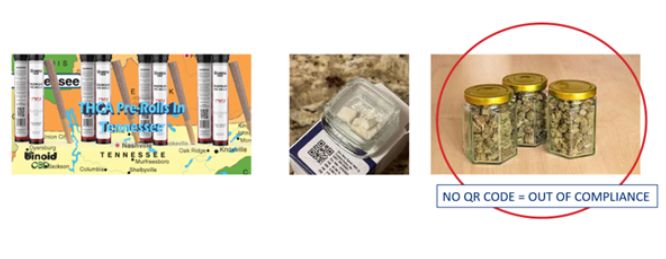
The webinar began by reminding current and prospective industry participants that the TABC now mandates scannable Quick-Response or "QR" codes that link directly to the COA, not to a brand site or shared folder. While QR codes were previously recommended, enforcement is now explicit and tied to compliance checks.
What TABC Expects on a COA
Required Information on Issued COAs for HDCPs include:
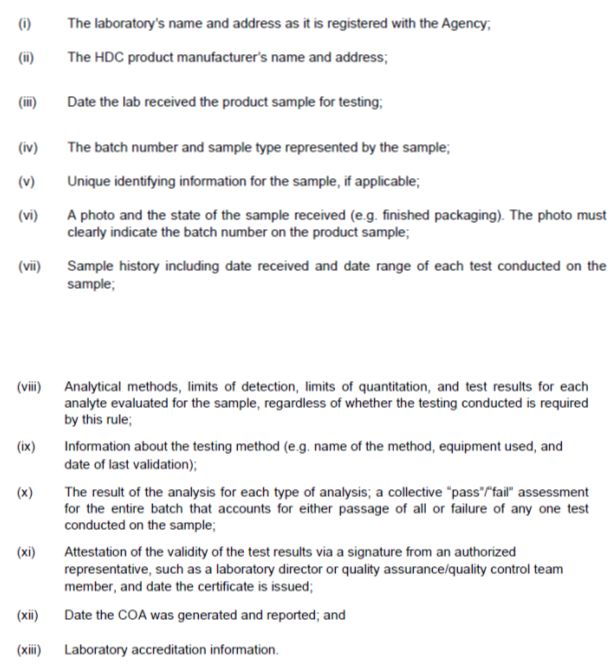
Regulators also emphasized that COAs must come from ISO17025 accredited laboratories registered with the TABC, and must include full panel results for potency, heavy metals, microbiological contaminants, pesticides, and residual solvents and an authorized lab signature.
If a product does not include these features, it is considered out of compliance by TABC, and non-compliant COAs can support enforcement actions up to and including automatic license cancellation.
Red Flags and Enforcement Risks
Regulators also walked through several common red flags that suggest a COA may not meet Tennessee's standards, including:
- Test results without watermarks or supplier information
- "Potency-only" reports that skip contaminant testing
- Documents with redacted data or obviously inconsistent fonts, suggesting alteration
- COAs that lack basic laboratory contact details
Taken together, these issues suggest the lab report may not be reliable, and that the underlying product might not satisfy TABC's testing and documentation requirements. Thus, each of these issues can trigger enforcement actions and put your products at risk of being deemed illegal for sale.
For More Information
If you have questions about Tennessee's new TABC rules for hemp-derived cannabinoid products or need assistance reviewing your COAs, labeling, or licensing strategy, please contact
*Note: TABC has clarified that businesses holding a valid Tennessee Department of Agriculture ('TDA") hemp license before December 31, 2025 may continue operating under that license and the existing Title 43 framework through June 30, 2026, while businesses without a TDA license by that date must obtain a TABC license beginning January 1, 2026. From January through June 30, 2026, TABC's stated enforcement priorities are (1) making sure every HDCP seller holds either a TDA or TABC license and (2) confirming that products have full-panel test results accessible via a functional QR code.
The content of this article is intended to provide a general guide to the subject matter. Specialist advice should be sought about your specific circumstances.
