- within Immigration, Media, Telecoms, IT, Entertainment and Criminal Law topic(s)
This article deals with position trade marks, a topic of increasing interest. The following quotes provide useful insight into what a position trade mark is:
Quote 1: 'Position marks are non-traditional trademarks that protect the specific placement or application of a sign on a product, like the red soles on Christian Louboutin shoes, or the yellow stitching on Dr. Martens boots, indicating brand origin through unique location.'
Quote 2: 'This judgment is a must-read for trade mark practitioners, showing as it does, some of the pitfalls with filing for position marks, particularly around descriptions used.'
Adidas AG
Adidas AG ("Adidas") is, of course, the company behind the iconic three-stripe trade mark used in relation to sporting goods and apparel. A depiction of Adidas' world famous trade mark is shown below together with a problematic description of the trade mark:
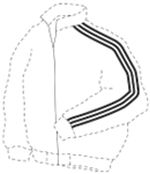
'The mark consists of three parallel equally spaced stripes applied to an upper garment, as illustrated below (above), the stripes running along one third or more of the sleeve of the garment'
Thom Browne Inc
Thom Browne filed a court action seeking the invalidation of no fewer than 16 of Adidas' three-stripe trade mark registrations.1
A counterclaim from Adidas
Adidas did not take the court action lying down and counterclaimed for trade mark infringement and passing-off regarding Thom Browne's use of a four-stripe design. A depiction of Thom Browne's trade mark is shown below:
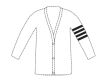
Thom Browne's 50/50
Thom Browne successfully cancelled 8/16 of Adidas' position trade marks and successfully defended the trade mark infringement and passing off counterclaim. A magazine report suggests that the judgment is 'difficult to summarize' – this is quite the understatement!
An appeal by Adidas – back to basics
Adidas' appeal was limited to a finding of invalidity of 6/16 of its position trade marks. Lord Justice Arnold dealt with the matter in some detail, going back to basics:
- A trade mark must be a 'sign'.
- A sign must be 'capable of being represented graphically in a clear, precise, self-contained easily accessible, intelligible, durable and objective manner' (the so-called 'Sieckmann criteria').
- A sign must be 'capable of distinguishing the goods or services of one undertaking from those if other undertakings'.
Public policy and inconsistency between the sign and the written description
Lord Justice Arnold referred to several major IP cases and emphasised issues such as consistency and certainty. He said:
' The key issue facing the trade marks in those (previous) cases was one of public policy: the public reading the register must be able to know what the mark in question is, and where the bounds of its protection lay. Inconsistency between the image of the sign and the written description (which together are the graphical representation) must be fatal to the registrability of the mark.'
Variable trade marks
Here is another important quote from the judgment:
'Marks that are sufficiently variable to warrant a description will require a great deal more thought than those that do not. The devil is really in the detail on those marks, and where one needs to specify attributes not shown in the image, clarity is absolutely key. Therein lies the tension between wanting to have a wide scope of protection and ensuring validity'.
Public reaction - placement is part of the trade mark
We conclude with a LinkedIn post by one Oliver Herzfeld, the general counsel of Beanstalk. As Lord Justice Arnold did, Herzfeld emphasised precision, clarity, consistency and placement:
'If you want to protect a design on your product your TM must show one clear sign, not a vague idea that can change shape or position... TMs must be precise and consistent, you cannot register a moving target... for position marks like stripes or logos placed on specific parts of clothing, placement is part of the mark itself.'
*Reviewed by Gaelyn Scott, Head of ENS' Intellectual Property Department
The content of this article is intended to provide a general guide to the subject matter. Specialist advice should be sought about your specific circumstances.
[View Source]