

Africa is emerging as a powerhouse of innovation, contributing solutions with global impact. Across the continent, entrepreneurs are building marketshaping solutions that leapfrog infrastructure constraints and address local needs with global relevance.
Innovation is not the exclusive domain of Silicon Valley or Shenzhen. It is alive and thriving in Nairobi, in Lagos, in Kigali, in Cape Town. It is born in the minds of African creators, nurtured in our communities, and increasingly recognised on the world stage. The continent's tech start-up ecosystem attracted over $5 billion in funding last year, with Fintech, E-commerce and HealthTech leading the way.
To unlock these innovations' full potential, strong Intellectual Property (IP) frameworks are essential: they secure ownership, enable commercialisation, and make scaling possible.
A continent of innovators and creators
When we consider the incredible examples of innovation arising from the continent, this work takes on even more meaning. We all know the story of M-Pesa, the mobile money platform launched in Kenya. It revolutionised financial inclusion, not just in East Africa, but in countries as far afield as India and Romania. It's a prime example of African innovation solving African problems – and then being adopted worldwide.
Consider Cardiopad, developed by Arthur Zang in Cameroon. This tablet-based medical device allows heart patients in remote areas to receive diagnostic care from specialists hundreds of kilometres away. It's now being used in other developing regions, proving that African tech can leapfrog infrastructure gaps and save lives.
Then there's Lumkani, a South African startup whose fire detection systems are tailored for informal settlements. It's a solution born of local need, now being deployed in similar communities across the globe. These are not isolated cases – they are signs that Africa is not just a consumer, but also a producer of global innovation. As producers, the IP legal fraternity must ensure that African creators have the tools to protect, commercialise and scale their ideas.
The future of IP in Africa
There are positive indicators for the future of IP in Africa. Although some hurdles remain, the impact of the African Continental Free Trade Area (AfCFTA) agreement is viewed positively. It is development-focused, prioritising African innovation, technology transfer, and access to knowledge. A harmonised IP regime across the continent will ensure the protection of African innovations and unique African intellectual property assets like traditional knowledge and geographical indications.
Many African countries have implemented substantive examination in the past 10 years, which improves the quality of patents granted and shows an improvement in technical capacity in Africa. We are seeing many improvements in the systems and legislation, such as the introduction of patent examination in OAPI and capacity building efforts, improvements in the Harare and Banjul protocols by ARIPO and continued growth in member states.
OAPI and the African Guarantee Fund (AGF) have also launched an ambitious initiative to finance a thousand innovative projects across several African countries by 2030, with the hope of nurturing and rewarding businesses which generate useful intellectual property portfolios.
We also focus our efforts on increasing awareness of IP on the continent. Our partnership with Qualcomm's L2Pro Africa IP training programme, now in its third year, is a testament to that belief. Through this initiative, Qualcomm has helped entrepreneurs and inventors understand the value of IP – not just in theory, but in practice. It is exciting for Adams & Adams to be involved in the Africa programme, advising inventors and startups and helping them realise the commercial potential of their patents and, often, giving them the confidence needed to approach investors.
For Africa, the next 12 years will be even more defining. By 2036, Africa's population will exceed 1.7 billion. Our cities will double in size, our economies will diversify and with AFCFTA maturing, Africa's share of global trade is set to increase dramatically.
At Adams & Adams, we've long believed that IP is not just a legal discipline, it's a development tool. As we continue to champion collaboration, innovation, and capacity building across the continent, the firm's commitment to strengthening Africa's intellectual property landscape is clear. Through ongoing engagement, advocacy, and partnership, the firm is helping to shape a future where African IP rights are robustly protected and valued, ensuring lasting benefits for innovators, businesses, and communities alike.

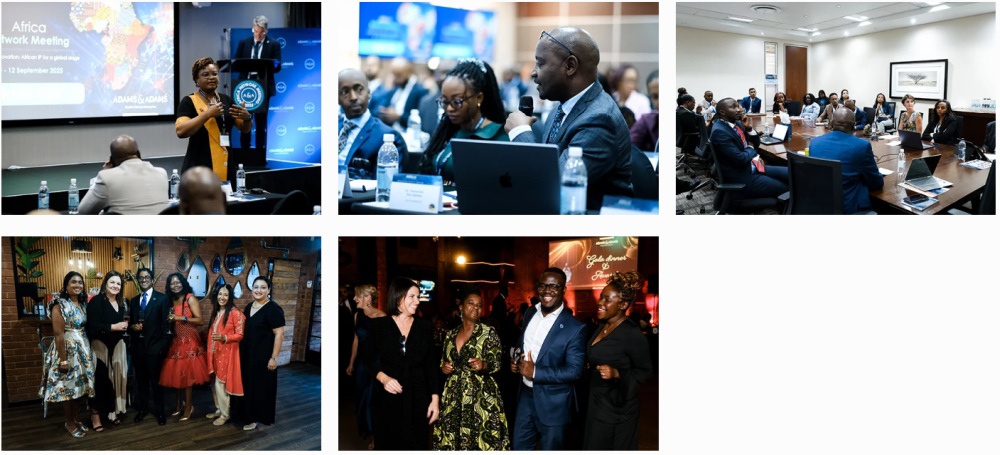
View more pictures here: Africa Network Meeting 2025 – Adams & Adams
The content of this article is intended to provide a general guide to the subject matter. Specialist advice should be sought about your specific circumstances.

