

The European Commission's Digital Omnibus Package (published on 19 November 2025) proposes several amendments to the GDPR designed to reduce barriers to innovation in the field of scientific research.
For the first time, the proposal seeks to introduce an express definition of scientific research into the GDPR to give clarity on its scope.
The proposal also aims to enable and simplify the use of personal data for scientific research in several key ways, including:
- Further processing for research automatically deemed
compatible:
It confirms that further processing of personal data for scientific research is automatically considered compatible with the original purpose for which the data was collected, removing uncertainty around whether additional compatibility assessments are required. - Scientific research recognised as a legitimate interest:
It affirms that scientific research can constitute a legitimate interest for processing personal data. - Relaxed information‑provision requirements:
It eases certain information obligations owed to data subjects when personal data are processed for scientific research in specified circumstances.
In addition, the proposal aims to loosen the strict obligations associated with processing residual special category data when developing or operating AI systems.
Overall, the proposals seek to strike a balance between maintaining the GDPR's high standards of personal data protection and recognising the societal benefits of granting limited, safeguarded flexibilities for innovation, including via scientific research.
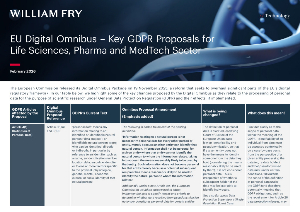
The overview table below highlights the key proposed amendments to the GDPR, including the changes affecting scientific research, and the predicted practical implications (based on the current texts) for your organisation, if these changes are implemented.
Download the summary below.
Contributed by Louisa Muldowney & Eva O'Hara
The content of this article is intended to provide a general guide to the subject matter. Specialist advice should be sought about your specific circumstances.

