

- within Intellectual Property topic(s)
- in Africa
- within Intellectual Property topic(s)
- with Senior Company Executives, HR and Finance and Tax Executives
- in Africa
- with readers working within the Accounting & Consultancy and Law Firm industries
Introduction:
With the business and commercial environment changing so quickly, branding is crucial for drawing in customers through products, designs, colors, lighting, etc. Store layout is the arrangement of aisles, product displays, or departmental designs in a way that improves the customer experience or directs customer traffic. It aids in laying the groundwork for merchandising and boosting consumer interaction.
For example, stores of Apple are well known for minimalist and aesthetic elements as such feature as white tables, glass walls etc., as white is Apple signature colour. Sometimes and gains more recognition for design more than the product or services e.g., Ikea Stores or McDonald’s outlets. Godrej & Boyce Manufacturing Company Limited has filed for a distinct Discussion Area.
These examples show that a store layout can be easily associated with a specific brand. As a result, store designs that serve as brand identifiers have become a significant type of intellectual property that should be acknowledged and protected by the law. This raises the crucial question of whether a layout or design that has become unique and functions as a point of identity can be legally protected.
Trade Dress: Protecting the Look and Feel
Trade dress helps in playing a role in protecting the identity of and layout of store of a brand. It helps in making a design, arrangement, décor, colour scheme, and overall look of a store more recognizable to customers. When layout of the store becomes more popular and people start to connect with the brand then it can be legally protected under the law of trade dress. This helps the brands getting protection and preventing competition from copying a similar layout or design which might create confusion in the customer’s mind.
The Landmark Judgment of Delhi High Court in Colgate Palmolive Company v. Anchor Health and Beauty Products observed that trade dress is the overall impression of visual impression of colour and shape etc., to the customer. This principle is also extended for store layout indicator of a brand identity.
What is so special about a Store Layout?
In the context of trade dress protection for store layout, a distinctive and consistently used store design can strongly capture and stay in the minds of consumers in several interconnected ways:
A unique store layout works as a visual signature - elements such as the arrangement of shelves, pathways, lighting, color schemes, signage, and overall spatial flow create an immediate and recognizable impression. When customers repeatedly encounter the same look and feel, they begin to associate that layout with a single commercial source, even without consciously noticing logos or brand names. Over time, the layout itself becomes a brand cue, triggering instant recognition and recall.
Nykaa is a strong Indian example of how retail store layouts can be protected under trademark law as trade dress. Rather than relying only on its word mark or logo, Nykaa has taken steps to protect the overall visual appearance of its physical retail stores, particularly its premium “Nykaa Luxe” outlets.
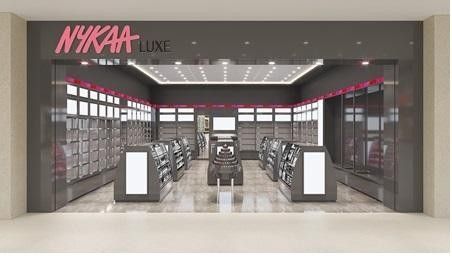
Nykaa Luxe Store Layout
Beyond recognition, a well-designed layout shapes the customer experience and emotional response. The sensory and experiential elements help embed the store’s identity in consumers’ minds, making the experience difficult to replicate without evoking the original brand.
From a legal perspective, once such a layout acquires distinctiveness (secondary meaning), consumers no longer see it as mere décor—they see it as an indicator of origin. This is precisely why trade dress protection becomes critical: copying a store layout can mislead consumers into believing there is an association or common source. Thus, a specific store layout captures the public’s mind not just aesthetically, but commercially, functioning as a powerful non-verbal trademark that differentiates the brand in a crowded marketplace.
What Does Indian Law Say?
Indian trademark law does not expressly define “store layout” as a separate category of trademark, but it does permit protection of store layouts as trade dress under the Trade Marks Act, 1999, primarily through passing-off actions and, in some cases, device mark registrations.
Most brands overlook that store layout can be a valuable Intellectual Property. Nowadays, valuable Intellectual Property is not limited to packaging or product shape of brands but overall experience which include layout décor and décor which leave mark on consumers. Many brands like Apple, Microsoft has secured Protection for their store layouts. Formal layout registrations are rare in India, but in 2019, the Mary Cohr salon was able to secure protection for store layout for distinctive. As a developing nations brands to increase the experience of customers, they must standardise their Interiors and protection for such is likely to grow in upcoming years.
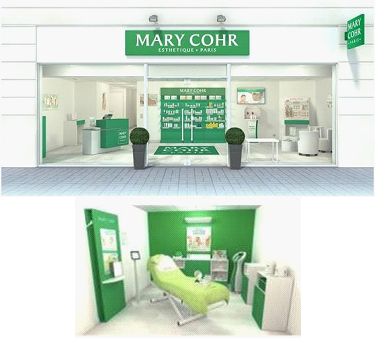
MARY COHR Store Layout
Challenges faced in Registration
There are several challenges that applicants face in securing protection for store layout as intellectual property.
- Distinctiveness: One of the primary challenges is establishing the distinctiveness of the store. The applicant has a onus to prove that the store layout is related to business and consumers can easily recognised.
- Functionality: Another challenge is the functionality, which prevents the registration of marks that are functional in nature.
- Cost and Accessibility: The process of registering a store layout as a trademark can be expensive and time taking process making it difficult for small and medium-sized businesses to afford such protection.
- Risk of Monopolization: If granting a trademark protection then a risk for common design gets a protection. This raises important questions that the balance between protecting brand identity and encouraging creativity.
Judicial Recognition: Passing-Off and Court Rulings
Indian jurisprudence acknowledges that trade dress may include the overall look and feel of a business, such as colour combinations, arrangement, décor, and presentation, provided these elements have acquired distinctiveness and secondary meaning. Courts apply the classical passing-off test—goodwill, misrepresentation, and damage—to determine infringement, focusing on whether the defendant’s adoption is likely to cause consumer confusion.
The courts have consistently held that overall visual appearance, when distinctive and source-identifying, is protectable under trademark law, extending beyond traditional word and logo marks.
In 2019, Merwan’s, a well-known bakery in Mumbai, asserted its rights in the unique décor, layout and design of their store across all their 24 franchisees against one M/s Sugar Sweet at the Bombay High Court on the ground that the same as a whole formed a part of the trade dress of their business and products.
Conclusion
Store layout protection is an evolving area of intellectual property law that reflects the growing importance of brand identity in an increasingly competitive retail market. In India, store layouts are presently protected under the Trade Marks Act, 1999 as trade dress, though a dedicated framework is still developing. With the rapid growth of the retail sector, there is a rising need for clearer legal recognition and protection of distinctive store layouts. By drawing guidance from jurisdictions such as the United States, the European Union, and the United Kingdom, India can move towards a more structured and balanced legal framework for store layout protection.
The content of this article is intended to provide a general guide to the subject matter. Specialist advice should be sought about your specific circumstances.
