

In today's highly competitive business environment, unique trademarks and brand typography act as significant visual assets that enable companies to create a recognizable identity. These components transcend mere text representation—they stir emotions, enhance recognition, and solidify a brand's principles.
As companies work on creating distinctive fonts and stylized logos, it is vital to protect them from imitation and unauthorized use to uphold brand exclusivity and authenticity. Stylized trademarks serve as a crucial legal and branding instrument, ensuring that a company's distinct typography, logo, and design remain unique and identifiable. Whether through custom typefaces, color palettes, or typographic features, these trademarks preserve brand authenticity in demanding markets.
- Understanding the Role of Stylized Trademarks in BrandingA stylized trade mark is a unique, artistic depiction of a brand's name, logo, or typeface. In contrast to standard trade marks, which mainly protect text-based word marks (like "Nike" as a word), stylized trademarks focus on the visual components, such as custom-designed fonts, specific color palettes, etc.These trade marks play a crucial role in brand recognition, prompting companies to register them to maintain exclusivity and avoid brand dilution, where competitors imitate an established brand identity to confuse consumers, at times maintaining the font and changing the words.While copyright typically protects the design of a typeface, trade marking stylized trade marks add another layer of protection, preventing others from using it in such a way that causes consumer confusion. Under the Copyright Act, 1957 in India artistic work, including graphic designs are eligible for protection. In India, new fonts and the style of writing can be included in "artistic work" under section 2(c) of the Copyright Act, which includes: Paintings, drawings, and sculptures; engravings, photographs and works of artistic craftsmanship. Since creation of authentic fonts consists of a creative and artistic perspective, they qualify as artistic and creative works because of which fonts can be registered for copyright protection.
- Examples of Iconic Stylized Trade Marks/
Fonts
A key characteristic of a stylized trademark is its unique typography. Numerous global companies have created custom fonts that immediately bring to mind their brand identity. For instance:
Disney'sBy Ananyaa Banerjee and Asmita Kaur
In today's highly competitive business environment, unique trademarks and brand typography act as significant visual assets that enable companies to create a recognizable identity. These components transcend mere text representation—they stir emotions, enhance recognition, and solidify a brand's principles.
As companies work on creating distinctive fonts and stylized logos, it is vital to protect them from imitation and unauthorized use to uphold brand exclusivity and authenticity. Stylized trademarks serve as a crucial legal and branding instrument, ensuring that a company's distinct typography, logo, and design remain unique and identifiable. Whether through custom typefaces, color palettes, or typographic features, these trademarks preserve brand authenticity in demanding markets.
- Understanding the Role of Stylized Trademarks in BrandingA stylized trade mark is a unique, artistic depiction of a brand's name, logo, or typeface. In contrast to standard trade marks, which mainly protect text-based word marks (like "Nike" as a word), stylized trademarks focus on the visual components, such as custom-designed fonts, specific color palettes, etc.These trade marks play a crucial role in brand recognition, prompting companies to register them to maintain exclusivity and avoid brand dilution, where competitors imitate an established brand identity to confuse consumers, at times maintaining the font and changing the words.While copyright typically protects the design of a typeface, trade marking stylized trade marks add another layer of protection, preventing others from using it in such a way that causes consumer confusion. Under the Copyright Act, 1957 in India artistic work, including graphic designs are eligible for protection. In India, new fonts and the style of writing can be included in "artistic work" under section 2(c) of the Copyright Act, which includes: Paintings, drawings, and sculptures; engravings, photographs and works of artistic craftsmanship. Since creation of authentic fonts consists of a creative and artistic perspective, they qualify as artistic and creative works because of which fonts can be registered for copyright protection.
- Examples of Iconic Stylized Trade Marks/
Fonts
A key characteristic of a stylized trademark is its unique typography. Numerous global companies have created custom fonts that immediately bring to mind their brand identity. For instance:
Disney's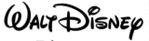 enchanting script is not merely a typeface;
it encapsulates the essence of childhood wonder and nostalgia. It
is a trade mark inspired from the original autograph.
enchanting script is not merely a typeface;
it encapsulates the essence of childhood wonder and nostalgia. It
is a trade mark inspired from the original autograph.
 's elegant cursive, which was
introduced in 1905, enhances the brand's link to luxury and
indulgence.These typefaces represent much more than just letters;
they serve as a visual shortcut to trust, heritage, and emotional
resonance.
's elegant cursive, which was
introduced in 1905, enhances the brand's link to luxury and
indulgence.These typefaces represent much more than just letters;
they serve as a visual shortcut to trust, heritage, and emotional
resonance.
Legally, stylized trademarks are essential for safeguarding a brand's unique visual identity. Unlike copyright, which generally does not protect typefaces or fonts as artistic works, registering a stylized trademark gives companies exclusive rights over specific typography, logos, and design elements. This legal protection allows brands to prevent competitors from imitating their distinctive fonts, logos, and color schemes, thereby reducing consumer confusion and maintaining brand integrity.
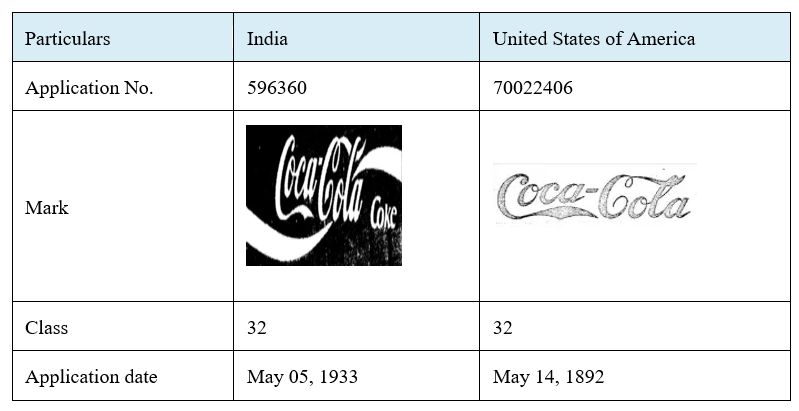
For example:  has successfully
protected its iconic cursive script through trademark registration,
making its lettering style synonymous with the brand and preventing
others from using similar designs. The details of the foremost
applications for the said mark in India and United States of
America are mentioned below:
has successfully
protected its iconic cursive script through trademark registration,
making its lettering style synonymous with the brand and preventing
others from using similar designs. The details of the foremost
applications for the said mark in India and United States of
America are mentioned below:
Another example is of  (United States of America,Application No.
7408956 in Class 28), a typography which has received worldwide
recognition and association with the owner, i.e., Mattel Inc.
(United States of America,Application No.
7408956 in Class 28), a typography which has received worldwide
recognition and association with the owner, i.e., Mattel Inc.
By securing stylized trademarks, companies reinforce their brand's visibility, trustworthiness, and exclusivity in the marketplace. Consumers often recognize brands visually-through fonts, logos, and colors-rather than just by name. Without trademark protection for these stylized elements, brands risk losing their distinctiveness, as competitors could replicate key visual features and potentially confuse customers.
To preserve their unique identity in a crowded visual landscape, businesses typically combine trademark registration with strict brand guidelines and the development of proprietary fonts or logos.
- The Importance of Typography in BrandingTypography is much more than just aset of letters—it is asilent ambassadorof a brand's personality, which:
- Creates instant recognition– Consumers associate specific fonts with brands even in the absence of logos.
Evokes emotions– Fonts can be bold and
authoritative like 
, playful and fun like , or futuristic and sleek 
- Maintains consistency– From digital campaigns to packaging, typography ensures unified brand identity.
Typography is a critical element in shaping how consumers perceive a brand, as it not only reinforces visual identity but also influences emotional responses and brand associations. Unauthorized imitation of distinctive typography can indeed cause brand confusion, potentially misleading customers into believing they are interacting with the original brand owner.
Someone could create a font that closely
mimicsCadbury'ssignature cursive style, making
only slight modifications to avoid direct legal conflict.
Similarly, an ice cream brand might adopt a font reminiscent
ofKwality Walls 
(with the iconic hearts), which the brand itself has genuine
variations thereof worldwide, for example: 
it is known as Langnese in Germany, Kibon in Germany, Algida in
Turkey and Italy, etc., leveraging visual familiarity to attract
consumers without overtly copying the trade mark. Another example
of a renowned brand, i.e., Lay's 
, in India, is actually called 
in the United Kingdom and  in Mexico.
In another example, someone could use lettering similar toDisney'siconic script, potentially misleading the public into thinking there's an association between the two brands.
Disney has actually taken action against several marks in India, which have attempted to copy its unique typeface. Examples of some of them are given below:
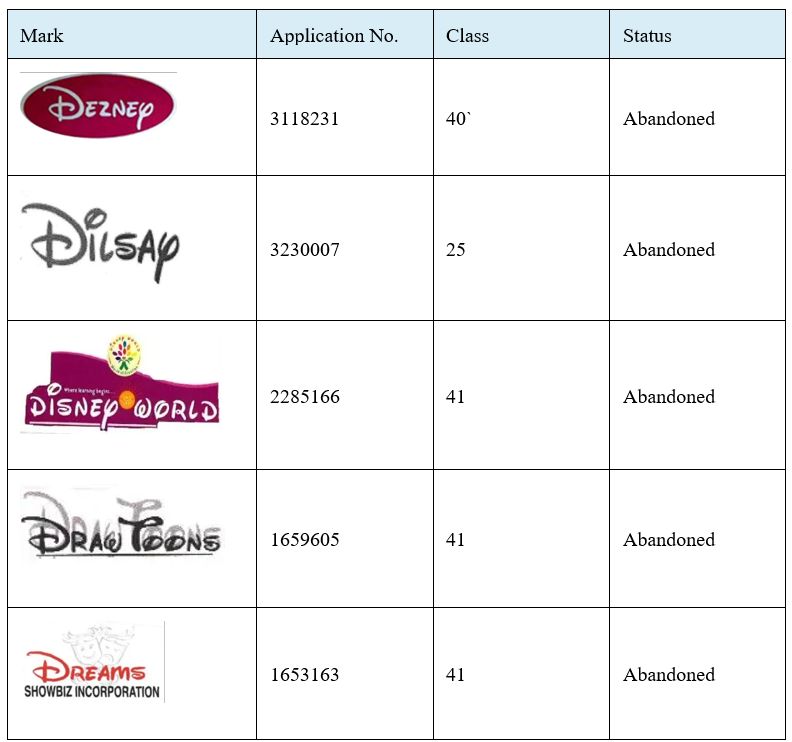
The above marks were not only opposed on the basis of the similarity in trade marks, but also on the basis of copyright, which is also protected under Section 11(3) (b) of the Trade Marks Act, 1999.
- Trademark Challenges in Protecting FontsWhile stylized trade marks protect brand typography when used within logos or word marks, registering a standalone font as a trademark is difficult. Trade mark law primarily covers unique visual marks, but it does not automatically grant protection to individual font designs unless they are integrated into a brand's identity.However, a standalone font that is not exclusively linked to a brand is unlikely to qualify for trademark protection, making it harder for companies to legally claim ownership over their custom typography.
- Kaira District Cooperative Milk Producers Union Ltd. v. MaaBrand Dilution and Consumer ConfusionBrand dilution occurs when unauthorized or similar-looking typography weakens the distinctiveness of a brand's identity. If competitors use fonts that closely resemble a popular brand, consumers may mistakenly associate the lookalike branding with the original company. This can lead to a loss of uniqueness and even mislead buyers into trusting counterfeit products.For example:
-
- If a new beverage brand uses a script font nearly identical toCoca-Cola, it might create consumer confusion about authenticity.
- A luxury brand's typography could be replicated in counterfeit merchandise, reducing exclusivity.
- An entertainment company could design a font similar toDisney's, misleading viewers about official affiliation.
Brand dilution harms credibility, reducing a company's ability to maintain strong consumer trust.
- Let us now look at a few case laws in India, where we have seen several legal disputes related to font protection. Here are some notable cases and legal perspectivesTrading Co.1
The defendants used the 'Amul' trademark in a deceptively similar font on the labels of their candles.

The court recognized that the use of a similarfontcould cause confusion among consumers, especially when the font style closely mimics the well-known 'Amul' mark, even if used on unrelated goods (candles instead of dairy products).
- Yahoo Inc. v. Rinshad Rinu2
The Delhi High Court granted an ex parte order in favour
ofYahooInc.  and restrained the defendant from using the
domain name 'yahookochi'and also awarded
damages of Rs. 5 lakh. The Court noted that there is no possible
explanation for the adoption of theidentical
markin theidentical
font(which was used by Yahoo Inc., well until 2014)
as part of its trading name and domain name.
and restrained the defendant from using the
domain name 'yahookochi'and also awarded
damages of Rs. 5 lakh. The Court noted that there is no possible
explanation for the adoption of theidentical
markin theidentical
font(which was used by Yahoo Inc., well until 2014)
as part of its trading name and domain name.
Final Thoughts: Preserving Visual Identity in a Competitive Market
In an era where branding plays a central role in consumer recognition, safeguarding stylized trademarks and typography is essential for maintaining exclusivity and credibility.
By implementing robust legal safeguards and strategic brand protection, businesses can ensure that their iconic typography remains a defining element of their brand identity for generations to come. Trademarking a business's typography allows a brand to stand out and build instant recognition, provides exclusive rights and legal protection, while also enhancing brand trust and market value.
Shreya Kumar , Assessment Intern at S.S.Rana & Co. has assisted in the research of this article.
Footnotes
1 Kaira District Cooperative Milk Producers Union Ltd. v. Maa Trading Co. (2022 SCC OnLine Cal 2516.)
2 Yahoo Inc. v. Rinshad Rinu2017 SCC OnLine Del 8949
For further information please contact at S.S Rana & Co. email: info@ssrana.in or call at (+91- 11 4012 3000). Our website can be accessed at www.ssrana.in
The content of this article is intended to provide a general guide to the subject matter. Specialist advice should be sought about your specific circumstances.

