

A recent Federal Court of Appeal decision, Therme Development v. Nordik Spa Village (2026 FCA 85), may make it harder to register trademarks that contain descriptive wording – even where the mark also includes significant graphic or logo elements.
For many years, trademark owners have relied on the 2004 Best Canadian decision, which suggested that a trademark containing descriptive wording could still be registrable where the design features created a sufficiently distinctive overall impression. In that case, however, the Court ultimately found that the wording remained the dominant feature of the mark shown below, and that the trademark was therefore clearly descriptive when sounded:
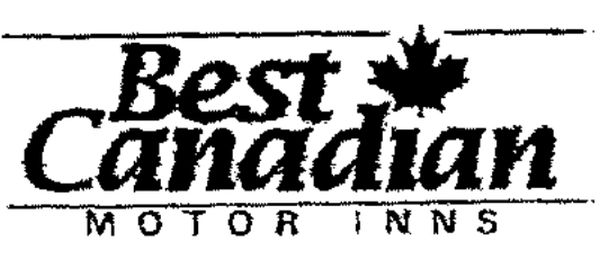
In Therme, the Federal Court of Appeal clarified that the lower court should not have treated the word portion as dominant simply because the design elements could not be sounded. Instead, the Court confirmed that the proper analysis is to compare the overall visual impression created by the combination of the textual matter and the design features, including their relative size and the distinctiveness of the design element.
The decision is particularly notable because the marks contained substantial graphic features, including the following designs:
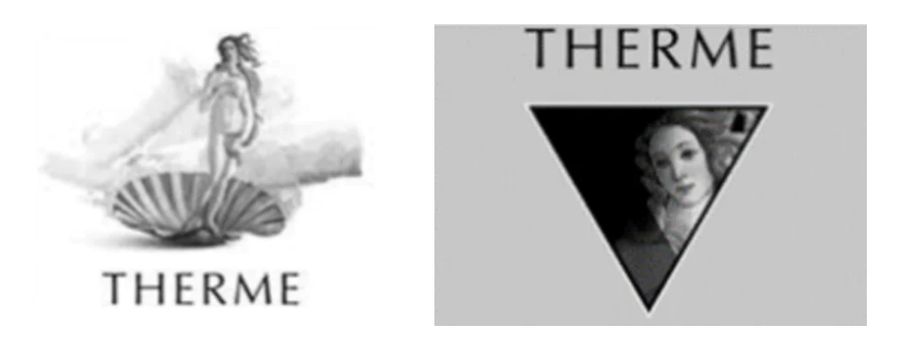
However, even after recognizing that the design elements were larger and more visually complex than the textual component, the Court still found the word “THERME” to be the dominant feature. The Court reasoned that consumers would likely have the word THERME – rather than the less easily described graphic elements – at the front of their minds when viewing the marks.
Importantly, the Court also noted that there are very few cases where a design element has been found to outweigh the wording in a trademark.
The decision does not overturn Best Canadian, but it may signal a stricter approach going forward. In practical terms, businesses may no longer be able to rely as heavily on logos or graphic features to overcome descriptive wording in a trademark application.
Based on Therme, Canadian courts may increasingly move toward an approach similar to that used in the United States when assessing “unitary” composite marks – namely, whether the wording and design elements combine to create a single, inseparable commercial impression or whether consumers will still primarily perceive and remember the descriptive wording.
Under U.S. practice, descriptive wording may sometimes be registrable as part of a composite mark where the design and wording are so integrated that consumers perceive the mark as a unified whole rather than as descriptive wording accompanied by a logo.
Based on that reasoning, some practical considerations may include:
- Using graphic elements that are closely integrated with the wording, rather than simply placed beside or behind it
- Creating designs where the wording and graphics visually interact to form a single commercial impression
- Using distinctive symbols, icons, mascots or graphic devices that consumers may independently recognize and remember
- Avoiding marks where the descriptive wording remains immediately recognizable and visually dominant
- Using coined or suggestive wording where possible instead of highly descriptive terms
- Building acquired distinctiveness through consistent marketplace use and consumer recognition over time
U.S. cases finding marks to be “unitary” have often involved designs physically connected to the wording or layouts where the visual arrangement created a distinct overall impression beyond the literal meaning of the words. By contrast, courts have generally rejected unitary status where descriptive wording simply appears inside ordinary borders, shapes or decorative designs.
While Best Canadian had long been viewed as leaving room for substantial design features to support registration of marks containing descriptive wording, Therme suggests a narrower path forward. The Court’s focus on what consumers are likely to remember and articulate may signal a shift toward an approach more closely resembling the U.S. treatment of “unitary” composite marks, where descriptive wording remains difficult to protect unless the wording and design elements combine to create a truly unified commercial impression. As a result, it may become increasingly difficult to register composite marks where the wording continues to form the dominant commercial impression, even where substantial graphic elements are present.
The content of this article is intended to provide a general guide to the subject matter. Specialist advice should be sought about your specific circumstances.
[View Source]
