Overview: Can You Claim Medical Tourism Expenses on Your Canadian Tax Return?
Medical tourism has become a mainstream choice for Canadians facing long wait times or high out-of-pocket costs for dental implants, orthopedic procedures, fertility treatment, and other care. The good news is that fees paid to a properly licensed doctor, dentist, or hospital outside Canada can qualify for the medical expense tax credit in the same way as fees paid at home. The bad news is that the flights, hotels, and meals that make medical tourism possible are subject to much stricter rules, and many taxpayers only discover this when the CRA issues a tax reassessment.
The Tax Court of Canada illustrated that gap in Yanta v The King, a judgment issued on September 18, 2026. A North Bay, Ontario taxpayer claimed the cost of his spouse’s travel to Antalya, Türkiye, for complex dental implant treatment in 2022. The CRA allowed the dental fees but denied the airfare and accommodation. The Tax Court dismissed the appeal, holding that it was not reasonable to travel thousands of kilometres to Türkiye when the same prosthodontic services were available in Toronto or other larger urban centres nearby.
The decision matters for every Canadian weighing treatment abroad. The cost of the treatment and the cost of getting there are assessed under different provisions of the Income Tax Act, and satisfying one does not satisfy the other. Understanding that distinction before booking a trip can mean the difference between a well-supported claim and a denied one.
“The biggest mistake taxpayers make with the Medical Expense Tax Credit is assuming that medical necessity equals tax eligibility. The CRA and the Tax Court look first to the wording of the Income Tax Act, not simply to whether the expense was reasonable or helpful from a medical perspective.”
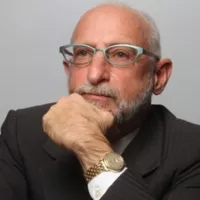
David J. Rotfleisch, founding tax lawyer and CPA at Rotfleisch & Samulovitch, and a Law Society of Ontario Certified Specialist in Taxation
Background: How the Medical Expense Tax Credit Treats Medical Expenses Outside Canada
The Basic Credit
The medical expense tax credit in section 118.2 of the Income Tax Act is a non-refundable credit. It reduces tax owing but does not generate a refund on its own. The credit applies to eligible medical expenses above a threshold equal to the lesser of 3% of the claimant’s net income and a fixed, indexed amount, which was $2,834 for the 2025 taxation year. Taxpayers may choose any 12-month period ending in the taxation year, or a 24-month period that includes the date of death when claiming for a deceased individual. Expenses may be claimed for the taxpayer, a spouse or common-law partner, and children under 18 on line 33099, and for certain other dependants on line 33199. Canadians supporting a dependant may also want to review the available caregiver tax credits and other tax relief that may apply when caring for a family member.
For a full walkthrough of eligible expenses and common filing errors, see our resources:
- Guide to claiming the Medical Expense Tax Credit in Canada
- Canadian tax lawyer’s guide to medical expenses eligible for tax credits
No General Rule Requiring Treatment in Canada
Subsection 118.2(2) does not generally require that medical services be performed in Canada. In technical interpretations issued in 2014 and 2020, the CRA confirmed its view that eligible medical expenses are not restricted to amounts paid in Canada or for services provided in Canada unless the Act specifically says otherwise. A fee paid abroad to a dentist, medical practitioner, nurse, or public or licensed private hospital can therefore qualify under paragraph 118.2(2)(a).
The key condition is professional authorization. Under paragraph 118.4(2)(a), a reference to a dentist, medical doctor, or other medical practitioner means a person authorized to practise as such under the laws of the jurisdiction where the service is rendered. In Canada v Couture, 2008 FCA 412, the Federal Court of Appeal held that “authorized to practise” requires more than the absence of a prohibition.
The CRA’s Income Tax Folio S1-F1-C1, Medical Expense Tax Credit, states at paragraph 1.22 that the CRA looks for specific legislation that licenses or certifies the practitioner and establishes a governing body to set standards and enforce discipline. For medical tourism, that means the foreign clinic’s marketing materials are not enough. The taxpayer needs evidence that the individual practitioner is licensed under the laws of the country where the treatment took place.
The Travel Rules in Paragraphs 118.2(2)(g) and (h)
Travel costs are governed by separate provisions. Paragraph 118.2(2)(g) allows amounts paid to a person in the business of providing transportation services to transport the patient at least 40 kilometres from the locality where the patient dwells to a place where medical services are normally provided. Paragraph 118.2(2)(h) extends the credit to other reasonable travel expenses, such as accommodation, meals, and parking, where the patient travels at least 80 kilometres. Both paragraphs require that all three of the following conditions be satisfied:
- Substantially equivalent medical services are not available in the patient’s locality (subparagraph 118.2(2)(g)(iii)).
- The route travelled is, having regard to the circumstances, a reasonably direct route (subparagraph 118.2(2)(g)(iv)).
- The patient travels to obtain medical services for himself or herself, and it is reasonable, having regard to the circumstances, for the patient to travel to that place to obtain those services (subparagraph 118.2(2)(g)(v)).
The same travel costs for one accompanying individual may qualify only where the patient is certified in writing by a medical practitioner as incapable of travelling without the assistance of an attendant. The firm has discussed how these rules apply to domestic trips in our article on travel expenses for medical treatment. Medical tourism tests the same conditions at a much greater distance, which is where the reasonableness requirement becomes decisive.
Specific Exclusions That Catch Medical Tourists
Two further rules are especially relevant to treatment abroad.
- First, subsection 118.2(2.1) excludes expenses for medical or dental services, and related services and expenses, provided purely for cosmetic purposes, unless the procedure is necessary for medical or reconstructive purposes. Because the exclusion extends to related expenses, travel for a purely cosmetic procedure is also ineligible.
- Second, the CRA’s Guide RC4065, Medical Expenses, states that amounts paid to a fertility clinic or donor bank to obtain sperm, ova, or embryos, and certain expenses relating to a surrogate or donor, qualify only where the expenses are incurred in Canada. Fees paid to a foreign fertility specialist for in vitro fertilization itself remain eligible, but the donor and surrogacy components of fertility tourism generally are not.
Key Issues and Findings: How the Tax Court Decided Yanta v The King
The Facts
The taxpayer’s spouse lived in North Bay, Ontario. Before 2022, his dentist recommended that he see a prosthodontist to obtain dental implants. Because no prosthodontist practised in North Bay, the dentist told him that he would likely need to travel to Toronto. After making inquiries, the spouse concluded that the treatment he needed, if provided by a prosthodontist in Ontario, was unaffordable. In 2022, he instead travelled to Antalya, Türkiye, to begin the first phase of complex dental treatment carried out by a prosthodontist and other specialists.
The taxpayer claimed both the dental treatment and the related airfare and accommodation in computing the medical expense tax credit for the 2022 taxation year. The CRA allowed the amount paid for the dental treatment but disallowed the airfare and accommodation, on the basis that equivalent medical services were available within the spouse’s home area. The taxpayer appealed to the Tax Court of Canada under the informal procedure.
The Issue
The sole question was whether the transportation and travel costs of the spouse’s trip to Türkiye qualified as medical expenses under paragraphs 118.2(2)(g) and (h). The deductibility of the dental fees themselves was not in dispute, which confirms that the CRA accepted that treatment performed by licensed foreign dental specialists fell within paragraph 118.2(2)(a).
The Decision
The Tax Court dismissed the appeal. The Court held that it was not reasonable for the spouse to travel many thousands of kilometres from North Bay to Antalya in 2022 to obtain prosthodontic treatment and related dental services, because those same services were available in Toronto or in other larger urban centres nearby.
Analysis: Reasonableness Is an Independent Hurdle
The decision highlights how the three travel conditions work together. North Bay itself had no prosthodontist, so a trip to Toronto, roughly 340 kilometres away, would likely have satisfied the locality requirement and the other conditions, making the travel costs claimable. The difficulty was not that the spouse travelled; it was where he travelled. The Court’s stated basis for its decision, that the same services were available much closer to home, corresponds to the requirement in subparagraph 118.2(2)(g)(v) that it be reasonable, having regard to the circumstances, to travel to that particular place.
The decision also addresses, at least implicitly, the most common reason Canadians choose medical tourism. The spouse went to Türkiye because Ontario prices were unaffordable. The Court nevertheless found the trip unreasonable because equivalent services existed in Canada within a reasonable distance. The practical message is that a lower price abroad will rarely, by itself, make a long-distance trip reasonable when comparable care is available domestically. The tax system will share the cost of the treatment wherever it is performed, but it will not subsidize a trip abroad simply because the destination is cheaper.
Taxpayers should keep the precedential weight of the decision in perspective. Under section 18.28 of the Tax Court of Canada Act, judgments rendered under the informal procedure are not treated as precedents for other cases. However, informal procedure decisions show how the Court applies the statutory test to everyday facts, and the CRA regularly relies on them when reviewing similar claims.
What Qualifies When You Receive Treatment Abroad
The table below summarizes how the main categories of medical tourism expenses are treated.
| Expense | Tax treatment for treatment abroad | Main authority |
|---|---|---|
| Fees paid to a licensed foreign doctor, dentist, or hospital | Generally eligible if the practitioner is authorized to practise under the laws of the country where the service is rendered | Paragraphs 118.2(2)(a) and 118.4(2)(a); Canada v Couture |
| Airfare and other transportation to the clinic | Eligible only if substantially equivalent services are not available locally, the route is reasonably direct, and it is reasonable to travel to that place (40 km minimum) | Paragraph 118.2(2)(g); Yanta v The King |
| Hotel, meals, and parking | Same conditions as transportation, with an 80 km minimum | Paragraph 118.2(2)(h) |
| Travel costs of a companion | Eligible only if the patient is certified in writing as incapable of travelling without an attendant | Paragraphs 118.2(2)(g) and (h) |
| Purely cosmetic procedures and related travel | Not eligible unless medically necessary or reconstructive | Subsection 118.2(2.1) |
| Donor, surrogate, and gamete acquisition costs | Eligible only if incurred in Canada | CRA Guide RC4065 |
| Travel to a warmer climate for health reasons | Not eligible because no medical service is provided | CRA administrative position |
Practical Implications: What Yanta Means for Canadians Considering Medical Tourism
The first implication is that taxpayers should treat every medical tourism claim as two separate claims.
- The treatment fees stand or fall under paragraph 118.2(2)(a) and depend mainly on the foreign practitioner’s licensing. The travel costs stand or fall under paragraphs 118.2(2)(g) and (h) and depend on availability, route, and reasonableness. A taxpayer who assumes that an eligible procedure automatically carries its travel costs with it is exposed to exactly the reassessment upheld in Yanta.
- The second implication concerns the reasons for travelling abroad. Travel is most defensible where the specific treatment is genuinely unavailable in Canada, such as a specialized surgical technique or a procedure not offered by any Canadian provider. In its 2020 technical interpretation involving a child with cerebral palsy who was considering surgery abroad, the CRA indicated that reasonable travel expenses to obtain medical services outside Canada were likely to qualify, provided the statutory conditions were met.
Where a provincial health plan has approved and funded out-of-country treatment because it is not available in Canada, that approval is strong evidence on both the availability and reasonableness questions, although any amount the province reimburses cannot itself be claimed. Arguments based on Canadian wait times are more uncertain and highly fact-dependent; taxpayers relying on delay should expect to prove with medical evidence that the delay made domestic treatment unavailable in any meaningful sense.
The third implication is that multi-phase treatment compounds the risk. The spouse in Yanta travelled for the first phase of a longer course of treatment. Where each later phase involves another trip to the same destination, the same reasoning is likely to apply to every return flight and hotel stay, while the treatment fees for each phase remain claimable in the year paid. Taxpayers planning staged treatment should budget on the assumption that the travel portion will not attract the credit unless the facts are materially different.
The fourth implication is evidentiary. Foreign claims attract closer CRA scrutiny because receipts may be in another language, issued in a foreign currency, and prepared by clinics unfamiliar with Canadian requirements. The taxpayer bears the burden of proving each claim, and the Tax Court has repeatedly refused medical tax deductions that cannot be supported by proper documents, as our commentary on Paetz v The King explains. Amounts should be converted to Canadian dollars using the exchange rate in effect on the date of payment, as our guide to complying with the CRA spot rate requirement under subsection 261(1) of the Income Tax Act explains, and taxpayers should keep proof of the conversion. Distance thresholds are also measured carefully; our discussion of the 40-kilometre test in De Kruyff v The King shows how the Tax Court approaches distance measurement in a related context.
Finally, taxpayers who pay for a relative’s treatment should note that the family relationship rules still apply. A parent, grandparent, or sibling who lives abroad generally must be resident in Canada at some time in the year to qualify as a dependant, as the Tax Court confirmed in Persaud v The King. A Canadian who pays for a foreign-resident parent’s surgery abroad will usually have no claim at all.
Takeaway: Medical Tourism Can Reduce Treatment Costs, but Travel Costs Rarely Follow You onto Your Tax Return
Yanta v The King confirms a rule that is simple to state and easy to overlook. Canadian tax law will generally recognize treatment performed abroad by properly licensed professionals, but it recognizes the cost of getting there only when travelling to that particular place is reasonable in the circumstances. Where the same treatment is available in Toronto, Montreal, Vancouver, or another Canadian centre within a reasonable distance, a lower price abroad is unlikely to satisfy that test.
Taxpayers considering medical tourism should decide where to be treated for medical reasons, understand the tax consequences before they travel, and keep the evidence they will need if the CRA asks questions. An experienced Canadian tax lawyer can assess a proposed claim before filing and can defend it if the CRA reassesses.
Pro Tax Tips: Protecting Your Medical Tourism Tax Credit Claim
Before booking treatment abroad, ask your Canadian doctor or dentist to document in writing whether the treatment is available in your community, where the nearest Canadian provider is located, and whether there is any medical reason to seek care elsewhere. A letter written before the trip is far more persuasive than one obtained after the CRA has proposed a tax reassessment, and it speaks directly to the availability and reasonableness conditions that decided Yanta.
Obtain proof that each foreign practitioner is licensed. Ask the clinic for the practitioner’s licence or registration number and the name of the governing body, and keep a copy of any online registry listing. Request itemized invoices that identify the patient, the practitioner, the specific services performed, the date, and the amount paid, and arrange a certified translation for anything not in English or French. Keep bank or credit card statements that show payment and the exchange rate applied.
Separate the treatment and travel components when preparing your return and your records. If the CRA accepts the treatment fees but challenges the travel costs, having each category properly documented allows you to preserve the undisputed portion while dealing with the contested portion. If you are claiming a companion’s travel, obtain the written certification from a medical practitioner that the patient could not travel without an attendant before the trip, not afterwards.
Coordinate the timing of your claim. Because the credit is based on any 12-month period ending in the taxation year, a taxpayer who pays for staged treatment across two calendar years may be able to group expenses into a single, more valuable claim.
Our articles on optimizing the medical expenses tax credit and on aggregating family medical expenses and choosing the right claimant explain these planning techniques in detail.
If the CRA denies your claim, act promptly. An individual generally has until the later of 90 days after the notice of reassessment and one year after the filing due date for the year to file a notice of objection. If the objection fails and the amount of tax in dispute is $25,000 or less for the year, the taxpayer can appeal under the Tax Court’s informal procedure. The CRA’s ability to reassess is also time-limited, as our guide to statute-barred tax years and the CRA’s power to reassess explains.
As a Toronto tax law firm, we can assess whether the facts support the travel claim, assemble the medical and licensing evidence, and represent you through a CRA tax audit, the notice of objection process, and any appeal to the Tax Court of Canada.
FAQs: Medical Tourism and Medical Expenses Outside Canada
Can I claim medical expenses paid outside Canada on my Canadian tax return?
Yes, in many cases. The Income Tax Act does not generally require medical services to be performed in Canada. Fees paid to a dentist, medical practitioner, nurse, or public or licensed private hospital abroad can qualify, provided the practitioner is authorized to practise under the laws of the country where the service was rendered and the expense is otherwise eligible. The main exceptions are purely cosmetic procedures and certain fertility donor and surrogacy expenses, which must be incurred in Canada.
Can I claim airfare and hotel costs for medical treatment abroad?
Only if strict conditions are met. Transportation costs require travel of at least 40 kilometres, and accommodation, meals, and parking require at least 80 kilometres. In both cases, substantially equivalent services must be unavailable in your locality, you must take a reasonably direct route, and it must be reasonable, having regard to the circumstances, to travel to that particular place. Where equivalent care is available in a Canadian centre within a reasonable distance, travel abroad will often fail the reasonableness requirement.
Why did the Tax Court deny the travel expenses in Yanta v The King?
The Court held that it was not reasonable for the taxpayer’s spouse to travel many thousands of kilometres from North Bay, Ontario, to Antalya, Türkiye, for prosthodontic treatment because the same services were available in Toronto or in other larger urban centres nearby. The CRA had already allowed the dental treatment fees; only the airfare and accommodation were denied, and the Court upheld that result.
Is a lower price abroad a good enough reason to claim medical travel expenses?
Generally not. In Yanta, the spouse chose Türkiye because treatment in Ontario was unaffordable, yet the Court still found the trip unreasonable because equivalent services existed in Canada. Cost savings may be a sound personal reason to travel, but they rarely satisfy the statutory test for travel expenses when comparable care is available domestically.
What does substantially equivalent medical services mean?
The phrase asks whether the patient’s own locality offers services comparable to those obtained elsewhere. The test focuses on the nature of the treatment, not on price or on the patient’s preference for a particular provider. Where no qualified provider practises in the patient’s community, as with the absence of a prosthodontist in North Bay in Yanta, the locality condition may be satisfied, but the separate requirement that it be reasonable to travel to the chosen destination must still be met.
How far do I have to travel to claim medical travel expenses in Canada?
Transportation costs, such as airfare, bus, or train fares, require travel of at least 40 kilometres from the locality where the patient dwells. Other reasonable travel expenses, including accommodation, meals, and parking, require travel of at least 80 kilometres. Meeting the distance threshold is necessary but not sufficient; the availability, route, and reasonableness conditions also apply.
Can I claim the travel costs of a family member who accompanies me abroad?
Only if a medical practitioner certifies in writing that the patient is incapable of travelling without the assistance of an attendant. Where that certification exists, the accompanying individual’s transportation and reasonable travel expenses may qualify on the same conditions that apply to the patient. Without it, a companion’s costs are personal expenses.
Are cosmetic surgery and hair transplants abroad eligible for the medical expense tax credit?
Not if they are purely cosmetic. Subsection 118.2(2.1) excludes medical and dental services provided purely for cosmetic purposes, together with related services and expenses such as travel. The CRA lists hair replacement procedures among the ineligible expenses. A cosmetic-type procedure can qualify only where it is necessary for medical or reconstructive purposes, such as surgery to address a congenital abnormality, an injury, or a disfiguring disease.
Can I claim IVF or fertility treatment received outside Canada?
Fees paid to a licensed foreign medical practitioner or hospital for fertility procedures, including in vitro fertilization, can qualify. However, the CRA’s guidance states that amounts paid to obtain sperm, ova, or embryos from a fertility clinic or donor bank, and certain surrogate and donor expenses, qualify only if incurred in Canada. Travel costs for fertility treatment abroad are subject to the same availability and reasonableness conditions as other medical travel.
Does a foreign doctor or dentist count as a medical practitioner for Canadian tax purposes?
Yes, if the individual is authorized to practise under the laws of the country where the service is provided. Following Canada v Couture, 2008 FCA 412, the CRA looks for legislation that licenses or certifies the practitioner and a governing body that sets standards and enforces discipline. Keep proof of the practitioner’s licence or registration with your receipts.
What documents should I keep for medical expenses incurred abroad?
Keep itemized receipts showing the patient, practitioner, services, dates, and amounts; proof of payment; evidence of the practitioner’s licensing; certified translations of documents not in English or French; records of the exchange rate used to convert amounts into Canadian dollars; boarding passes and hotel invoices; and any letter from your Canadian doctor or dentist explaining why treatment was sought outside your community.
Can I claim my travel medical insurance premiums?
Premiums paid to a private health services plan can be eligible medical expenses, and the CRA has accepted that premiums for supplemental travel medical coverage may qualify where the coverage is for hospital or medical care that would otherwise be an eligible expense. Premiums paid by an employer on your behalf, or already reimbursed, cannot be claimed.
What if my provincial health plan or insurer reimbursed part of my treatment abroad?
Only the unreimbursed portion of an eligible medical expense can be claimed. If a provincial plan or private insurer paid part of the cost of treatment or travel, subtract that amount from your claim. A provincial plan’s approval of out-of-country treatment can, however, be useful evidence that the treatment was not available in Canada.
Can I claim medical expenses I paid for a parent who lives outside Canada?
Usually not. A parent, grandparent, sibling, aunt, uncle, niece, or nephew qualifies as a dependant only if resident in Canada at some time in the year and dependent on you for support. In Persaud v The King, the Tax Court denied a claim for a visiting parent’s hospital costs because the parent was not resident in Canada.
Does the decision in Yanta v The King bind the CRA and the courts?
Yanta was decided under the Tax Court’s informal procedure, and section 18.28 of the Tax Court of Canada Act provides that informal procedure judgments are not treated as precedents. Even so, the decision applies the statutory wording directly, and the CRA frequently relies on informal procedure decisions when reviewing similar claims. Taxpayers should expect the CRA to apply the same reasoning.
What should I do if the CRA denies my medical tourism claim?
Review the CRA’s reasons and determine whether the denial concerns the treatment fees, the travel costs, or both. You can provide additional documents, and if the reassessment stands, file a notice of objection within the later of 90 days after the notice of reassessment and one year after the filing due date. If the objection is unsuccessful, you may appeal to the Tax Court of Canada. An experienced Canadian tax lawyer can advise whether the evidence supports the claim and how best to present it.
The content of this article is intended to provide a general guide to the subject matter. Specialist advice should be sought about your specific circumstances.
[View Source]