

Australia’s renewable energy transition is accelerating, with large-scale wind, solar and storage projects being developed across vast areas of regional land. However, many of these regions also sit within prospective or active mining and petroleum basins.
The result is an emerging tension between renewable energy developers seeking long-term, stable land and operationally predictable tenure for generation and storage assets, and resource authority holders with statutory rights to explore for or extract minerals and hydrocarbons beneath, or adjacent, to the same land.
This overlap is common. Mining and petroleum tenements frequently extend across broad geographic areas and can coexist with agricultural land, pastoral leases and other land uses. However, when these tenements intersect with renewable energy projects, they can create significant legal, financial and operational risks.
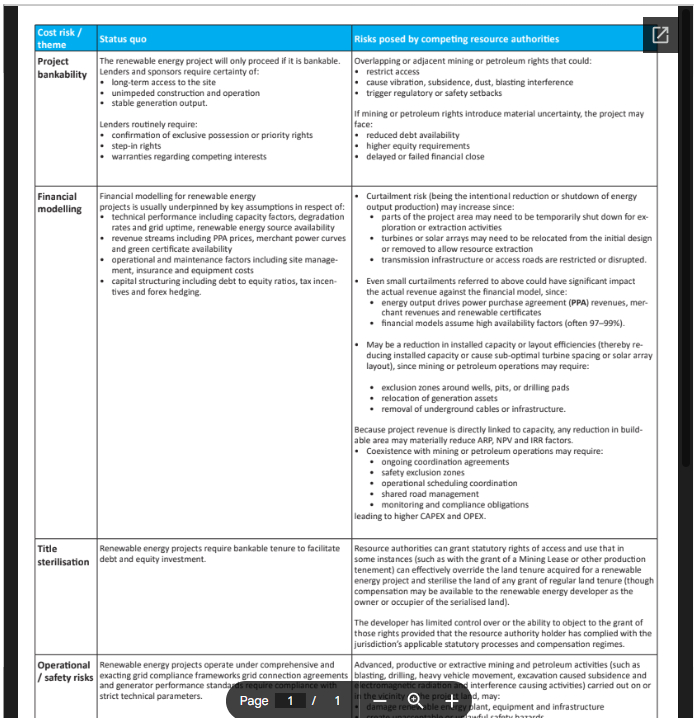
For developers, lenders and investors, the key issue is not simply whether these rights exist, but how they may affect the bankability, project financial modelling and long-term viability of a renewable energy generation and storage projects.
This article explores why competing resource authorities present a material risk to renewable energy projects and outlines practical steps developers can take to manage that risk.
Why is this important?
Renewable energy projects are capital-intensive, long-life infrastructure assets. Their viability depends on predictable land use, stable generation output and the ability to operate without interference for long periods of time.
Where mining or petroleum rights overlap with or sit adjacent to project land, they can introduce uncertainty that affects most stages of renewable energy project lifecycle including feasibility, financial performance, operations, approvals, and asset value. These conflicts can reduce revenue, increase costs, delay financing, and undermine long-term certainty, ultimately disrupting project viability and the commercial balance underpinning land access agreements.
While the existence of resources tenements rarely stops a renewable energy project in its tracks (in our experience a large majority of renewable energy projects have at least some overlapping tenements applicable to their project areas) there are important risks and mitigation measures developers, sponsors and lenders should take into consideration when looking to kick start and continue their involvement in a renewable energy project.
What to do?
Managing these risks requires a combination of due diligence, contractual protection, and operational coordination.
Due diligence
Developers, investors and lenders should undertake comprehensive investigations to identify existing or potential resource interests, including:
- detailed mining and petroleum title searches
- RFIs to landowners regarding past and present resource activities; and
- monitoring of public disclosures and market announcements by resource companies.
Early identification of risks is critical to structuring appropriate protections.
Contractual protections
Transaction documents with landowners should address competing interests directly. Key mechanisms include:
- exclusivity provisions preventing the grant of inconsistent rights without developer consent
- warranties confirming no existing agreements or negotiations with resource authority holders
- termination rights where risks cannot be mitigated
- abatement mechanisms to adjust payments if land use is impacted.
The goal is to align the landowner’s obligations with the project’s need for certainty.
Operational strategies
Where coexistence cannot be avoided, proactive engagement is essential. Developers should:
- seek to enter coordination deeds with resource authority holders
- establish clear protocols for shared access and infrastructure
- agree on safety setbacks and operational scheduling
- pursue statutory compensation where available.
These arrangements will not eliminate risk but can help manage and allocate it more effectively and in a contractually predictable and bankable manner.
Takeaway
The intersection of renewable energy development with mining and petroleum interests is an increasingly common and complex feature of the Australian energy landscape.
For renewable developers, the key challenge is not simply securing land but securing certainty of use over the life of the project. Without that certainty, core assumptions underpinning bankability, financial modelling, and asset value incur inherent risk.
A disciplined approach grounded in rigorous due diligence, robust contractual protections, and practical operational planning is essential. Developers who proactively address these issues will be better positioned to navigate competing land uses and deliver projects that are both financeable and resilient over the long term.
This publication does not deal with every important topic or change in law and is not intended to be relied upon as a substitute for legal or other advice that may be relevant to the reader's specific circumstances. If you have found this publication of interest and would like to know more or wish to obtain legal advice relevant to your circumstances please contact one of the named individuals listed.
The content of this article is intended to provide a general guide to the subject matter. Specialist advice should be sought about your specific circumstances.
[View Source]