

Key Takeaways:
- Prepare for a cannabis tax audit by retaining thorough financial records, following GAAP-compliant accounting methods as a best practice, and staying current on all federal tax obligations.
- Work with experienced cannabis accountants to document tax positions, accurately track COGS, and respond quickly to any IRS audit notice.
- If faced with unfavorable audit results, consider appealing through the IRS Independent Office of Appeals or, if necessary, pursuing Tax Court.
—
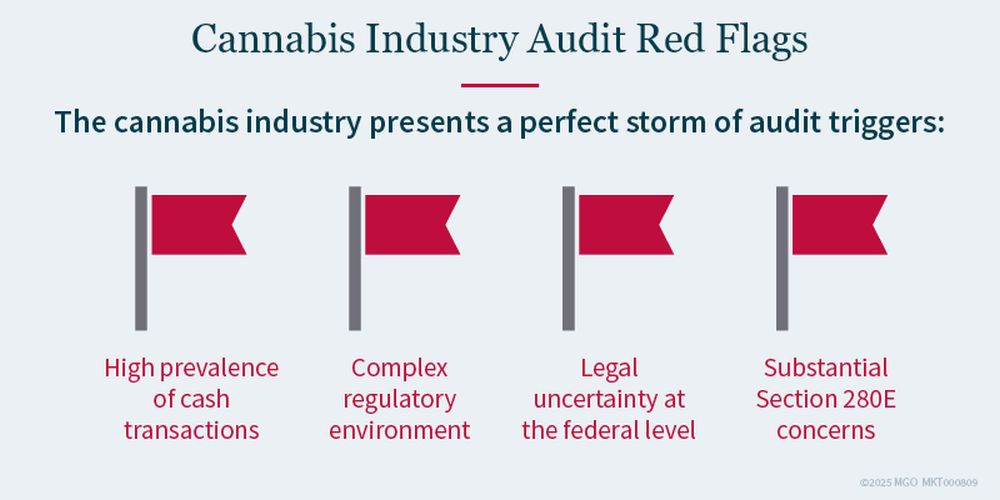
As a cannabis business owner, you operate in one of the most heavily scrutinized industries in America. With Section 280E hanging over all plant-touching activities and limiting business deductions, you’re already carrying a heavy tax burden. So adding a potential audit to the mix, it’s understandable why tax compliance might keep you up at night.
But here’s the good news: with proper preparation, you may be able to reduce audit risk and improve your ability to respond effectively if an examination occurs — and with professional support you may have opportunities to pursue available administrative remedies, adjustments, or appeals, depending on the facts or circumstances. Let’s walk through a comprehensive strategy to help you prepare for and survive during an IRS examination.
Your Four-Step Cannabis Audit Preparation Plan
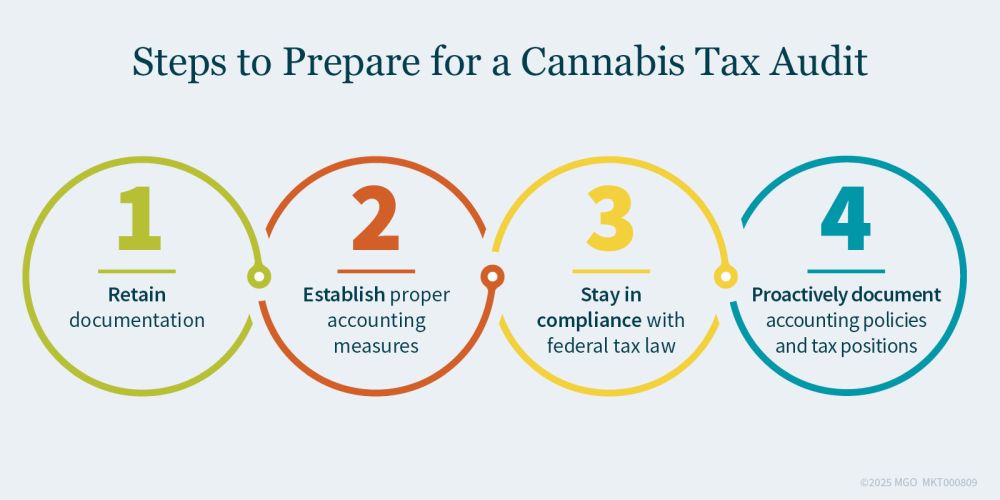
Taking proactive steps now can save you significant headaches (and money) later. Here’s how to get your cannabis business audit-ready:
1. Retain Proper Documentation
The foundation of audit defense is comprehensive documentation. In the event of an audit, you’ll need to provide evidence of every transaction under IRS review. These documents must be organized so they can be quickly retrieved and linked to general ledger entries.
Essential documents to preserve:
- General ledger (always requested during an examination)
- Financial statements (trial balance, profit and loss, balance sheet, chart of accounts, etc.)
- Point of sale transaction data
- Invoices, receipts, and purchase orders
- Credit card statements
- Agreements (intercompany, licensing, management, etc.)
- Board and meeting minutes — particularly for major events like M&A activity or ownership and structure changes
- Cash logs (especially important!)
- Payroll documentation and independent contractor agreements
- Rent payment records, property tax bills, utility bills, and other overhead documentation
Board and meeting minutes are often overlooked, but examiners routinely ask for them. C-corporations face stricter state-law requirements here than LLCs or partnerships, but every structure should document major organizational changes, regardless of what state law requires.
Since the IRS can leverage an extended statute of limitations when income tax is “substantially understated”, you should generally retain most documents for seven years and critical formation documents indefinitely.
2. Establish Proper Accounting Methods
As a best practice, your accounting and record-keeping should align with generally accepted accounting principles (GAAP), particularly for inventory accounting — the key to managing 280E exposure.
Critical accounting practices:
- Accrual method of accounting: As a business that uses inventory accounting and reports cost of goods sold (COGS) expenses, you’re generally required to use accrual accounting. This means assigning values to inventory items based on acquisition and development costs.
- Understanding COGS: Your COGS must reflect actual costs of goods sold — not merely renamed ordinary expense deductions. Identify each expense and correctly categorize it as direct or indirect. When allocating selling, general and administrative (SG&A) expenses, they should specifically tie to production costs (not just be a generic percentage of overhead).
- Straight-line depreciation: Recent IRS cases and guidance establish that only straight-line depreciation methods (used for book purposes) are allowable for inclusion in COGS. Bonus depreciation and modified accelerated cost recovery system (MACRS) are not authorized.
3. Stay in Compliance With Federal Tax Law
This may seem obvious, but it bears repeating: the best way to stay off the IRS radar is to pay your taxes. Failure to remit taxes is among the strongest audit risk indicators.
With limited access to banking services and capital, some cannabis operators are tempted to treat delinquent tax payments as a financing tool. While it may seem attractive for cash flow, it dramatically increases your audit risk.
This applies doubly for federal employment taxes (withholding, FICA, etc.), where penalties and interest are severe. The IRS imposes the Trust Fund Recovery Penalty against “responsible persons” in their individual capacity, at 100% of the underlying tax liability.
The consequences of unpaid tax liabilities can extend beyond the business itself. Depending on the circumstances and the type of tax involved, owners of pass-through entities such as LLCs and S corporations may face personal liability for certain tax obligations.
Businesses should also consult legal counsel regarding potential insolvency or bankruptcy issues. Bankruptcy treatment for cannabis-related businesses continues to evolve, and eligibility for protection may vary based on the specific facts, the nature of the business, and the jurisdiction involved.
4. Proactively Document Accounting Policies and Tax Positions
If there’s any confusion about accounting practices or you lack back-office support, hire an experienced cannabis accountant to:
- Perform a 280E/COGS study to identify appropriate tax treatment
- Determine whether your “separate trade or business” truly qualifies as separate
- Address outstanding tax balances with an installment agreement or “offer in compromise”
- Review document creation/retention policies
- Ensure inventory accounting procedures align with GAAP/International Financial Reporting Standards (IFRS) rules
Receiving an IRS Audit Notice: Your Action Plan
If you receive an audit notice, don’t panic. Follow these steps:
1. Understand the Situation
The IRS conducts several types of audits — from relatively simple correspondence audits to intensive field audits where they visit your facility. Note that the IRS will first contact you via traditional mail (never by phone or email).
2. Act Immediately
Initial IRS contact letters typically require a response within 10-30 days. Don’t procrastinate. Reach out to a cannabis-specialized accountant immediately and execute a power of attorney so that your representative can contact the IRS auditor within the required timeframe.
3. Work With Qualified Professionals
An experienced representative will know cannabis accounting inside and out, understand how to navigate IRS examinations, and be familiar with IRS procedures and examination teams. They’ll help minimize risk and potentially negotiate a reasonable outcome.
4. Set the Right Tone
From the outset, build rapport and credibility with the IRS auditor. Organize document production, establish a reasonable timeline, and follow through on commitments.
5. Be Transparent About Known Issues
The IRS examiner is trained to identify errors and problems. If you know there’s a glaring error in your tax return or a gap in record-keeping, discuss the issue with your tax advisor and determine an appropriate response strategy. Reluctance may be perceived as fraudulent intent, whereas transparency might earn goodwill from the auditor.
Challenging Unfavorable Audit Results: Your Options
If your audit doesn’t result in an agreeable outcome, you have options:
1. Appeal
The IRS Independent Office of Appeals offers a path to resolving disputes without litigation. To successfully navigate this process, you’ll need to clearly present your case, provide all supporting documentation, and demonstrate where the IRS assessment went wrong.
2. Tax Court
As a last resort, you can take your case to U.S. Tax Court. While there have been some successes (Harborside reduced their tax bill from $29 million to $11 million), note that every attempt to overturn 280E has failed in Tax Court. Consider whether potential savings justify the resources invested in litigation.
Beyond the IRS: State and Local Tax Risks
Don’t forget that maintaining compliance with state and local tax laws is equally important. State and local regulators issue your licenses and are directly connected to tax enforcement. Even a minor tax infraction at the local level could lead to license revocation.
Types of audits to keep in mind:
- State income tax
- State sales and use tax
- State excise tax
- Local business tax
Take Control of Your Cannabis Tax Strategy Today
Being “audit-ready” not only helps you navigate an IRS examination but also implements financial best practices that benefit your business in numerous ways — from regulatory compliance to preparing for potential acquisition or initial public offering (IPO).
The cannabis industry presents tremendous opportunities for entrepreneurs ready to forge new paths. But significant risks await the unprepared. By following these guidelines, you’ll be positioned not just to survive an audit, but to thrive in this challenging regulatory environment.
The content of this article is intended to provide a general guide to the subject matter. Specialist advice should be sought about your specific circumstances.
[View Source]