

Industrial automation is a large and growing market, driven by the convergence of AI, Industry 4.0, smart manufacturing, and clean energy investment. While hardware still dominates current revenues, software and data-centric solutions are capturing a growing share of spend and are expected to drive a disproportionate share of value creation through the decade. Long-term infrastructure and industrial capex plans, particularly in transport, energy, and digital networks, provide additional demand tailwinds.
Within this, process, factory, and warehouse automation sub‑segments show strong growth potential, expected to expand at healthy rates through 2030. However, this market growth has not been evenly reflected in company performance. Many European and U.S. players combine strong margin profiles with modest recent growth, while several Asian competitors are growing faster from a lower-margin base. Benchmarking reveals that, for some established players, automation revenues have lagged behind wider market growth over the past three years, and in some cases, declined in real terms.
Long, project‑based sales cycles, capital intensity, and skill shortages make it challenging to turn attractive market CAGRs into consistent, profitable top‑line expansion, implying that exposure to favourable themes is no longer sufficient. This highlights the need for focused value creation plans to address structural constraints and reposition business models.
AlixPartners has developed an integrated value-creation plan aimed at unlocking the sector’s full potential. Our experience highlights five critical levers that consistently drive performance and should form the foundation of any comprehensive value-creation plan:
- Strategic growth agenda and integrated go-to-market approach
- Alleviating supply chain fragility and working capital pressure
- Geographical footprint and capacity
- SG&A and operating model improvements
- Strategic M&A and portfolio management
Maintaining strong commercial performance is critical to protecting value
1. Strategic growth agenda and integrated go to market approach
Automation is central to the shift from manual processes to AI-enabled, data-driven operations. However, strong sector demand hasn’t consistently translated into profitable growth. Many companies, particularly diversified groups in Europe and the U.S., struggle to convert tailwinds into organic growth due to product-centric selling, unclear growth strategy, diffused go-to-market models, complex portfolios, and weak pricing discipline. Customers increasingly expect integrated solutions, faster deployment, and support in managing technological and organisational change, rather than simply purchasing standalone products, making it essential to adapt commercial models and offerings.
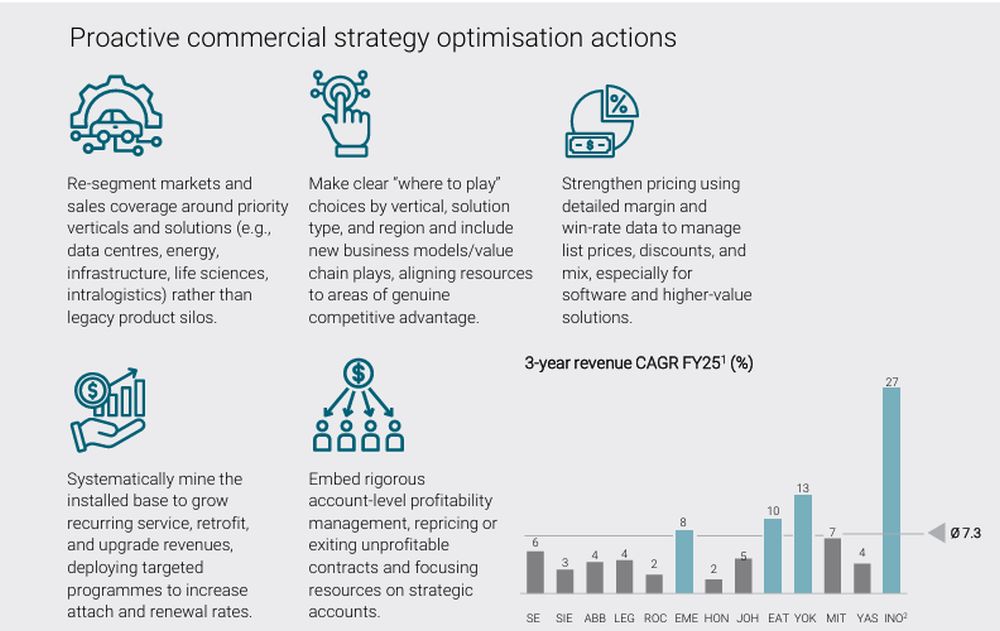
An operational approach to supply chain management to reduce working capital and unlock cash to fund investment
2. Alleviating supply chain fragility and working capital pressure
Industrial automation businesses have invested heavily in centralised procurement, but value is often pursued narrowly through unit price negotiations. In an environment of ongoing component shortages, long lead times, and elevated working capital needs, this approach can miss structural opportunities and, in some cases, increase risk. Limited transparency on should-costs, supply criticality, and total cost of ownership leaves many organisations without a clear view of vulnerabilities and savings potential.
To maintain service levels, many vendors have increased safety stocks, tying up cash in inventory and further elevating working capital requirements. Meanwhile, global logistics disruption, reshoring, and trade tensions have added volatility and complexity to sourcing strategies and network design, making a more holistic, risk-aware approach to procurement and supply chain essential.
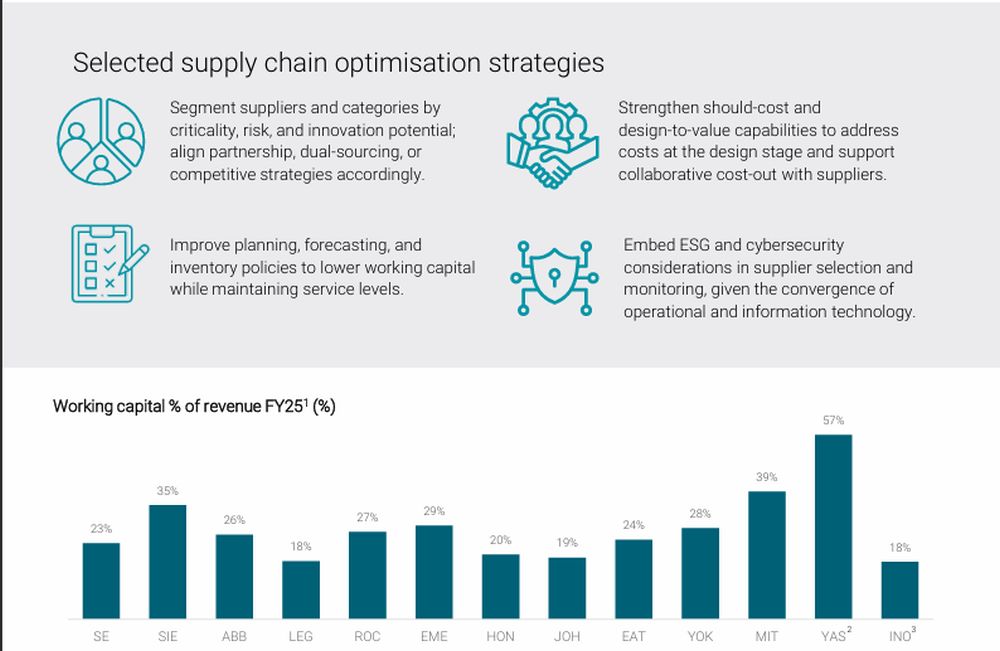
Optimising the network frees capacity and capital for growth
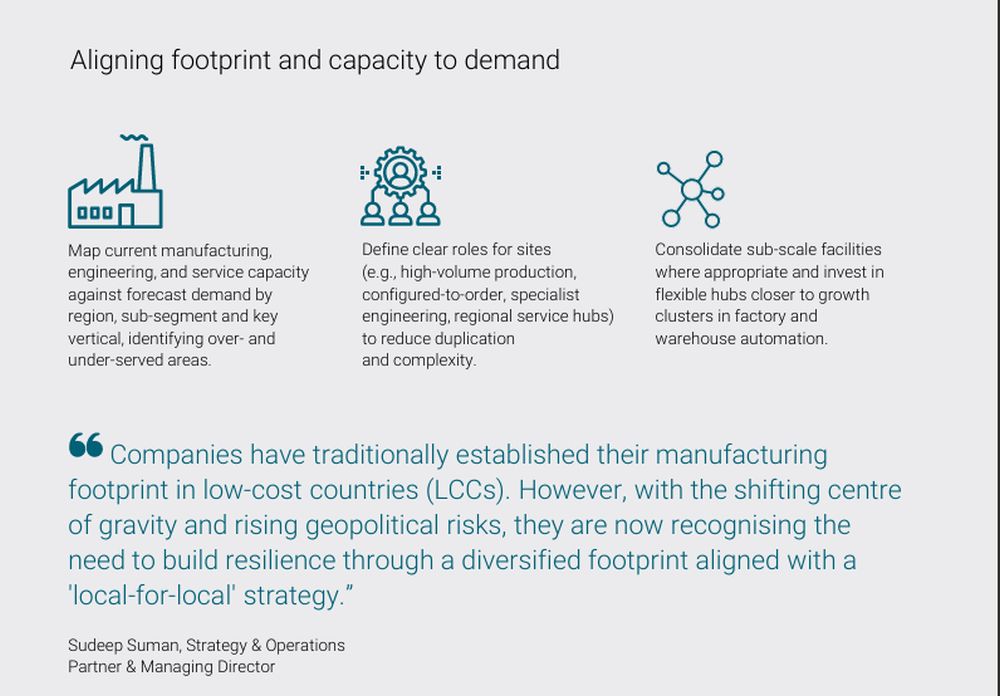
3. Geographical footprint and capacity
Many industrial automation businesses operate global manufacturing and integration footprints shaped by historical growth and acquisition patterns rather than current growth opportunities, with a long tail of smaller U.S. players and a concentration of larger European champions. As sub-segments grow at different rates and factors like regional demand, reshoring, and customer expectations shift, mismatches emerge between capacity, capability, and demand. This leaves underutilised assets in some markets, bottlenecks in others, and complex, costly logistics.
To read this article in full, please click here.
The content of this article is intended to provide a general guide to the subject matter. Specialist advice should be sought about your specific circumstances.
[View Source]


