

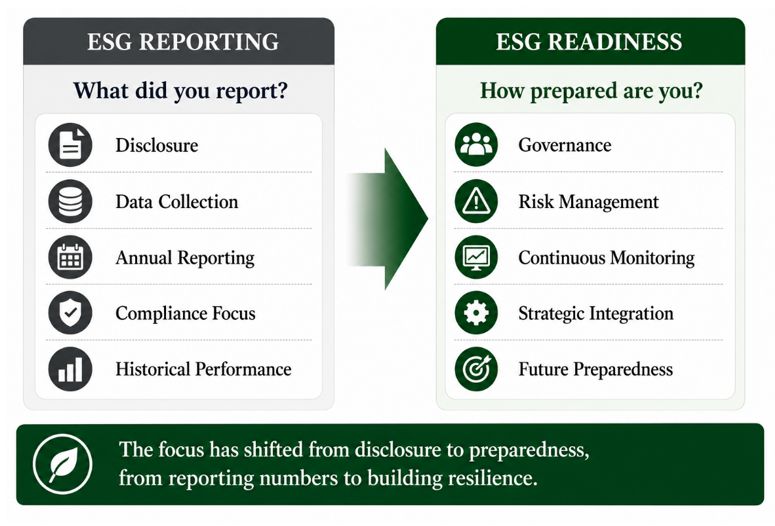
For years, Environmental, Social, and Governance (ESG) efforts have largely revolved around reporting. Organizations focused on publishing sustainability reports, disclosing greenhouse gas emissions, and responding to investor questionnaires. While transparency remains important, the ESG landscape is rapidly evolving. Today, stakeholders are no longer satisfied with what companies disclose- they want to understand how prepared organizations are to manage ESG risks, comply with emerging regulations, and capitalize on sustainability opportunities.
This shift marks the emergence of a new business imperative: ESG Readiness.
The Evolution of ESG Expectations
Customers, investors, regulators, lenders, and supply chain partners are increasingly scrutinizing how organizations manage ESG-related issues. Climate change, resource scarcity, biodiversity loss, human rights concerns, circular economy requirements, and governance failures are no longer viewed as peripheral sustainability topics. They have become core business risks.
As ESG regulations expand globally, companies are expected to demonstrate not only their ESG performance but also the systems, governance structures, and processes they have in place to effectively manage ESG risks.
The focus is gradually moving from ESG Reporting to ESG Readiness.
What is ESG Readiness?
ESG Readiness refers to an organization's ability to identify, assess, manage, monitor, and disclose ESG-related impacts, risks, and opportunities.
An ESG-ready organization possesses:
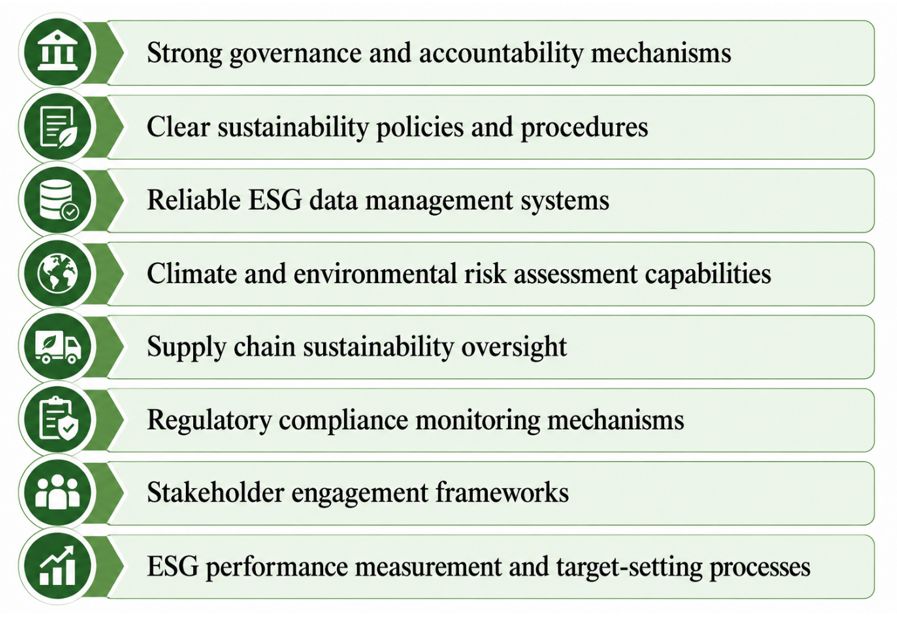
In simple terms, ESG Readiness evaluates whether a company has the foundational capabilities required to meet current and future ESG expectations.
Why ESG Readiness Matters
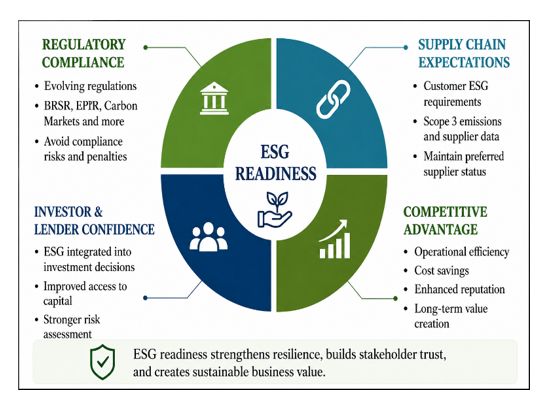
1. Increasing Regulatory Requirements
Governments and regulators worldwide are introducing more comprehensive sustainability disclosure and due diligence requirements. In India, initiatives such as BRSR, EPR frameworks, carbon markets, waste management regulations, and sector-specific environmental obligations continue to evolve.
Organizations that proactively assess their readiness are better positioned to adapt to changing regulatory expectations and avoid compliance risks.
2. Supply Chain Pressures
Large corporations are increasingly evaluating suppliers based on ESG performance and sustainability maturity. Many suppliers now receive requests for carbon emissions data, ESG policies, human rights practices, waste management information, and sustainability commitments.
Companies lacking ESG readiness may face challenges in maintaining preferred supplier status or participating in global supply chains.
3. Investor and Lender Expectations
Financial institutions are integrating ESG considerations into investment and lending decisions. Investors seek confidence that companies understand their ESG risks and have credible plans to manage them.
Organizations with strong ESG governance and risk management frameworks are often viewed as more resilient and better prepared for long-term value creation.
4. Competitive Advantage
ESG readiness can unlock opportunities beyond compliance. It enables organizations to identify efficiency improvements, reduce resource consumption, lower emissions, strengthen stakeholder trust, and enhance corporate reputation.
Companies that act early often gain a strategic advantage over competitors who view ESG solely as a reporting exercise.
Key Components of an ESG Readiness Assessment
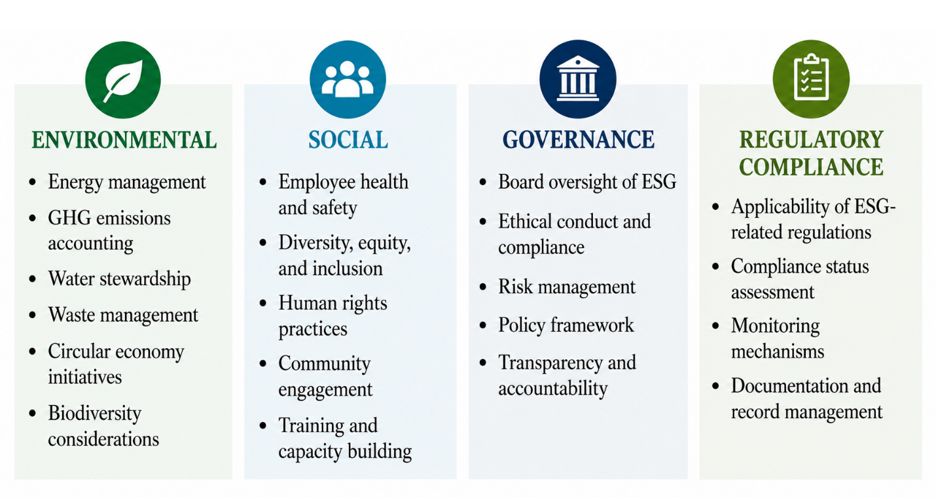
An ESG Readiness Assessment evaluates an organization's maturity across several dimensions: The outcome provides a clear understanding of current maturity levels and identifies priority actions for improvement.
Moving from Assessment to Action
Conducting an ESG Readiness Assessment is only the first step. The true value lies in translating findings into action.
Organizations should focus on:
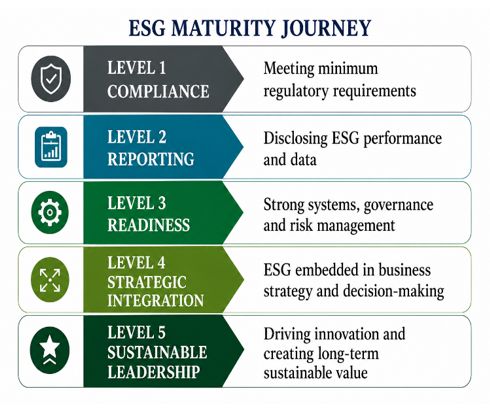
- Closing governance and policy gaps
- Establishing ESG data management systems
- Conducting materiality assessments
- Developing sustainability targets
- Strengthening regulatory compliance processes
- Enhancing supply chain sustainability practices
- Building internal ESG capabilities
A structured roadmap helps organizations progress from basic compliance toward strategic ESG integration.
The Future Belongs to ESG-Ready Organizations
As ESG expectations continue to evolve, preparedness will become a defining factor in long-term business success. Organizations that proactively build ESG capabilities today will be better positioned to manage regulatory changes, respond to stakeholder expectations, strengthen operational resilience, and unlock sustainable growth opportunities.
The conversation is no longer limited to ESG reporting; it is increasingly focused on an organization's ability to identify risks, seize opportunities, and integrate sustainability into core business strategy. In this new landscape, ESG readiness is emerging as a critical indicator of corporate resilience and future competitiveness.
Recognizing this shift, Corporate Professionals has developed a comprehensive ESG & Regulatory Readiness Assessment to help organizations evaluate their current ESG maturity, understand applicable compliance requirements, identify key risks and opportunities, and establish a practical roadmap for ESG implementation. By providing actionable insights and a structured approach, the assessment enables organizations to move beyond compliance and build a strong foundation for sustainable value creation.
The organizations that succeed in the coming decade will not be those that simply report on ESG performance, but those that are genuinely prepared to navigate an increasingly sustainability-driven business environment.
The content of this article is intended to provide a general guide to the subject matter. Specialist advice should be sought about your specific circumstances.
