

From team selection to the finish line
Designing, executing and winning Consumer and Industrials carve-outs
Don’t just divest. Win the race.
The most sophisticated sellers realise carve-outs can be a fantastic financial arbitrage play. The sum of the parts is often worth more than the whole, and every dollar of CarveCo EBITDA improvement can be worth 10–20x in deal value (the multiple), while the cost to implement it is often less than 1x.
However, few sellers run their best race; they don’t fully maximise value by articulating a full potential CarveCo. Two lessons stand out:
- The race is won or lost, long before the starter’s bell: Value creation needs to be brought forward — before the decision to divest — ideally embedded in ongoing portfolio analysis. The earlier you move the value levers, the more of them price into the deal
- Carve-outs aren’t a normal sprint. specialised race tactics and handoffs need to be learned: Carve-outs are not “Business As Usual” (BAU) and require a specific execution muscle to be built in advance. Choosing to spin, sell or list is a strategic call that demands its own tool-set. A superpower is to flex this muscle while simultaneously executing BAU.
Most carve-out articles will tell you where teams stumble, or what the accounting carve-out guidance says. In this series we seek to buck that trend and focus on ‘the how’: the decisions, capabilities and sequencing that turn a carve-out into a premium performing deal.
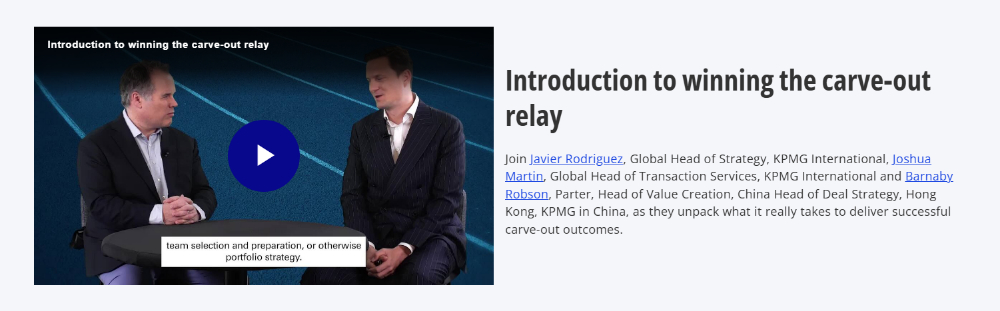
Global forces driving carve-outs
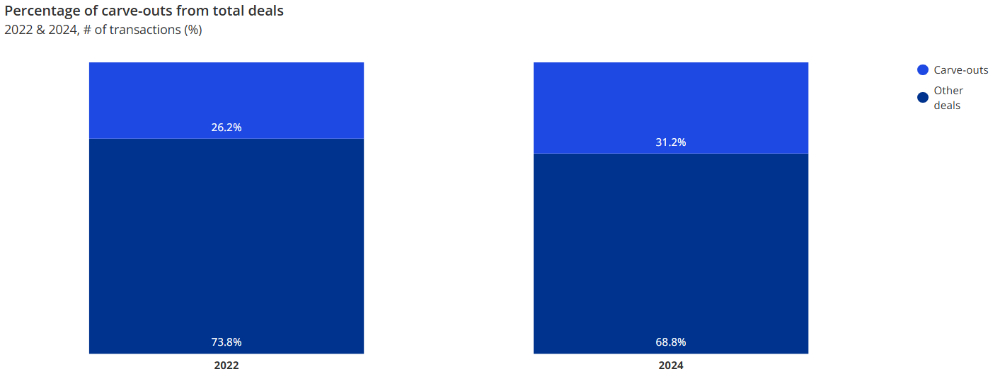
Almost one third of global deal volume is carve-outs, and this proportion is rising. Five structural forces are driving this momentum.
- Focus on the core: More than 50% of 20241 carve-outs were driven by a desire to focus on the core.
- Risks in the tail: Cybercrime2 costs are projected to reach $12 trillion in 2025, pushing firms to isolate vulnerable business units.
- Unlocking asset agility: Consumer and Industrial conglomerates are using carve-outs to release assets from corporate bureaucracy.
- Strong PE appetite: PE-led break-ups in consumer groups drive 35% CAGR1 in apparel and leisure carve-outs.
- Tariffs and decoupling: More than 20%1 of strategic carve-outs involve the sale of companies located in different countries than the HQ of the seller.
Carve-outs on the rise
Carve-outs are outpacing the wider M&A market and now account for almost one in every three deals worldwide. Public-company divestitures grew at approximately 8.5% CAGR from 2022 to 2024, and rose 16.3% year-on-year in 2023-24, even as overall M&A stayed flat.1 Recently, corporate break-ups and spins have added fresh momentum to portfolio reshaping.
Despite the global deals market coming under pressure, carve-outs are increasingly appealing to buyers looking to tap into undervalued and/or underinvested assets with potential to unlock value opportunities.
Carve-outs are complex, value slips unless you plan early for it
Carve-out complexity means sellers take their eye off the ball when it comes to value creation. We believe value creation should be embedded from the start, and set out how to do this, in this report.
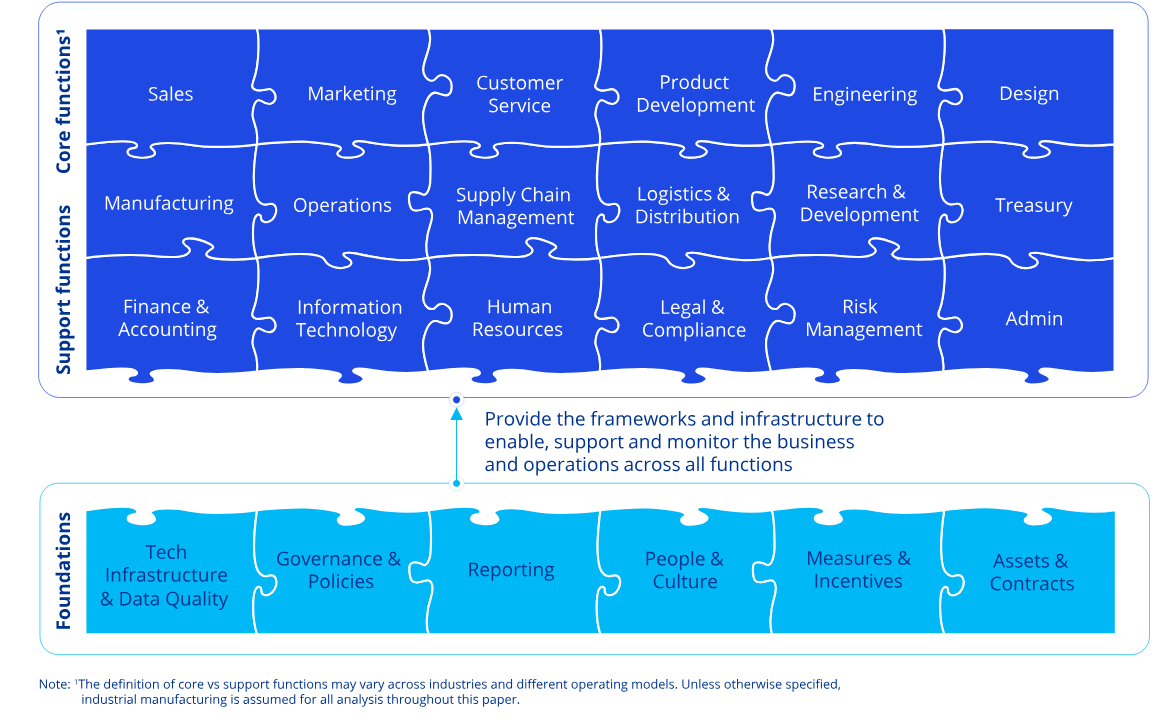
A carve-out entails significant complexities at both functional and foundational levels. Unlike selling an independent subsidiary, in carve-out transactions, you must also unwind shared systems, people and contracts.
Ultimately some of the best carve-out outcomes come from identifying and addressing complexities and value opportunities early, regardless of the playbook chosen.
Roadmap for an effective carve-out
Too many teams focus only on the race, rushing into the financials without proper preparation. We believe more time should be spent upfront — picking and training the squad, defining the race plan, and getting fit — before the race even begins.
Many carve-out articles tell you where teams stumble, or what the accounting carve-out guidance says. In this series we seek to buck that trend, and focus on ‘the how’: the decisions, capabilities and sequencing that turn a carve-out into a premium performing deal.
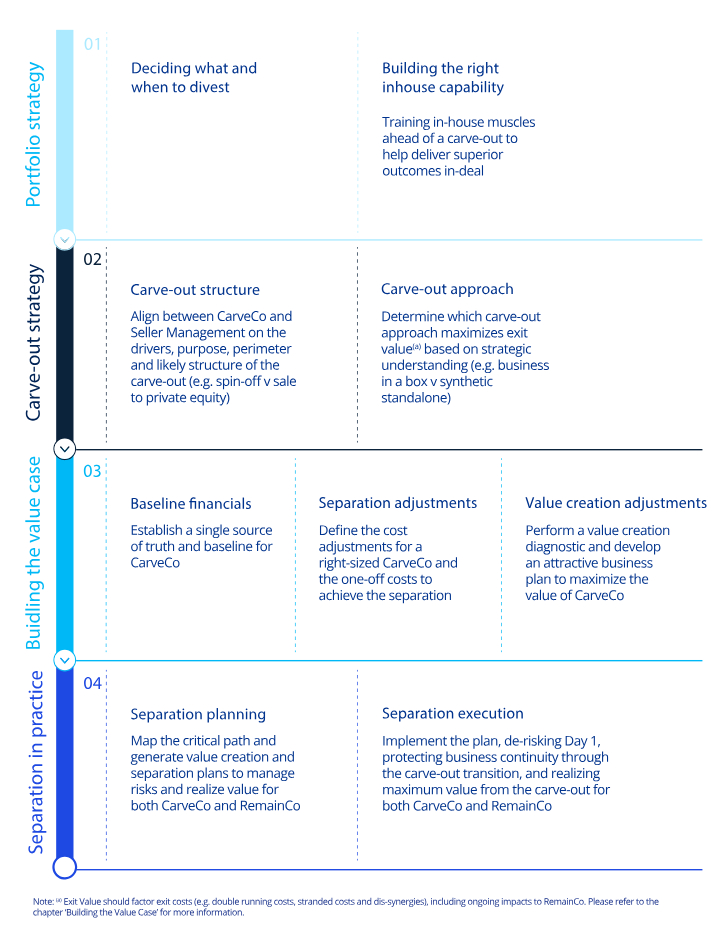
We have organised this series into four chapters, which answer the following key questions:
-
Selection & preparation (Portfolio strategy)
How can we embed value creation into our year-round BAU portfolio management, to help ensure we are always fielding the strongest team and make optimal divestment decisions? How can I build organisational capabilities long ahead of the race day?
-
Setting the race plan (Carve-out strategy)
There are four strategic race-plans for a carve-out: Business-in-a-box, Partial Standalone, Synthetic Standalone, and Integrated with RemainCo. How do I choose the playbook which best fits the deal and positions us to win?
-
Getting off to a good start (Building the value case)
How do I enhance the performance of the CarveCo — moving beyond baseline performance, to create a winning proposition that bidders can fully value and price into the deal?
-
Executing a flawless exchange (Separation in practice)
How do I choose the right separation model so that I can run the separation, and execute the final handover with precision, while minimising disruption and maximising value, for a clear win?
This series translates our real-world experience into insights and tools to help organisations push beyond baseline thinking and capture the gold-medal value a carve-out can offer.
Footnotes
1 KPMG Analysis; Dealogic
2 Forrester
The content of this article is intended to provide a general guide to the subject matter. Specialist advice should be sought about your specific circumstances.
[View Source]