Managing proof of use for trademark rights is not always glamorous. However, overlooking this routine administrative step can cause considerable friction in time-pressured trademark workflows, such as oppositions, cancellations, and renewals. Fortunately, AI-powered solutions now exist to support and centralize trademark evidence of use collection, organization, and preparation.
From difficulty collating trademark use to defend rights against opposition and cancellation actions to struggles preparing compliant evidence specimens for US renewals, proof of use is a common source of friction in trademark workflows. Little wonder that many trademark professionals are looking to technology, including AI, to help them better manage their trademark evidence collection, organization, and preparation processes.
In our recent webinar on “Proof of Use in Practice,” Marie Farges, Client Solutions Specialist Manager at Questel, discussed how the UZ.IP trademark evidence of use software is helping brand owners unite their evidence and legal strategies with UZ.IP co-founder and European Trademark Attorney Julien Scicluna. In this article, we summarize the key points from their discussion.
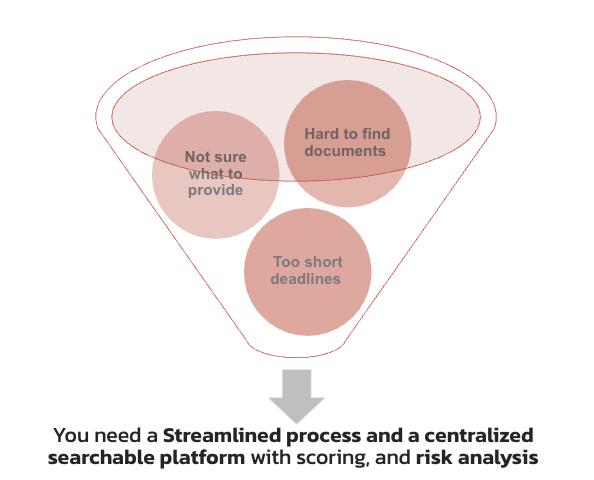
Three Common Sources of Friction in Proof of Use Management
Managing proof of use for trademark rights is fraught with pitfalls that can impact both productivity and legal security:
Short Deadlines
Short timelines for oppositions and cancellations add pressure to trademark evidence of use collection, especially if that evidence is spread or duplicated across disparate locations, both in-house and at external counsel.
Hard-to-Find Documents
Evidence is frequently siloed in legacy folders or email chains, making it challenging to find relevant, high-quality documents during a crisis.
Not Sure What to Provide
Without a centralized system, teams waste resources on manual searches and manage redundant evidence sets circulating between in-house departments and external attorneys.
What's the Solution?
You need a streamlined process and a centralized searchable platform with scoring and risk analysis.
Real-Life Scenarios: High-Stakes Lessons from the EU
As these four real-life cases show, the quality and specificity of trademark evidence of use are critical even for famous brands.
1 The Big Mac Case: Fame Is Not a Shield
- The Challenger: In 2017, Supermac’s, an Irish chain, sought to expand in the EU and faced opposition from McDonald’s based on its "Big Mac" trademark.
- The Claim: Supermac’s argued McDonald’s wasn’t genuinely using the "Big Mac" mark in the EU for specific goods/services.
- The Ruling: The EUIPO ruled McDonald’s failed to provide sufficient relevant proof of genuine use during the required five-year period.
- Insufficient Evidence: McDonald's relied on generic marketing materials (brochures, website printouts, and affidavits) that lacked concrete sales figures, market presence, or targeted advertising.
- Key Takeaway: Brand fame does not replace proof of use for trademark purposes; generic marketing evidence is not sufficient.
2 The Testarossa Case: The Value of the Aftermarket
- The Challenger: In 2017, Supermac’s, an Irish chain, sought to expand in the EU and faced opposition from McDonald’s based on its "Big Mac" trademark.
- The Claim: Supermac’s argued McDonald’s wasn’t genuinely using the "Big Mac" mark in the EU for specific goods/services.
- The Ruling: The EUIPO ruled McDonald’s failed to provide sufficient relevant proof of genuine use during the required five-year period.
- Insufficient Evidence: McDonald's relied on generic marketing materials (brochures, website printouts, and affidavits) that lacked concrete sales figures, market presence, or targeted advertising.
- Key Takeaway: Brand fame does not replace proof of use for trademark purposes; generic marketing evidence is not sufficient.
3 H by Hermès: The Precision Requirement
- The Challenger: In 2022, a third party filed a revocation action against an EU trademark owned by Hermès covering specific goods beyond its core leather products.
- The Claim: The applicant claimed Hermès had not genuinely used the contested mark in the EU for the designated goods within the required five-year period.
- The Ruling: The EUIPO Cancellation Division found the proof of use insufficient for certain goods and upheld the non-use claim (decision later subject to appeal; Board of Appeal judgment dated September 2024).
- Insufficient Evidence: Evidence relied mainly on branding material and limited documentation, without a clear, concrete link between the mark and actual commercial exploitation of the specific goods claimed.
- Key Takeaway: Owning a prestigious brand does not excuse the lack of product-specific evidence of use.
4 Baccarat: The "Silent Revocation" Risk
- The Challenger: In August 2023, a third party applied for revocation of Baccarat’s EU trademark covering goods beyond its core crystal business (notably textiles and clothing).
- The Claim: The challenger argued that Baccarat was not genuinely using the mark in the EU for the contested goods during the relevant five-year period.
- The Ruling: The EUIPO found that Baccarat failed to demonstrate genuine use of the mark for those goods and services and ordered partial revocation.
- Insufficient Evidence: Submitted materials (limited invoices, small sales volumes, website listings) were considered sporadic and commercially insignificant, with no convincing proof of sustained market presence (Decision from the Board of Appeal from September 2024).
- Key Takeaway: Expanding into new classes without real market activity creates a "silent revocation" risk.
Proof of Use and US Trademark Renewals
The Trademark Modernization Act (TMA), effective since December 2021, cleared the way for a use-based trademark register in the US. To manage their renewals, brand owners faced more demanding examination procedures, including the need to prove use in commerce for each good and service at the 5-year statutory maintenance deadline.
The landmark ‘Old School’ and Lens.com cases provide a warning on what can go wrong.
- Old School: In 2022, the Trademark Trial and Appeal Board (TTAB) of the USPTO granted cancellation actions for two registrations of the ‘Old School’ mark, on the basis that the registrant had failed to provide credible evidence of bona fide use or intent to resume use of the mark involving clothing goods. Attempts to license or sell the mark were not enough to establish use in commerce.
- Lens.com vs. 1-800 Contacts: The Federal Circuit ruled that software used only to enable an online service does not constitute valid trademark evidence of use for "computer software" as a product.
"Point-in-time" exercises (where evidence is scrambled together only when a deadline hits) are failing. USPTO proof of use must be viewed as a reusable asset rather than a one-off filing requirement.
The AI Solution: Leveraging UZ.IP for Trademark Evidence of Use
To manage this complexity, IP teams are turning to platforms such as the UZ.IP trademark evidence of use software to better support evidence collection, organization, and reuse. This technology shifts the workflow from manual paper shuffling to high-confidence automation for proof of use for trademark portfolios.
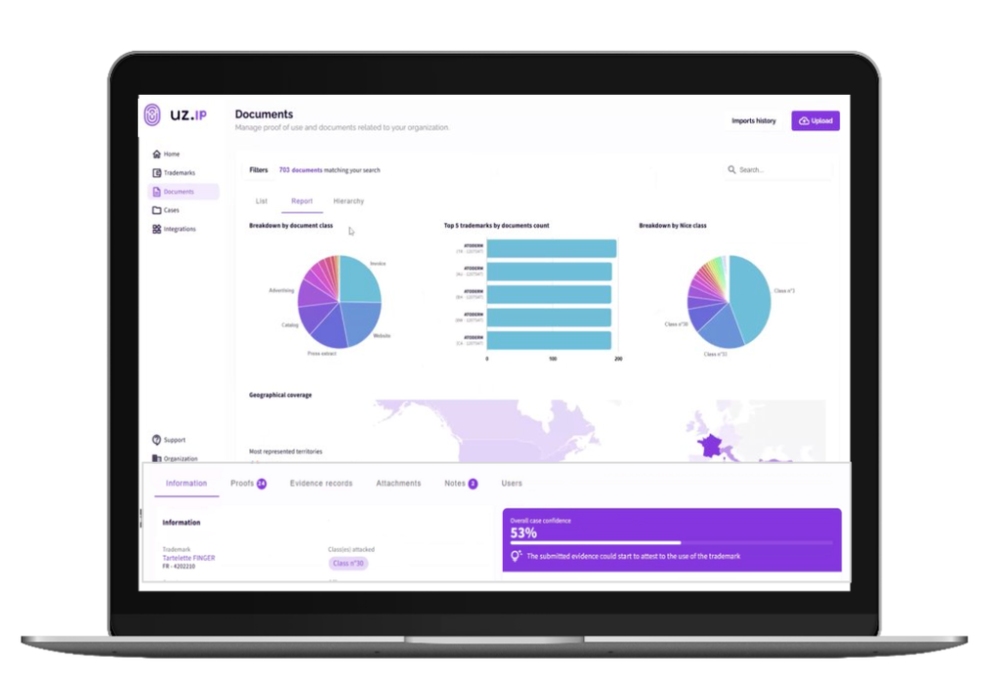
- Centralization & Visualization: Organize all trademark evidence of use in a single repository. Users can visualize geographical coverage on a world map and see class breakdowns to ensure the portfolio aligns with real-world sales.
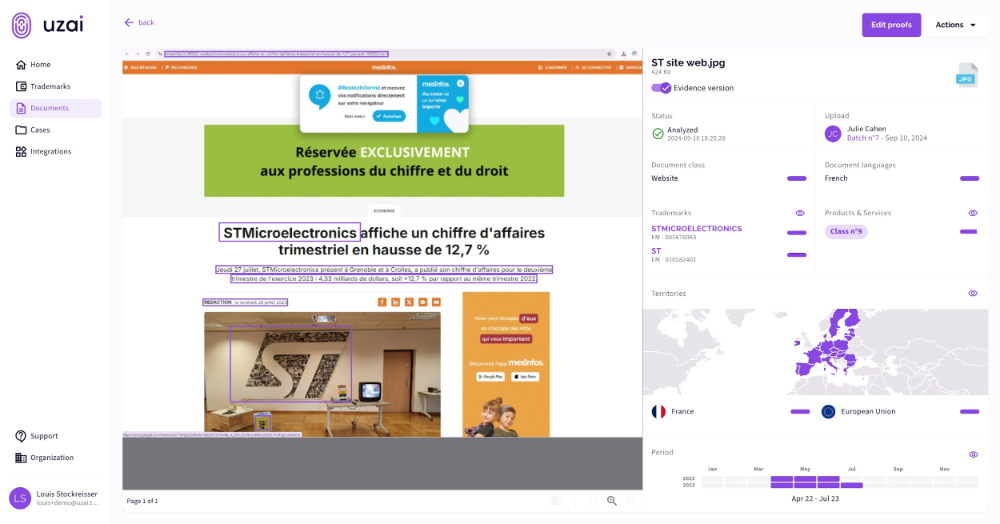
- Automated Analysis: Leverage the power of AI to analyze your documents automatically. The AI detects specific commercial indicators, such as product-ordering possibilities on a website, automatically classifying documents (invoices, press extracts, online shops) to build a robust record of trademark evidence of use.
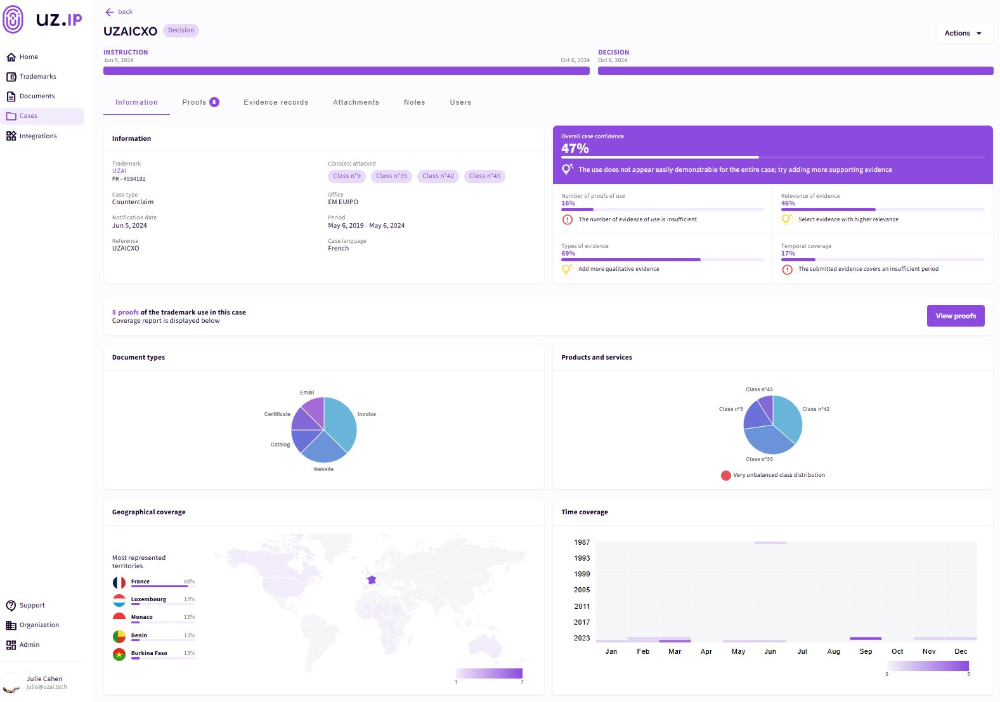
- Clear Case Management: Gain a clear vision of the case timeline, with reminders and AI-driven confidence scoring. The platform uses AI to generate an overall case confidence score, allowing teams to not only assess the strength of their USPTO proof of use submissions but also quickly generate office-compliant evidence records.
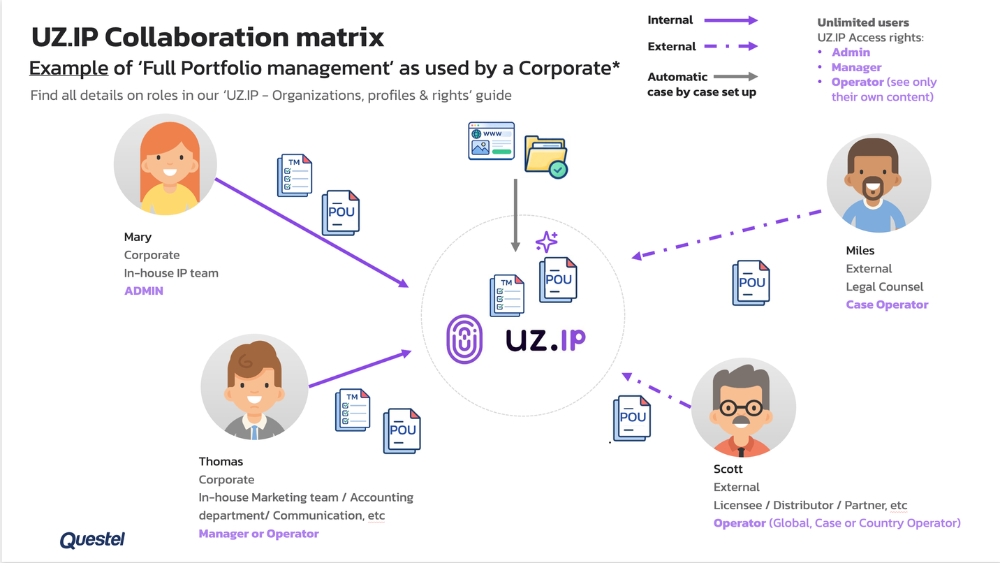
- A Collaborative Ecosystem: The platform creates a seamless workflow between IP attorneys, legal counsel, external licensees/distributors, and marketing advisors, enabling the quick preparation of proof packages for any jurisdiction.
Proof of Use and the Move Towards "Use Hygiene"
Trademark offices around the world are seeking to make cancellations easier and clean registries. This includes Canada, China, the EU, Mexico, Turkey, the UAE, and the UK, as well as the US:
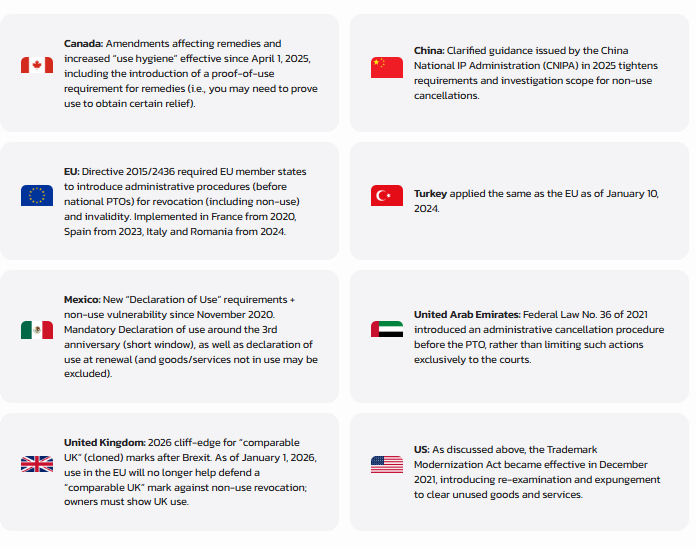
teams must adopt a culture of "use hygiene," aligning their registrations with documented, real-world trademark evidence of use.
Master Proof of Use for Your Trademark Portfolios
Many organizations lose valuable time not because evidence of use does not exist, but because it is scattered across business units, external counsel, distributors, shared drives, and email archives. The UZ.IP trademark proof of use software saves them valuable time by harnessing AI technologies to centralize trademark evidence of use collection, organization, and preparation.
To find out how you can improve the way you manage your trademark proof of use, including how AI technologies such as UZ.IP can assist, watch our webinar on “Proof of Use in Practice,” or contact our subject matter experts today.
The content of this article is intended to provide a general guide to the subject matter. Specialist advice should be sought about your specific circumstances.
[View Source]