

Washington lawmakers have increasingly focused on removing regulatory barriers to housing development in response to the state's housing affordability challenges. SB 5184, known as the Parking Reform and Modernization Act, continues that effort by limiting local minimum parking requirements for many residential and commercial developments.
For developers, the legislation creates new opportunities to design projects that better reflect market demand while potentially reducing development costs associated with excess parking requirements.
Why the Reform?
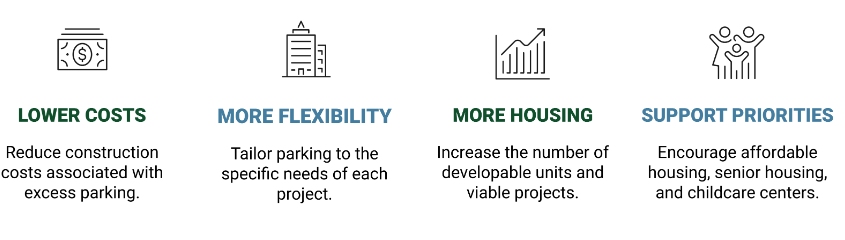
SB 5184 reflects the Legislature's recognition that mandatory minimum parking requirements can significantly increase development costs while limiting the flexibility needed to design projects that respond to local market conditions. Rather than applying a one-size-fits-all approach, the legislation gives developers greater flexibility to determine how much parking is appropriate for individual projects.
The legislation also seeks to encourage affordable housing, senior housing, and childcare facilities by eliminating minimum parking requirements for qualifying projects.
What Does SB 5184 Require?
SB 5184 applies to cities, including code cities, and counties with populations greater than 30,000. For jurisdictions covered by the law, SB 5184 establishes limits on local minimum parking requirements.
Maximum Parking Requirements
Cities and counties may not require more than:
- 0.5 parking space per multifamily dwelling unit;
- 1 parking space per single-family home; or
- 2 parking spaces per 1,000 square feet of commercial space.
Projects Exempt from Minimum Parking Requirements
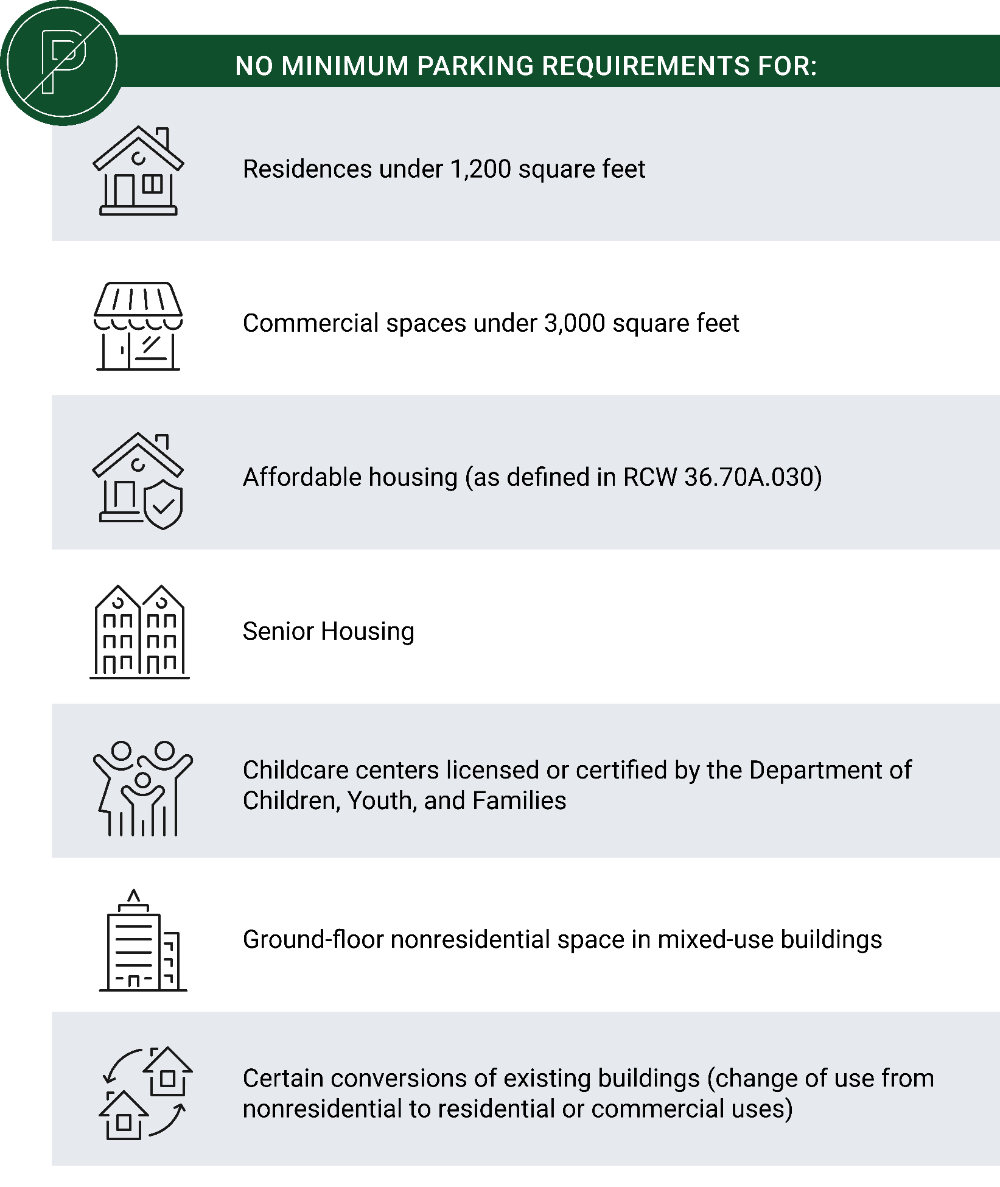
Minimum parking requirements generally may not be imposed for:
- residences under 1,200 square feet;
- commercial spaces under 3,000 square feet;
- affordable housing (as defined in RCW 36.70A.030);
- senior housing;
- childcare centers licensed or certified by the Department of Children, Youth, and Families;
- ground-floor nonresidential space within mixed-use buildings; and
- buildings undergoing certain changes of use from nonresidential to residential or commercial uses.
What Are the Exceptions?
SB 5184 does not affect parking requirements for accessible parking spaces required under the Americans with Disabilities Act (ADA). In addition, local governments may still require certain types of parking under limited circumstances, including:
- parking for religious organizations;
- designated carpool parking areas;
- temporary or time-restricted parking; and
- in some counties, off-street parking where county road standards differ from applicable city development standards.
Cities and counties may also request exemptions from the Washington Department of Commerce by demonstrating that compliance with SB 5184 would result in significantly less safe conditions than existing parking requirements.
What Does This Mean for Developers?
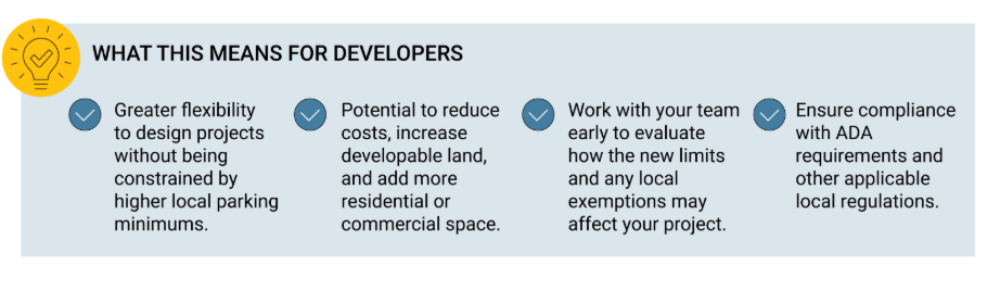
SB 5184 gives developers greater flexibility to design projects without being constrained by higher local minimum parking requirements. Rather than automatically designing projects around predetermined parking ratios, developers may now be able to tailor parking to the specific needs of a project while remaining within the limits established by state law.
Reduced parking requirements may also improve project feasibility by lowering construction costs, increasing the amount of developable land, and creating opportunities for additional residential or commercial space. Projects that may not have been economically viable under prior parking requirements may warrant another look.
Developers evaluating proposed projects should discuss the new parking requirements with legal counsel, design professionals, and local planning staff early in the development process. Because cities and counties may seek exemptions from certain provisions of SB 5184, developers should also confirm whether the jurisdiction has adopted implementing regulations or received an exemption from the Department of Commerce.
Developers should continue to ensure that projects comply with ADA accessibility requirements and any other applicable local development regulations.
When Does the Law Take Effect?
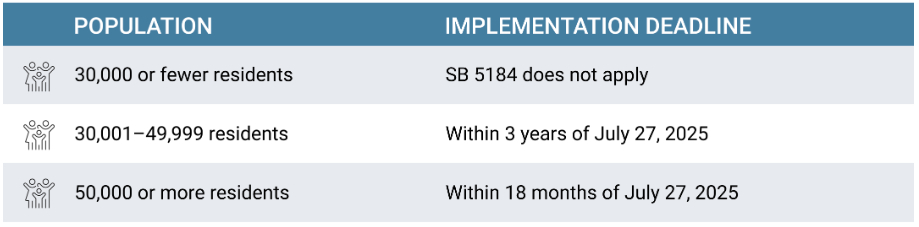
Implementation depends on the population of the applicable city or county.
Bottom Line
SB 5184 is another significant step in Washington’s ongoing effort to reduce regulatory barriers to development. By limiting local minimum parking requirements, the legislation gives developers greater flexibility to design projects that better reflect market demand while potentially reducing construction costs.
Developers planning residential, mixed-use, or commercial projects should evaluate whether the new law creates opportunities that were not previously available and should monitor how local jurisdictions implement SB 5184 through updates to their development regulations.
The content of this article is intended to provide a general guide to the subject matter. Specialist advice should be sought about your specific circumstances.
[View Source]
