

Disruption isn't slowing down — it's accelerating
AI, quantum, and other next generation technologies are rewriting the rules of business. Strategy and execution must keep pace with an unwavering focus on ROI.
Are you ready to lead in the Intelligence Age?
To excel, organisations need to balance ambition with rational thinking. To thrive amid disruption, leaders should modernise their methods of measuring tech value, adopt strategies that favour flexibility and speed, and build cultures that welcome change. Expectations are high and adoption is rapid, but scaling introduces additional complexity and returns vary widely.
Technology leaders should also keep one eye on the horizon — anticipating the future and preparing for the magnitude of disruptions to come. KPMG's Global tech report 2026, Leading in the Intelligence Age: Excelling today, shaping tomorrowopens in a new tab examines how organisations are responding.
Key findings from our research
Meeting the challenge of the Intelligence Age
In an era characterised by the immense growth of tech, most organisations have bold plans to uplift maturity in 2026, fueling the shift from experimentation to scale. However, intensifying challenges of tech debt, cost pressures and talent shortages are holding many back from realising their tech goals.
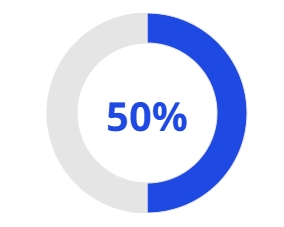
50% of tech executives expect to reach top tech maturity in 2026
yet only 11% are there today
Building adaptive strategies amid continual disruption
With the fast pace of innovation, tech plans are often obsolete before implementation. To thrive amid this constant change, technology leaders must coordinate investment priorities across the enterprise, build clarity around strategic decision making, create a culture that can leverage the best of tech, and ensure the foundations of data and resilience are spot on.
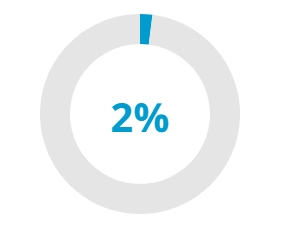
Only 2% of high performers* report several disconnected AI projects and teams
compared with 34% of others
Realising value from tech investment
ROI on tech investment can vary dramatically based on factors such as readiness, diligent governance, execution discipline, and organisational agility. Investment decision making, particularly for new AI tools, has often been based on indirect and hypothetical benefits, adding to the complexity of getting it right. Tech executives need to look at the typical pattern of ROI for guidance and update their ROI KPIs to align with the kinds of business value that AI can generate.
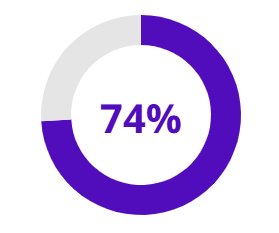
74% report their AI use cases deliver business value
but only 24% achieve ROI across multiple use cases
The foundations for the next wave
The rise of agentic AI is commanding the attention of tech executives, but there are even more disruptive AI tech trends on the horizon. Quantum computing provides immense computing power and calls for superior security, while Artificial General Intelligence and Artificial Superintelligence hold unpredictable potential. One eye must always remain fixed on what is coming next.
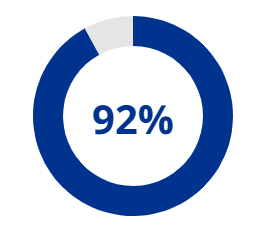
92% say managing AI agents will become an important skill within 5 years
which supports 78% who agree they must take more risks on emerging technologies to stay relevant
* High performers are organisations distinguished by advanced tech maturity, process maturity, and the ability to consistently deliver significant value from their digital investments.
Stanley Sum
Head of Technology Consulting
Greater Bay Area
KPMG China
Your 2026 agenda
Accelerating learning, building a future-ready and agent-empowered workforce, and having one eye on emerging technology trends are just some of the essentials that should be on your 2026 agenda.
Discover even more future-forward technology transformation tips in our report.
KPMG Global tech report 2026
Leading in the Intelligence Age: Excelling today, shaping tomorrow
About the research
The KPMG Global tech report 2026 is based on a survey of 2,500 tech executives from 27 countries, including 43 percent from Europe, Middle East and Africa (EMEA); 29 percent from Asia-Pacific (ASPAC); and 28 percent from the Americas.
The tech executives are representatives from eight industries: automotive, consumer and retail, energy, financial services, government, healthcare and life sciences, industrial manufacturing, and tech and telecom. A significant proportion of the tech executives surveyed are senior leaders, and annual revenues for all organisations in our survey are above US$100 million.
This report features valuable insights on emerging technology trends from interviews with eight global technology leaders including Dean Bortz, Director, AI Go-to-Market, Google; Zack Kass, Global AI advisor, thought leader, and former Head of Go-to-Market, OpenAI; Noelle Russell, AI Solutions Architect and Strategic Advisor, CEO, AI Leadership Institute; and Seth Patton, General Manager, Product Marketing, Microsoft 365 Copilot.
The content of this article is intended to provide a general guide to the subject matter. Specialist advice should be sought about your specific circumstances.
