

The Competition Commission (the "Commission") published its final pre-merger filing consultation guidelines (the "Guidelines") on 13 February 2026.
This marks a significant development in South Africa's merger control landscape, introducing a process through which merging parties may engage with the Commission before formally notifying a transaction.
The objective is to identify potential concerns early, streamline investigations and reduce unnecessary regulatory costs and delays.
Why does this matter?
The Commission intends the Guidelines to address common bottlenecks in merger reviews. Key advantages include:
- Early identification of issues: Parties can proactively identify and navigate potential competition or public interest concerns ahead of filing.
- Upfront remedies: Where concerns are apparent, parties may propose remedies in advance, reducing the likelihood of prolonged negotiations.
- Tailored information requirements: For complex transactions, parties may consult the Commission on the level of detail, data and competitive assessment required, helping to avoid information requests that delay approvals.
- Public interest guidance: Early discussion of issues such as potential large scale retrenchments, ownership by historically disadvantaged persons and workers or supply chain impacts helps to avoid delays later in the process.
- Guidance for sellers and business rescue practitioners (“BRPs”): Investment banks, advisors, and BRPs can engage with the Commission when structuring transactions – particularly useful when selecting purchasers or designing deal structures that may attract regulatory scrutiny.
Key features of the consultation process
The consultation process is:
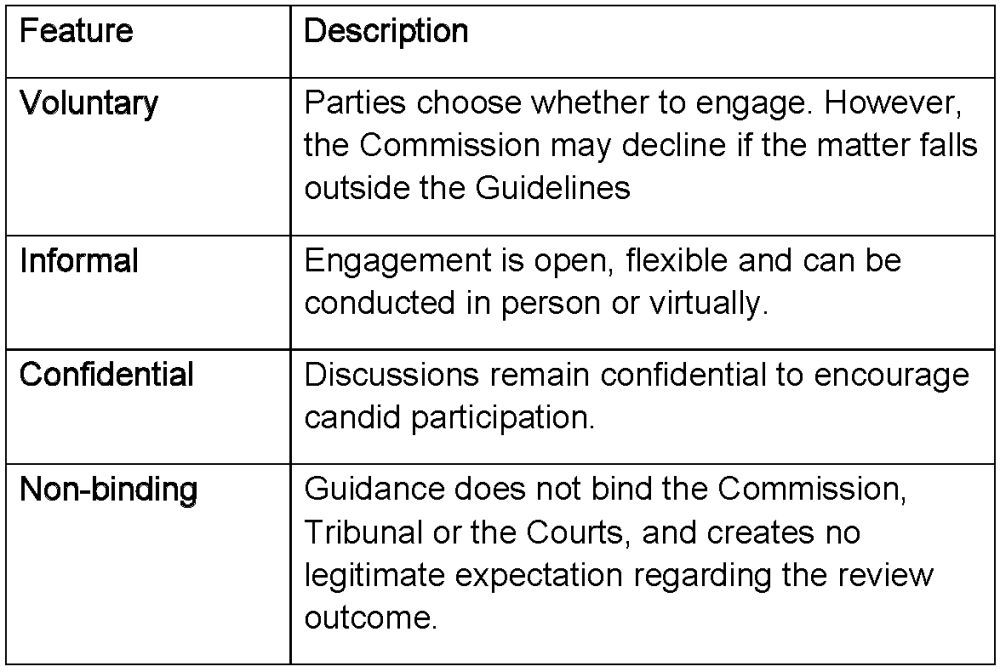
Important limitations:
- No hypothetical queries: The Commission will not entertain academic questions or hypothetical scenarios. Only actual proposed transactions with sufficient detail will be considered.
- Limited engagement: The Commission generally intends to hold no more than one consultation per query, unless circumstances justify further engagement.
- Complex mergers only: The process is reserved for Phase II (complex) or Phase III (very complex) mergers – typically matters involving overlaps, public interest concerns or high post-merger market shares.
How to initiate a consultation
Parties must submit a formal written request to the Commission that includes:
- Documentation outlining the proposed transaction;
- The parties' own assessment of the merger's complexity;
- Specific queries for the Commission;
- Details of attendees; and
- Available dates within the next 10 business days.
Once received, the Commission will allocate a query number for tracking. It recommends that at least one commercial representative/BRP attend the consultation to ensure accurate and complete responses.
Our view
These Guidelines introduce a welcome and pragmatic mechanism for managing complex mergers. For transactions involving substantive overlaps, public interest sensitivities or failing firm issues, early engagement will hopefully help parties:
- Anticipate concerns,
- Tailor their notifications, and
- Reduce the risk of avoidable (and potentially costly) delays.
Parties should, however, remain mindful that the process is non-binding and full scrutiny will still apply during the Commission's formal investigation.
The content of this article is intended to provide a general guide to the subject matter. Specialist advice should be sought about your specific circumstances.
[View Source]

