

1. INTRODUCTION
Over the years, Nigeria’s entertainment industry has witnessed a number of high-profile disputes between artists, record labels, managers, producers, and other industry stakeholders. Disagreements over the ownership of master recordings, royalty entitlements, management commissions, contractual exclusivity, and the termination of recording contracts have frequently resulted in litigation, arbitration, and prolonged public disputes. These disputes underscore an important reality: while talent and creativity drive the entertainment industry, contracts define the legal and commercial rights of the parties.
The growth of Nigeria’s entertainment industry has transformed it into one of the country’s most commercially significant sectors. The international success of Afrobeats, the expansion of Nollywood, and the increasing monetisation of digital content have attracted substantial investment from record labels, production companies, streaming platforms, advertisers, and other commercial entities. As entertainment has evolved into a sophisticated business, contractual relationships have become increasingly complex.
Virtually every commercial relationship within the entertainment industry is governed by contract. Recording agreements, management contracts, publishing agreements, production agreements, distribution agreements, and endorsement contracts regulate the creation, ownership, and commercial exploitation of creative works. These agreements also allocate commercial risks, determine revenue sharing, and establish mechanisms for resolving disputes.
Unlike some jurisdictions that have enacted legislation specifically governing entertainment transactions, Nigeria does not have a single, unified statute regulating entertainment contracts. Rather, these agreements are governed by the common law of contract, the Copyright Act 2022, and other legislation applicable to intellectual property and commercial transactions. Consequently, the enforceability of entertainment contracts depends not only on the terms negotiated by the parties but also on the broader statutory and regulatory framework governing the creative industry.
This article examines the legal framework governing entertainment contracts in Nigeria. It analyses the principal commercial agreements used within the entertainment industry and considers the legal mechanisms available for protecting the interests of artists, producers, investors, talent managers, and other participants in Nigeria’s creative economy.
2. THE LEGAL FRAMEWORK GOVERNING ENTERTAINMENT CONTRACTS IN NIGERIA
2.1 Law of Contract
Entertainment contracts are principally governed by the general law of contract. Like every commercial agreement, an entertainment contract must satisfy the essential requirements of a valid contract, namely: offer, acceptance, consideration, intention to create legal relations, certainty of terms, and legal capacity of the parties. Where these requirements are met, Nigerian courts will ordinarily give effect to the agreement reached by the parties.
The principle of freedom of contract remains central to commercial transactions in Nigeria. Parties are generally at liberty to negotiate the terms governing their relationship, including the allocation of intellectual property rights, royalty structures, exclusivity obligations, performance standards, and dispute resolution mechanisms. Consequently, the courts will not rewrite a contract merely because one party subsequently considers its terms to be unfavourable a principle particularly significant within the entertainment industry, where disputes often arise after a creative work achieves commercial success.
2.2 Copyright Act 2022
While contract law provides the legal foundation for entertainment agreements, the Copyright Act 2022 constitutes the principal legislation governing the ownership and commercial exploitation of creative works. The Act protects literary, musical, artistic, and audiovisual works, sound recordings, and broadcasts, while also recognising performers’ rights.
Most entertainment contracts are structured around the assignment, licensing, or commercial exploitation of rights created under the Act. The Nigerian Copyright Commission (NCC) is responsible for the administration and enforcement of copyright law in Nigeria and plays a significant role in regulating collective management organisations (CMOs) responsible for licensing and royalty collection.
2.3 Trade Marks Act
Depending on the nature of the transaction, other intellectual property legislation may apply. The Trade Marks Act protects registered brands, stage names, logos, and distinctive marks used within the entertainment industry to safeguard commercial identity.
2.4 Companies and Allied Matters Act (CAMA) 2020
The Companies and Allied Matters Act 2020 becomes relevant where artists, production companies, or talent management firms operate through corporate entities, joint ventures, or special purpose vehicles (SPVs).
2.5 Arbitration and Mediation Act 2023
Parties increasingly include alternative dispute resolution clauses in entertainment contracts, making the Arbitration and Mediation Act 2023 a critical component of the legal framework governing dispute resolution.
3. THE PRINCIPAL COMMERCIAL AGREEMENTS IN NIGERIA’S ENTERTAINMENT INDUSTRY
Entertainment transactions are rarely governed by a single agreement. Rather, they involve a series of interrelated contracts that regulate the creation, financing, management, production, and commercial exploitation of creative works.
While the terms of these agreements differ according to the commercial objectives of the parties, they generally seek to allocate intellectual property ownership, define performance obligations, establish compensation structures, and manage commercial risk.
3.1 Recording Agreements
Recording agreements regulate the relationship between a recording artist and a record label, primarily for the production, marketing, and commercial exploitation of sound recordings. The label typically undertakes to finance recording, production, promotion, and distribution, while the artist agrees to record and deliver musical works according to agreed terms.
Key Issue – Master Recording Ownership: Record labels traditionally demand ownership of master recordings in exchange for financial investment. However, as the bargaining power of established artists grows, many now negotiate arrangements retaining ownership while granting the label an exclusive license for a fixed period. Ownership determines who controls future streaming revenues, sync licensing, and secondary exploitation.
Recording agreements also contain provisions relating to advances, royalty rates, exclusivity, delivery commitments, creative control, recoupment of production costs, and contract duration.
3.2 Artist Management Agreements
Management agreements regulate the relationship between an artist and the individual or firm overseeing their professional career. Unlike record labels (which focus on content production and distribution), managers provide strategic direction by negotiating deals, coordinating PR, securing brand endorsements, and advising on career growth.
The agreement defines the scope of the manager’s authority, commission rates (typically 10%-20%), duration of appointment, reporting obligations, sunset clauses, and termination terms.
3.3 Music Publishing Agreements
Publishing agreements govern the administration and commercial exploitation of the copyright in a musical composition (lyrics and underlying music), as distinct from recording agreements which cover sound recordings. Songwriters or composers assign or license specified administration rights to a publisher in exchange for a share of generated income.
Publishers negotiate synchronization (sync) licenses, mechanical licenses, public performance licenses, and print rights. The agreement explicitly details the rights transferred, applicable territory, term, and royalty split structures.
3.4 Distribution Agreements
The expansion of digital streaming platforms (DSPs) has fundamentally altered music distribution. Distribution agreements regulate the relationship between rights holders and digital or physical distributors.
These contracts specify target platforms, territorial scope, revenue-sharing models, payment cycles, content takedown procedures, platform compliance, and treatment of revenue from emerging digital formats.
3.5 Film and Television Production Agreements
Central to Nollywood and television production, these agreements regulate relationships among producers, financiers, directors, screenwriters, cast, and crew.
Given the collaborative nature of film production, agreements must explicitly govern copyright ownership in the final audiovisual work, production schedules, financing milestones, distribution rights, and backend revenue sharing across theatrical, broadcast, and streaming windows.
3.6 Endorsement and Brand Ambassador Agreements
Endorsements represent a major revenue stream for creative talent. These agreements grant a brand the right to associate its products or services with an entertainer’s public image in exchange for financial compensation or other commercial considerations.
They specify the endorsement scope, campaign duration, territory, exclusivity restrictions, content approval procedures, and termination rights (notably morality clauses).
3.7 Live Performance and Event Agreements
These agreements govern single or multi-date engagements between talent and event organisers. Key terms include performance fees, deposit schedules, technical riders, cancellation rights, security guarantees, insurance, and force majeure protections.
4. KEY COMMERCIAL PROVISIONS IN ENTERTAINMENT CONTRACTS
Poorly drafted provisions in core contractual areas are among the leading causes of industry litigation. Parties must pay close attention to the following clauses:
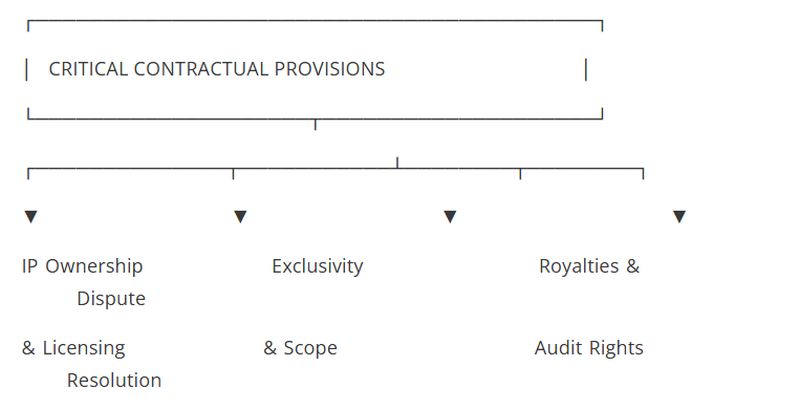
4.1 Intellectual Property Ownership
Contracts must explicitly distinguish between an outright assignment (transfer of ownership) and a license (permission to use under specific conditions). Under the Copyright Act 2022, creators enjoy exclusive rights to reproduce, publish, distribute, and adapt their work. Any transfer must clearly state:
- The exact scope of rights granted.
- Territorial limits (e.g., Worldwide vs. Nigeria only).
- Duration (e.g., life of copyright vs. a fixed term of years).
- Exclusivity status.
4.2 Exclusivity
Common in recording, management, and endorsement deals, exclusivity restricts talent from rendering similar services to competitors. To remain enforceable and avoid being challenged as an unreasonable restraint of trade, exclusivity clauses must be reasonable in scope, duration, and geographic reach.
4.3 Royalties and Revenue Allocation
Royalty provisions must define:
- Gross vs. Net revenue definitions.
- Permissible deductions (e.g., manufacturing costs, distribution fees, marketing caps).
- Accounting frequency (e.g., quarterly or semi-annually).
- Audit Rights: Granting talent the right to inspect accounting books to verify statement accuracy.
4.4 Representations, Warranties, and Indemnities
Warranties guarantee underlying facts for instance, an artist guaranteeing that a song is original and does not infringe third-party copyright. Indemnity clauses allocate financial responsibility if a breach leads to third-party claims or legal liability.
4.5 Term, Termination, and Post-Termination Rights
Contracts must define the initial term, renewal options, and clear termination triggers (material breach, insolvency, or non-performance). Crucially, agreements must state what happens after termination regarding accrued royalties, catalog exploitation, and non-disclosure obligations.
4.6 Confidentiality
Protects unreleased music, scripts, marketing plans, and financial terms. Non-disclosure obligations should survive the termination of the agreement.
4.7 Morality Clauses
Allows brands or labels to suspend or terminate contracts if talent engages in public conduct that brings public disrepute, scandal, or damage to corporate reputation.
4.8 Dispute Resolution Clauses
Defines governing law, jurisdiction, and resolution mechanisms. Including multi-tiered dispute resolution clauses (requiring negotiation, then mediation, then arbitration before litigation) helps safeguard confidentiality and commercial relationships.
5. PRACTICAL RECOMMENDATIONS
To promote sustainability and reduce litigation in Nigeria’s creative economy, stakeholders should adopt the following measures:
- Seek Specialist Legal Counsel: Avoid standard “boilerplate” templates. Engage legal practitioners with specialized knowledge of entertainment law and intellectual property before signing.
- Clarify Intellectual Property Terms: Always specify whether a transaction involves an assignment or a license, defining the territory, duration, and exact rights affected.
- Establish Transparent Accounting: Incorporate clear definitions of recoupable expenses, regular statement schedules, and express audit rights.
- Ensure Balanced Exclusivity: Structure exclusivity terms so they protect investor capital without unreasonably stifling an artist’s career growth.
- Prioritise Alternative Dispute Resolution (ADR): Adopt arbitration or mediation clauses to resolve commercial disagreements swiftly, confidentially, and cost-effectively.
6. CONCLUSION
Nigeria’s entertainment industry has matured into a sophisticated economic sector driven by immense creative talent, technological shift, and foreign direct investment. In this commercial landscape, well-structured contracts are indispensable tools for protecting assets, managing risk, and attracting capital.
While Nigeria lacks a single entertainment code, the combination of contract law, the Copyright Act 2022, and relevant commercial statutes provides a robust legal foundation. Viewing contracts as strategic commercial instruments rather than mere administrative formalities will allow Nigerian creators, investors, and executives to build sustainable, long-term industry partnerships.
The content of this article is intended to provide a general guide to the subject matter. Specialist advice should be sought about your specific circumstances.
[View Source]
