

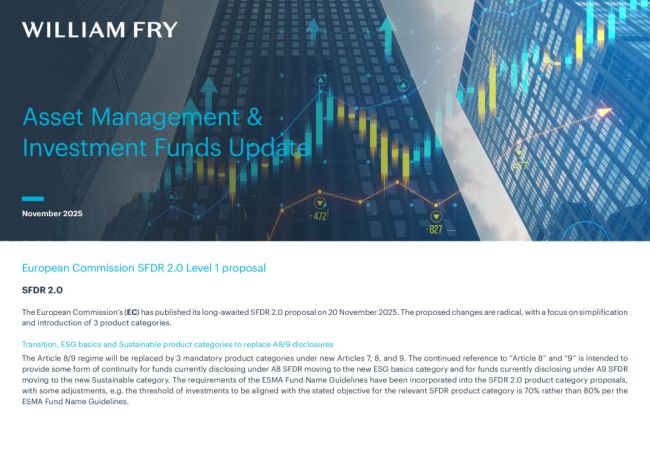
The European Commission has unveiled its landmark SFDR 2.0 proposal, promising to reshape the regulatory landscape for asset managers and investment funds across Europe.
This long-awaited update introduces three clear product categories—Transition, ESG Basics, and Sustainable—replacing the familiar Article 8/9 regime and aiming to simplify compliance while raising the bar for sustainability standards.
What's Changing?
- Streamlined Product Categories: Funds will now be classified under Transition, ESG Basics, or Sustainable, each with distinct requirements and thresholds.
- Simplified Disclosures: Pre-contractual and periodic disclosures are reduced to just two pages, making it easier for investors to understand a fund's sustainability profile.
- Specific Exclusions: New rules tighten restrictions on investments in fossil fuels, controversial weapons, and other activities, ensuring funds are genuinely aligned with ESG objectives.
- Impact Products Recognized: For the first time, products with a measurable sustainability impact can be officially categorized and marketed as such.
Why Does It Matter?
Fund managers must now map existing products to the new categories, update disclosures, and review investment strategies to ensure compliance. The changes will affect how funds are marketed, how investors assess sustainability, and how the industry approaches ESG integration.
Who Is Affected?
- Asset managers and fund providers
- Investors seeking clarity on sustainable products
- Compliance teams preparing for regulatory change
What's Next?
Implementation is expected from 2027–2028, with no transitional provisions for existing funds. The proposal is now under negotiation at EU level. Further details will be clarified in upcoming Level 2 measures.
Click the briefing below to explore our full briefing for a detailed breakdown of the SFDR 2.0 proposal, practical implications for fund managers, and expert insights on preparing for the new regime.
Contributed by Ann Shiels
The content of this article is intended to provide a general guide to the subject matter. Specialist advice should be sought about your specific circumstances.
