

As recently reported by Korea JoongAng Daily, South Korea’s Supreme Court (second division) has issued its first decision regarding whether “upcycling” or customizing branded luxury goods can amount to trademark infringement.
The case involved a tailor, who provided a customization service by using the customers’ own Louis Vuitton bags to create new bags and wallets in different sizes and shapes (see example below of the bag before and after customization). Louis Vuitton filed the suit against the tailor in 2022, alleging that the tailor’s service infringed its trademark rights and could lead customers to believe the customized products came from, or were approved by, the brand.
The district court originally ruled in favour of Louis Vuitton and reasoned that the customized products could cause consumers to associate the product as being made by the brand. The court ordered an injunction barring the tailor from using materials bearing Louis Vuitton’s trademarks in the production of bags and wallets and also required him to pay monetary damages.
However, on appeal, the Supreme Court held that customizing a brand’s product for personal use at the owner’s request does not itself constitute trademark infringement. In contrast, if the tailor were to sell the customized product as its own, that could amount to infringement.
The court listed the factors to consider, which include: the details of the customization request, who decided the purpose, form and quantity of the products, the compensation received, and the source of the materials used. If the tailor were to knowingly provide the service to a customer who planned to resell the customized product, they could be jointly liable for trademark infringement.
The case has reportedly been sent back to the Intellectual Property High Court for further review.
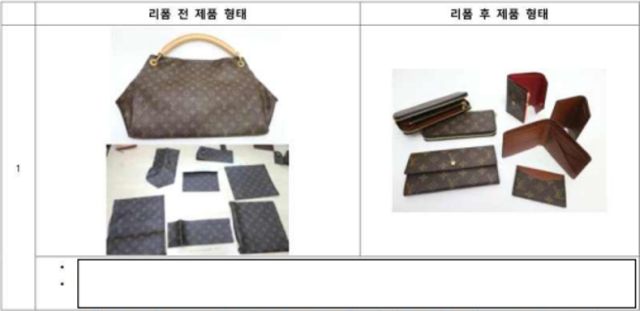
Source: district court decision
The content of this article does not constitute legal advice and should not be relied on in that way. Specific advice should be sought about your specific circumstances.

